Image

60+ YearsMORE THAN 60 YEARS AGO, THERE WERE 3. TODAY, THEY ARE 3500.ofStories

1961—2026

Deltawas born in 1961in a warehouse with 3 employeesonly

1961 —2026
Image

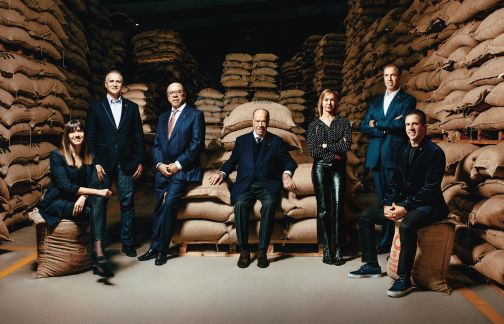
The Nabeiro family from left to right:

Rita Nabeiro, Rui Miguel Nabeiro, João Manuel Nabeiro,

Rui Nabeiro, Helena Nabeiro, Ivan Nabeiro and Marcos Tenório

Chapter I/1931 — 1945

Chapter I
1931
Chapter I
1945

The year of birth of Rui Nabeiro

— 1939 —
Manuel Rui Azinhais Nabeiro

(Founder)

Manuel Rui Azinhais Nabeiro was born on March 28, 1931, in Campo Maior to a humble family—“but not poor,” as he often emphasized in interviews. His father worked as a driver for a doctor and made significant efforts to ensure that his children received an education, which was a rare privilege at that time. Despite their simple life, the sacrifices made by his parents allowed Rui and his siblings to enjoy a more dignified existence.

During this period, Portugal was under a military dictatorship, with Salazar attempting to rebuild the economy after the crisis of 1929. The population faced widespread unemployment and hunger. This challenging environment played a crucial role in shaping Rui Nabeiro's character, teaching him the importance of hard work and resilience from a young age.

ImageImageImage
Image

In 1928, António de Oliveira Salazar became the Minister of Finance with the goal of stabilising the finances of a bankrupt country.

By strictly controlling expenses, he gained the trust of President Carmona, who appointed him President of the Council of Ministers in 1932. Salazar then drafted a new Constitution, which was approved in a referendum that showed 99.5% in favor, largely due to the inclusion of abstentions as favourable votes.

This Constitution outlined the principles of the Estado Novo, which were based on nationalism, corporatism, the social doctrine of the Church, and authoritarianism centred around Salazar himself.

Image

Life in Alentejo and the beginning of the Estado Novo

In the early 1930s, Alentejo was described as an arid region, with desolate landscapes and an extreme climate. Portugal had a popultation of around seven million, with half of the inhabitants living from agriculture and an illiteracy rate above 60%.
In Campo Maior, located in the sparsely populated district of Portalegre, Rui Nabeiro recalled a childhood filled with hard work and a lack of recognition.

“Here in Alentejo, there was no life to be lived. There was only a life of passing time, working, and struggling, always for someone who didn’t acknowledge us. Today, things have changed. There has been extraordinary improvement. The most humble people here in Campo Maior work, but they also live. This is the greatest transformation: we have started to become more human.”

Rui Nabeiro, recalling his childhood

Image

Dusty roads, scorched plateaus, schist or granite crags coiling here and there as if twisted in pain, a few olive trees and oaks, solitary ascetics in these endless steppes. Dry air, burning days and cold nights, distant horizons edged by ridgelines turned blue by distance.

This is how Alentejo appears to the French geographer Louis Papy, who, in the early 1930s, is travelling through Portugal.

Image
Image

Almada Negreiros is the author of several propaganda posters for the Estado Novo. This one, from 1933, calls for participation in the constitutional plebiscite.

On the border: Smuggling as a way of life

1935

ImageImage

The creation of a new brand

— 1937 —
Cafés Camelo
Image
Image
Image

(The first brand)

The Nabeiro family’s connection to coffee dates back to the 1930s when Joaquim dos Santos Nabeiro began roasting coffee illegally in Spain. He later established the brand Cubana. With assistance from a Spanish friend, he built the first factory in Campo Maior, which remained small and artisanal. During the war, the business expanded, leading to increased competition within the family. Joaquim's brother, João, launched the brand Cubano, and the rivalry between them intensified.

In 1937, after facing challenges with the brand Cubano, Joaquim partnered with his brother Manuel (who was the father of Rui Nabeiro) and a brother-in-law to create the brand Camelo, inspired by the tobacco brand Camel. Camelo grew in the Estremadura region, while the other brands were distributed across different areas of Spain. Despite encountering legal issues with Philip Morris over the brand name, Camelo remained dedicated exclusively to coffee.

Chapter II/1946 — 1953

Chapter II
1946
Chapter II
1953

A family connected to the coffee business

— 1944 —
With sacks on their backs, loaded with coffee, the smugglers cross the border from Spain. Joaquim dos Santos Nabeiro is the third in the photo.

With sacks on their backs, loaded with coffee, the smugglers cross the border from Spain. Joaquim dos Santos Nabeiro is the third in the photo.

Image

Uncle Joaquim,

An example for life

(Learning)

At the age of 13, Rui Nabeiro began working alongside his uncle Joaquim, carrying coffee sacks at the Camelo factory. Joaquim Nabeiro, a bold entrepreneur, initially started smuggling coffee between Portugal and Spain and was even imprisoned during the Civil War.

He later founded a roasting plant in Campo Maior and expanded his business by selling food at the border. For Rui, his uncle was not only a mentor but also an example of hard work and ambition, imparting valuable lessons in independence and determination.

Unlike his uncle, Rui Nabeiro did not have to cross the border with bags of coffee on his back. Instead, he focused on coordinating supply, securing customers, and organizing transport. Although smuggling had become more structured, it still involved significant risks, including frequent arrests. Despite the dangers, this venture allowed him to improve his living conditions, though it did not lead to great wealth. From an early age, Rui remained focused on the coffee business.

Image
Image
Image
— 1946 —

The Coffee Roasting Ball

One of the first Delta Bolas is on display at the Centro de Ciência do Café, in Campo Maior.

Image
Image

“My hobby was coffee.”

Rui Nabeiro, 1946

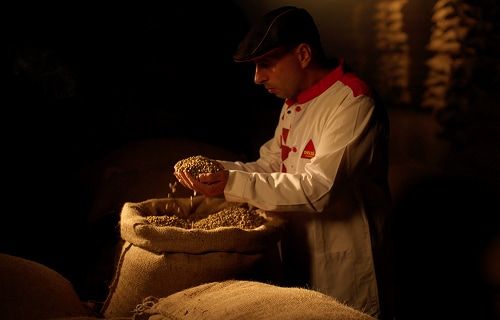
At the age of 14, Rui Nabeiro switched from loading work to operating his uncle’s small manual coffee roaster in the factory. There, he learned the intricate secrets of coffee roasting. He meticulously controlled the temperature, which ranged from 190 to 240 °C, balanced the intake and exhaust of air, and listened closely for the cracking sound of the beans, indicating they were nearly ready. Rui worked from morning until night, putting in intense physical effort. “I had no time for hobbies or entertainment; my hobby was coffee.”

  • 1950
  • 1951
  • 1952
  • 1953
  • 1954
  • 1959
  • Manual of Santos Nabeiro
    Manual of Santos Nabeiro
    1950The Father's Death

    With his father’s death, Rui Nabeiro takes his place in the family company. With no children of his own, Joaquim d’Olaia sees his nephews as the future of the business, and Rui stands out for his hard work. “I had no youth. I had to take my father’s position in the company,” he recalls. The coffee trade in Campo Maior continues to be dominated by the Nabeiro family, but Rui sets himself apart by turning the business into a more structured operation, making it less risky than the smuggling practices of earlier pioneers.

  • The Mother’s Letter to the President of the Republic
    1951The Mother’s Letter to the President of the Republic

    In 1951, Rui Nabeiro’s mother asked President Craveiro Lopes to exempt her son from military service, arguing that he was her only support. The request was denied, as this circumstance did not justify an exemption.

  • Identity card
    1952The Soldier Manuel Rui Azinhais Nabeiro

    In 1952, after his request for exemption was denied, Rui Nabeiro completed 103 days of military service at the Elvas barracks, in the 8th Caçadores Battalion, as a rangefinder observer.

  • Alice and Rui’s wedding
    1953Alice and Rui’s wedding

    After completing his military service, Rui Nabeiro married Alice on 25 October 1953, in Campo Maior. Having known each other since childhood, they built a relationship based on understanding and mutual support, from which two children were born, João Manuel and Helena Maria.

  • João Manuel is born, the firstborn son of Rui and Alice Nabeiro
    1954João Manuel, the firstborn son of Rui and Alice Nabeiro, is born

    João Manuel, eldest son of Rui and Alice Nabeiro, is born on Rua de Badajoz, next to the Campomaiorense stadium. He studies Electrical Engineering in Lisbon, but from the 1970s onwards he devotes himself fully to Delta, driving the brand’s advertising and its commitment to football. In the 1990s, he leads Campomaiorense to the first division and to the final of the Taça de Portugal. Later, he focuses on community and tourism projects, always following his father’s example.

  • The birth of my daughter Helena
    1959It’s a girl! The birth of our daughter Helena

    Helena Maria, daughter of Rui and Alice Nabeiro, grows up involved in the family business and becomes a key figure in Grupo Nabeiro. As a board member, she leads the opening of the Museu do Café in 1994 and, later, the Centro Ciência do Café in 2014, promoting the history, science, and technology of the sector.

Chapter III/1954 — 1960

Chapter III
1954
Chapter III
1960

The first generations

— 1954 —
Alice Nabeiro holding João Manuel Nabeiro on her lap, 1954

Alice Nabeiro holding João Manuel Nabeiro on her lap, 1954

In 1954,João Manuel Nabeirois born, the first son ofRui

andAlice Nabeiro

João Manuel Nabeiro, the first child of Rui and Alice Nabeiro, was born on Rua de Badajoz, right next to the Estádio do Campomaiorense. This location foreshadowed his future leadership of the local club. Before taking on this role, however, he pursued his studies in Lisbon. His time at Instituto Superior Técnico, where he was enrolled in an Electrical Engineering course, coincided with a pivotal moment in his father's career. In 1975, Rui Nabeiro made a bold move by bringing a ship loaded with coffee from Luanda. João Manuel recalls, "That was our launch pad. Seeing the satisfaction of our customers and serving them when there was no product on the market allowed us to grow exponentially."

As the company expanded, João Manuel found himself splitting his time between university and Delta. Eventually, he realized that he could no longer balance both commitments and decided to fully dedicate himself to the company.

In the late 1970s, João Manuel began working full time at Delta. He took charge of the first major advertising campaigns and communication initiatives for the company. "My role involved liaising with the agencies. Initially, we focused heavily on radio and newspapers. From early on, we also started investing in football."

In the 1990s, the company's focus on football evolved significantly with the Sporting Clube Campomaiorense project, which João Manuel led to the First Division and to an unprecedented Taça de Portugal final in 1999.

After senior football came to an end, he transformed the club’s facilities into the Clube de Saúde. Later, he oversaw the restoration of the ApertAzeite restaurant and developed a tourism project at Herdade dos Adaens, always inspired by his family's example.

João Manuel Nabeiro

João Manuel Nabeiro

Chairman of the Board of Directors Delta Cafés

João Manuel and Helena Maria, together with their parents

João Manuel and Helena Maria, together with their parents

"I have always tried to be a faithful follower of my father's footsteps. And that has filled me with love and joy. Because, above all, I stand by his side. It is like in a marriage: not behind, but beside."

It’s a girl! The legacy grows with the arrival of Helena Maria Nabeiro

Helena Maria Nabeiro

Helena Maria Nabeiro

Co-Administrator Delta Cafés

In 1959, Helena Maria was born to Alice and Rui Nabeiro. Like her brother, João Manuel, she closely followed her father’s business activities and took on an important role in the family company. In 1994, she was responsible for inaugurating the Museu do Café, a unique space in the country and one of the few of its kind in Europe, dedicated to telling the story of coffee and the Nabeiro family.

Later, she expanded this mission by inaugurating the Centro Ciência do Café in 2014. This centre serves as a hub for interpretation, scientific and technological outreach, and acts as a gateway to the Delta universe.

Helena is the mother of Ivan Nabeiro, the current administrator of the Group, and Marcos Nabeiro Tenório. She also has a passion for horses; over 20 years ago, she founded her own stud farm. Between 1987 and 1990, she participated in the national endurance riding championship.

Even after stepping away from competition, Helena remains connected to the equestrian world, which she shares with her husband, Joaquim Manuel Carvalho Tenório, known as Joaquim Bastinhas, who is one of the most acclaimed Portuguese bullfighting riders.

Chapter IV/1961 — 1973

Chapter IV
1961
Chapter IV
1973

Delta foundation

— 1961 —
Coffee Packaging

(Foundation)

With only three employees, Rui Nabeiro founds Delta in Campo Maior. After several years marked by hardship and two delicate surgeries (the result of a life of hard work), he decides to turn pain into strength and creates the brand that will become a case study and make him an example of business success.

Delta’s first year is not easy, with a small market and resistance to the new brand. Opened in 1961, in a 50 m² warehouse, Rui Nabeiro starts by selling barley to work around the difficulties.

Balancing the new business with his work at Torrefação Camelo, he gets up at 3:30 a.m. to work.

With only three retired employees and funding obtained through savings and credit, it adopts an innovative approach: customer support, credit facilitation, and direct deliveries. The name “Delta” is suggested by the company responsible for the patents, chosen for its sound and ease of pronunciation. The business model incurs losses at first, but it secures the brand’s growth.

Image

(The journeys)

Three years after the creation of the brand, Delta continues to grow and, after Lisbon and Coimbra, opens its commercial warehouse in Porto. Based in Senhora da Hora, it is created with storage and distribution functions, supported by a small team of salespeople who ensure commercial transactions.

Rui Nabeiro may not need to go to the North every week, but he also wants to stay as close as possible to all his workers, even if that means long seven-hour journeys from Campo Maior. These journeys are made in what is the first vehicle in service for the company – a robust and reliable green and yellow Ford Fordson, bought second-hand by his uncle Joaquim. It is in this vehicle that he travels across the whole country, almost always for work.

But even when parked at Delta’s facilities in Campo Maior, the van is ready for contingencies and emergencies, whether visiting a client or taking someone to the hospital. A car for every task, which time has turned into a museum piece: today it is one of the main attractions at the Centro de Ciência do Café.

Green and yellow Ford Fordson, on display at the Centro de Ciência do Café.

Green and yellow Ford Fordson, on display at the Centro de Ciência do Café.

Image

Herdade dasArgamassas—1968—

It is an estate that means a great deal to me, that moves me deep in my soul.

Image

Rui Nabeiro acquires the Herdade das Argamassas, where he will later install the Novadelta industrial complex and fulfil his dream of producing his own wine. The winegrowing tradition of Campo Maior, where even the poorest families cultivated wine for their own consumption, serves as his inspiration. With 106 hectares, the estate marks a new chapter in his story, bringing together business and emotion. Since childhood he had admired those lands, without imagining that one day they would be his. “It touches me to the depths of my soul,” he confesses, as he recalls his grandparents and the bond with the roots that always drove him.

Twenty houses for Delta workers

— 1969 —
Image

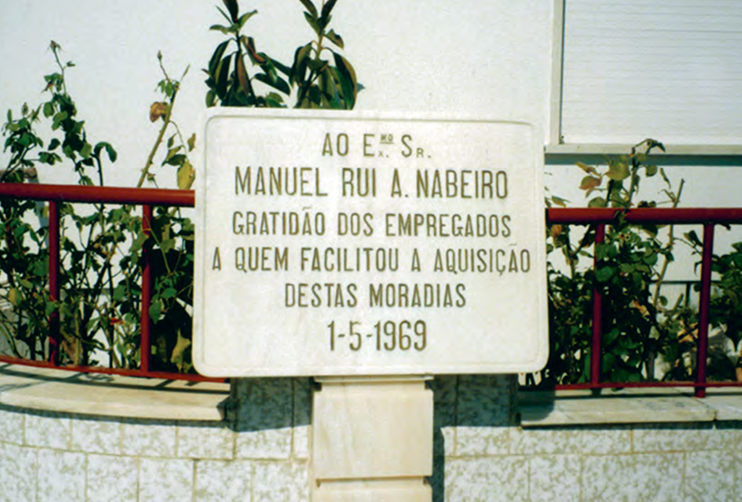
On 1 May, Labour Day, 20 homes built for Delta employees and their families are inaugurated. At a time when social responsibility was not yet a topic, Rui Nabeiro was already concerned with the well-being of his staff. He acquired a plot of land between the Delta factory and Torrefação Camelo, co-financed the houses, and ensured affordable instalments. Despite potential conflicts with the regime, he managed to make the project viable and secured the presence of the Archbishop of Évora at the inauguration. A commemorative plaque preserves the employees’ gratitude for his gesture.

Photography © Enric Vives-Rubio

Photography © Enric Vives-Rubio

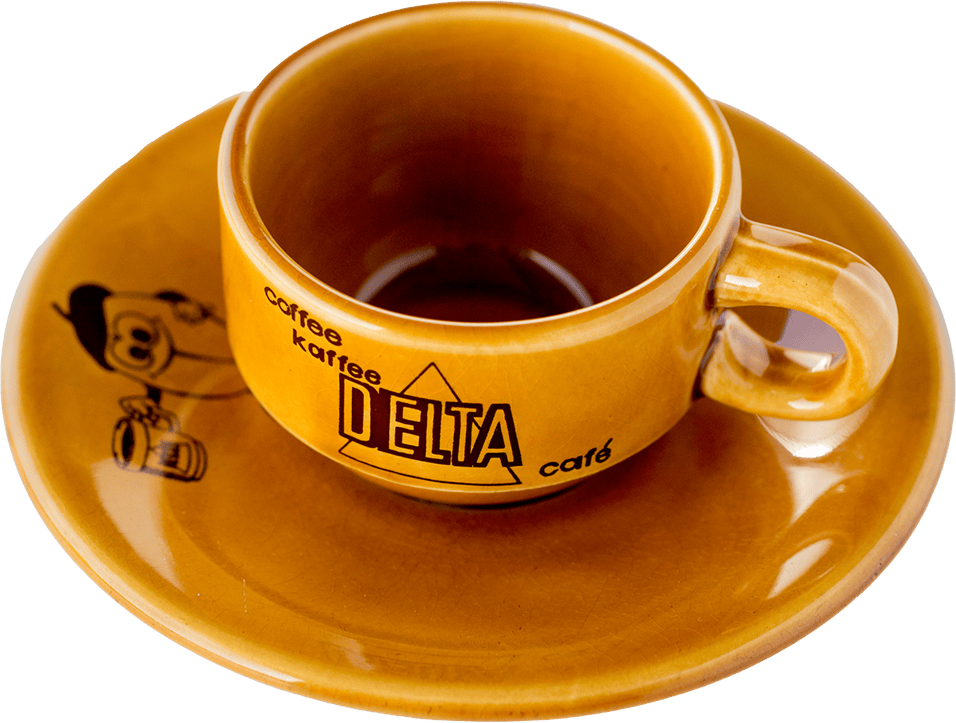
Delta cups: A porcelain heritage

Delta cups appear in the 1970s and become a brand icon. First produced in earthenware in brown tones, they evolve into more stylised and colourful designs in the 1980s. From the 1990s onwards, collector’s editions are created for special occasions and historic events, such as Expo’98 and football championships. These pieces, symbols of Delta’s emotional heritage, now hold a prominent place at the Centro de Ciência do Café.

Chapter V/1974 — 1983

Chapter V
1974
Chapter V
1983

The beginning of the third generation

— 1979 —
Rita and Rui with their father, João Manuel, on a visit to the Delta factory.

Rita and Rui with their father, João Manuel, on a visit to the Delta factory.

Image
Rui Miguel

Rui Miguel

CEO Delta Cafés

Rita Nabeiro

Rita Nabeiro

General Director Adega Mayor

Ivan Nabeiro

Ivan Nabeiro

Co-Administrator Delta Cafés

Ivan Nabeiro on the left, with his brother Marco

Ivan Nabeiro on the left, with his brother Marco

Rita and Rui with their father, João Manuel, on a visit to the Delta factory.

Rita and Rui with their father, João Manuel, on a visit to the Delta factory.

Image

(The grandchildren)

Rui Miguel and Rita Nabeiro, grandchildren of Rui Nabeiro, were born in Lisbon and grew up with Delta present throughout their childhood, remembering visits to the factory and games in the warehouses. Rui Miguel graduated in Business Management and joined Delta in 2003, launching Delta Office and later the Delta Q capsule system, one of the company’s most significant projects. Rita studied Communication Design and began working at an advertising agency, but went on to create Adega Mayor within Grupo Nabeiro, after presenting her proposal as an external client. Both highlight the inspiring role of their grandfather, who always knew how to motivate and guide with balance. Today, Rui Miguel is CEO of Delta Cafés and Rita is managing director of Adega Mayor, taking on leadership roles within Grupo Nabeiro.

Ivan Nabeiro, the third grandson of Rui Nabeiro, was born on 3 January 1983 and from a young age showed a spirit of leadership, serving as founding cabo of the Grupo de Forcados Académicos d’Elvas. With a degree in Business Management, he joined Delta at the age of 24 and worked in several areas of the company to understand its operations in depth. He deepened his knowledge with training in marketing, sales, and coffee in Brazil, drawing closer to his grandfather to learn from his experience. Over time, he took on the management of the company’s social responsibility initiatives, linked to Associação Coração Delta and Centro Educativo Alice Nabeiro. He is currently a board member at Delta and one of the voices of the new generation entrusted with continuing the family legacy.

Chapter VI/1984 — 1997

Chapter VI
1984
Chapter VI
1997

The growth of the delta

— 1984 —
Image
Image
Image
Image
Image

Novadelta: the largest roasting plant in the Iberian Peninsula

As Delta continues to grow, its coffee roasting operation expands significantly. The original roasting drum, which marked the start of the company in 1961, is no longer sufficient to meet increasing orders. Consequently, between the late 1970s and the early 1980s, the coffee roasting process transitions from the centre of Campo Maior to the large Herdade das Argamassas estate, acquired in 1968.

Rui Nabeiro establishes an initial roasting facility there, followed by additional ones, and the complex gradually grows and modernizes to fulfill customer demands. At the same time, the storage and packing services relocate from the village centre, and the sugar production moves as well. By 1984, the industrial unit of the group, known as Novadelta, becomes the largest roasting plant in the Iberian Peninsula. In other words, while Delta is already an iconic presence in the region, it is steadily progressing toward becoming a major national benchmark.

Image
Image

Delta takes Benfica to the European Champions Cup Final

— 1988

Go Benfica, strength and spirit
Great resolve in the final.
All our skill in one achievement:
Win the cup for Portugal.
Play them with grit, that is our pride.
And we have wings to fly.
We have a team, go Benfica,
Like champions, score and score.

Image
1986
Start of activity in Spain

The Calendar Craze

— 1989 —

In the late 1980s, Delta expanded across the country and invested in several forms of communication with the public. In addition to cups, sugar packets and advertisements, it focused on promotional items such as stickers, key rings, pins and pocket calendars, which were essential at the time. One of the most striking pieces adapted Fernando Pessoa’s portrait by Almada Negreiros, adding a Delta cup and the phrase “Todos os Pessoas bebem café Delta.”

  • Image
  • Image
  • Image
  • Image
  • Image
  • Image
  • Image
  • Image
  • Image
  • Image
  • Image
  • Image

Wake up every day with António Sala and Delta coffee

— 1990
António Sala

The Rádio Renascença show "Despertar" was a major success in the 1980s, sponsored by Delta. Presented by António Sala and Olga Cardoso, the show opened with a jingle performed by notable names in Portuguese music. The partnership with Delta was strong and included contests like "Nem sim nem não," which rewarded listeners with coffee and cups. Sala also recorded voice-overs for the brand and collaborated closely with Rui Nabeiro.

Special editions of "Despertar" were released one after another, but the edition for International Coffee Day, recorded live at a packed Campo Pequeno, stands out in the host's memory. "It was a magnificent event, featuring all the prominent artists and many songs about coffee. It even made the front page of the newspapers." The main sponsor? Delta, of course.

Image

Where is Brigite Monique? Herman José uncovers the mystery

— 1992

During the 1990s, Delta ramped up its television advertising efforts, most notably with a 1992 campaign produced by Neovox. This memorable initiative starred Herman José as the detective Dick Shade seeking the whereabouts of Brigite Monique, aiming to boost the company's retail footprint. João Manuel Nabeiro remembers the project's success and his partnership with the comedian fondly; the campaign featured a popular contest involving product packaging symbols. The massive response culminated in a 100,000-euro grand prize draw broadcast on RTP1, significantly elevating the brand's profile.

During the 1990s, Delta ramped up its television advertising efforts, most notably with a 1992 campaign produced by Neovox. This memorable initiative starred Herman José as the detective Dick Shade seeking the whereabouts of Brigite Monique, aiming to boost the company's retail footprint. João Manuel Nabeiro remembers the project's success and his partnership with the comedian fondly; the campaign featured a popular contest involving product packaging symbols. The massive response culminated in a 100,000-euro grand prize draw broadcast on RTP1, significantly elevating the brand's profile.

Tecnidelta, the first "hospital" for coffee machines

— 1993

Founded in the 1980s, Tecnidelta initially provided technical assistance for coffee machines to reduce equipment-related returns. In 1993, it opened a branch in Campo Maior, featuring a large spare parts warehouse and serving as a service centre for machines. The company later expanded into manufacturing machines and designing coffee shop spaces.

Tecnidelta
Image

Market leadership in coffee and a museum

— 1994

Thirty-three years later, Delta reaches the leading position in the Portuguese coffee market, a milestone that coincides with the certification of Novadelta by the Instituto Português da Qualidade – the first certification of its kind for a roasting company in Portugal. To mark this achievement, Rui Nabeiro fulfils a long-held dream and inaugurates the Museu do Café on 21 December. Located at Herdade das Argamassas, near the Novadelta factory, the space brings together a significant collection on the history of coffee and Delta, allowing visitors to learn about the origin, production, and impact of the beverage, as well as coffee smuggling in the border region. The pieces on display include machines, grinders, cups, the first roasting drum, and the first distribution vehicle of the brand. In 2014, the museum is integrated into the Centro de Ciência do Café, expanding its educational and cultural offer.

Thirty-three years later, Delta reaches the leading position in the Portuguese coffee market, a milestone that coincides with the certification of Novadelta by the Instituto Português da Qualidade – the first certification of its kind for a roasting company in Portugal. To mark this achievement, Rui Nabeiro fulfils a long-held dream and inaugurates the Museu do Café on 21 December. Located at Herdade das Argamassas, near the Novadelta factory, the space brings together a significant collection on the history of coffee and Delta, allowing visitors to learn about the origin, production, and impact of the beverage, as well as coffee smuggling in the border region. The pieces on display include machines, grinders, cups, the first roasting drum, and the first distribution vehicle of the brand. In 2014, the museum is integrated into the Centro de Ciência do Café, expanding its educational and cultural offer.

Chapter VII/1998 — 2008

Chapter VII
1998
Chapter VII
2008

Looking to the future

— 1998 —
On 15 August 1998, the statue of Rui Nabeiro is unveiled on Avenida da Liberdade

On 15 August 1998, the statue of Rui Nabeiro is unveiled on Avenida da Liberdade

Image
Image

The official café of Expo’98 (and a statue)

(A special year)

On 22 May 1998, Expo’98 opens its doors in Lisbon, transforming the eastern area of the city and attracting the attention of Portugal and the world. With the theme “The Future of the Oceans”, this last great World Exposition of the 20th century becomes a landmark of modernity and urban renewal. Delta, always attentive to major events, is present as the official coffee of the exposition.

Over four months, the brand from Campo Maior serves more than six million coffees at 137 points across the venue. Visitors consume 42 tonnes of coffee and receive 20,000 cups created especially for the event, further strengthening Delta’s visibility during a period of strong growth.

But 1998 still holds another special moment. On 15 August, Campo Maior pays tribute to Rui Nabeiro with the unveiling of a statue on Avenida da Liberdade. Sculpted in bronze by Laureano Ribatua, the work portrays a serene and approachable Rui Nabeiro, reflecting his spirit of service and dedication to the town he always made a point of supporting. Visibly moved, Rui Nabeiro reaffirms, in his inauguration speech, his commitment to the community he holds in such high regard.

1988
Start of operations in Angola
Image
Image

A café for Timor Lorosae

(Solidarity and impact)

In 1999, Rui Nabeiro traveled to Timor to support local coffee producers following independence. Rather than simply purchasing the coffee, he invested in strengthening the local cooperatives by providing equipment and technical expertise.

In 2000, Delta launches the campaign “Um Café por Timor,” which aimed to raise funds for building and rehabilitating schools. The project gained international recognition in 2003, and Timorese coffee successfully established itself in the global market, with Delta handling its commercialisation.

Image

Figo steps in, an ad for Delta comes out

— 1900

Delta launched a memorable advertisement for the 2002 World Cup featuring Luís Figo, associating coffee and the national team. In the commercial, Figo's gestures align perfectly with the play-by-play of a match, creating a thrilling moment. Despite the strength of the campaign, Portugal was eliminated in the group stage, and Figo did not score any goals during the tournament.

The (huge) Delta heart

Coração Delta was established in 2005 as a social solidarity association of Grupo Nabeiro, continuing the spirit of community support initiated by Delta employees. Its initiatives benefit various generations: it supports children through the Centro Educativo Alice Nabeiro, encourages young adults with qualification and professional integration programs, and addresses the loneliness of older individuals through the Tempo Para Dar program. Over the years, Coração Delta has expanded its reach and created a significant social impact in Campo Maior and beyond.

Image

The sugar packets

— 1900 —

In 2007, the Delta Lote Chávena campaign featured Nuno Markl as its main figure and quickly gained popularity. In the commercial, the comedian struggles to wake up until a cup of coffee resolves his dilemma. The campaign's posters included the phrase “Recognisable even with your eyes closed,” which inspired fans to create altered versions of the image, leading to the blog Vandalismos da Delta. The brand embraced this initiative and turned it into a contest, celebrating the public’s spontaneous creativity. This phenomenon strengthened the relationship between Delta and humor, with unanticipated levels of success.

  • Image
  • Image
  • Image
  • Image
  • Image
  • Image
  • Image
  • Image
  • Image
  • Image
  • Image
  • Image
2007
Direct operation in France

Chapter VIII/2009 — 2020

Chapter VIII
2009
Chapter VIII
2020

Discovering the world

— 2007 —
Image

Delta Q: Entering the New World of Coffee Capsules

Delta Q was established in 2007, driven by the innovative spirit of Grupo Nabeiro. However, the story dates back to 1961, when our founder, Rui Nabeiro, created Delta Cafés, the coffee brand most recognised by the Portuguese.

Delta Cafés had been around for 45 years when the shift to a capsule system began in 2005. This transition led to the creation of Delta Q in 2007, a promise made by Rui Miguel Nabeiro to his grandfather, Rui Nabeiro. Delta Q was founded with the aim of providing quality espresso in a practical and accessible manner. Just five years later, in 2012, it became the market leader.

The brand embodies a passion for coffee and inherits over 60 years of expertise in espresso, which is a proud part of our Portuguese heritage, crafted by Grupo Nabeiro. From the outset, Delta Q has positioned itself as the specialist in capsule coffee, bringing authentic Delta coffee from the street into Portuguese homes and making capsule coffee consumption accessible to many. This has made it possible for everyone to enjoy genuine coffee, rich in Portuguese soul and flavour, through Portugal’s first proprietary system for capsule coffee extraction.

Today, Delta Q is a global brand that combines innovation, technology, design, and flavour, transforming the experience of drinking coffee into a unique ritual of connection and sharing. It is present in over 25 countries across five continents and aspires to inspire diverse cultures to discover and share our passion for coffee.

Festival Delta Tejo brought music to 50,000 people.

— 2008 —

Delta Tejo was a festival held in Lisbon, overlooking the Tejo River. It combined music, coffee, and sustainability. In its second edition in 2008, the festival attracted 50,000 visitors and emphasized showcasing artists from coffee-producing countries.

The event featured performances by artists such as Adriana Calcanhotto and Sam The Kid. Additionally, attendees could enjoy experiences like coffee cocktails, enter contests for prizes, and try the Delta Jump, a thrilling 60-meter free fall. To offset the festival's carbon footprint, Delta planted 50,000 trees in Gerês.

Image
Image
Image
Image
Image
Image
Image
Image
Image
Image
Image
Image
Image
Image
Image
Image
Image
Image
Diverge, Innovation Centre

Diverge, the new ideas factory of Grupo Nabeiro

— 2010 —

Established in 2010, Diverge serves as the Innovation Centre for Grupo Nabeiro. It integrates design, engineering, and research to develop innovative products. The team manages the entire process, from the initial concept to industrialization, and actively involves employees through Delta's innovation model. Notable creations include the Qoffee Qar robot, the rise extraction system, the MyQoffee platform, the biodegradable Delta Q eQo capsule, and the walq portable coffee machine.

Delta discovering Brazil (and the world)

— 2010 —

Delta began its international expansion in 1986, entering the Spanish market, and strengthened this commitment in 1998 with its arrival in Angola. In the new millennium, growth accelerated with entry into France (2007), Luxembourg (2011), and Brazil (2012), where it established Delta Foods Brasil. In 2014, it reached China, its largest market up to that point.

Today, Delta is present in more than 35 countries, through direct operations or partnerships. Exports already account for more than 30% of Grupo Nabeiro’s turnover, with the goal of exceeding 50% and placing Delta among the 10 largest coffee brands in the world by 2030.

Luxembourg

Luxembourg

United Kingdom

United Kingdom

Brazil

Brazil

São Paulo, Brazil

São Paulo, Brazil

São Paulo, Brazil

São Paulo, Brazil

Luxembourg

Luxembourg

Namibia

Namibia

Spain

Spain

United Kingdom

United Kingdom

“The Café of Your Life”

In 2013, Delta launched a new visual identity, marking the first global unification of the brand in over 50 years. The iconic red triangle was retained but featured softer lines and a darker outline. Additionally, the yellow letters returned to the uppercase style reminiscent of the original design from 1961. This update signified a modernization of the brand while preserving its core essence.

Over the years, Delta’s image has gradually evolved. In the 1980s, the logo was redesigned with yellow letters outlined in black, which contrasted sharply against the red triangle. Then, in 1999, further adjustments were made: the letters were made smaller, the word "Cafés" was rendered in yellow, and "Delta" appeared in white, while the triangle acquired a yellow outline. The renovation in 2013 was accompanied by a new slogan, "The coffee of your life," symbolising the brand’s connection to consumers’ daily experiences and reinforcing its legacy of quality and innovation.

  • Delta Logo

    1961

  • Delta Logo

    1980s

  • Delta Logo

    1999

  • Delta Logo

    2013

2007
Direct operation in Luxembourg
Image
Image
Image
Image
Image
Image
Image
Image

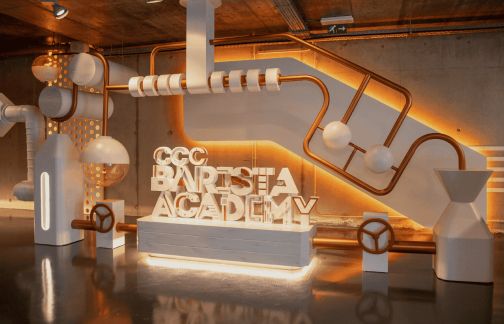
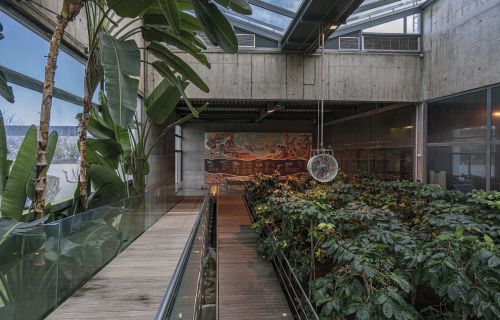
The inauguration of theCoffee Science Centre

— 2014 —

On Rui Nabeiro’s 83rd birthday, March 28, 2014, the former Museu do Café was transformed into the new Centro de Ciência do Café (CCC). Within just one year, it received the prestigious Portuguese Museum Award from the Associação Portuguesa de Museologia. The Coffee Science Centre serves as a venue for interpretation, scientific and technological outreach, and tourism promotion by Delta Cafés. Its primary goal is to become a leading reference for scientific, technological, educational, tourism, and cultural development. Situated in Herdade das Argamassas, the building spans a total area of 3,426 square meters across two floors. It features various exhibition areas, an auditorium, a shop, and, of course, a café. Visitors can embark on an interactive journey exploring the history, culture, and science of coffee—from the plant to the cup—through the Delta collection and its associated cultural heritage. Helena Nabeiro, director of the Associação do CCC, states, “The Centro de Ciência do Café aims to be a meeting place for people from diverse fields and interests. To achieve this, we provide a space for temporary exhibitions where, alongside science, we promote the dissemination of art and culture.”

2012
Direct operation in Brazil

First version

Launched in 2015

The coffee machines Made in Alentejo

Second version

Third version

Mayor has evolved over time. The most recent model produced in Campo Maior is from 2020 – Mayor Maxima. Commands are given through an App that switches the machine on and off, heats the cups, sets pre-infusion, and provides access to statistics and technical support.

TecniDelta, established in 1998 to provide technical assistance for coffee machines and other coffee equipment, expanded with the opening of TecniDelta II on February 4, 2015. This new facility, covering nearly two thousand square meters in Campo Maior, involved an investment of about one million euros and created 14 new jobs.

From this point forward, TecniDelta II would take over the production of coffee machines, which had previously been manufactured in Italy. The initial version of the Mayor machine took four years to develop, with extensive sketches and tests, but it was launched successfully in 2015. Designed for professional use in hotels, restaurants, and cafés, the Mayor machine features simple operation, low acquisition costs, and high reliability.

According to Rui Nabeiro, the machine is the culmination of years of collaboration with customers and coffee machines from around the world, aimed at delivering the best coffee experience in Portugal. Mayor coffee machines not only serve the domestic market but are also exported to countries such as Angola, France, Spain, and Luxembourg.

At the inauguration ceremony of TecniDelta II, João Manuel Nabeiro emphasized, “The coffee is Portuguese, and so are the machines. Beyond commercial exchange, the friendships built throughout this relationship are an important asset for Delta Cafés. If coffee is our calling card, I believe that these machines will also serve as one in our demanding task of internationalisation.”

Rui Miguel Nabeiro demonstrating how the Qoffe Qar robot works.

Rui Miguel Nabeiro demonstrating how the Qoffe Qar robot works.

The Delta robot that serves coffee at Web Summit

— 2016

The Qoffee Qar, the result of a collaboration between Delta Q and the Portuguese startup Follow Inspiration, was one of the highlights of Web Summit 2016 in Lisbon. This innovative robot, equipped with a coffee machine, used artificial intelligence and facial recognition to follow people and serve coffee without them having to look for it.

In addition to the Qoffee Qar, Delta Q – the event’s official coffee brand – developed fixed machines with translucent panels and LED technology, allowing visitors to observe the internal operation of the equipment. For Rui Miguel Nabeiro, this presence at Web Summit represented a strategic statement of the company’s innovative vision.

Resilience and solidarity in a time of pandemic

— 2020

In 2020, the Covid-19 pandemic brought a major challenge for Delta, with the Horeca sector recording a 30% drop. In response, Grupo Nabeiro launched several solidarity initiatives, such as producing protective equipment, distributing meals and essential hampers, and creating the Delta com Todos platform to support customers financially.

Despite the difficulties, the company remained active and innovative, with no cuts or layoffs, launching new products such as Mayor Maxima, Delta Slow Coffee and the cold drink Bruma, and establishing a partnership with Why Not to diversify the market.

Delta worker wearing a mask

Delta worker wearing a mask

Chapter IX/2021 — 

Chapter IX
2021
Chapter IX

The delta today

Sixty years ago we were 3 — today we are 3500.

Founded in 1961 in a small 50-square-metre warehouse, Delta has grown into an empire with a presence in more than 35 countries and around 3,500 employees. What began as a small coffee business has become a business group active in several areas, from food to hospitality, as well as the automotive and real estate sectors. Its success is due to the vision of Rui Nabeiro, who from the outset knew how to adapt to the market, winning customers in person, with a motto that still defines the brand today: “one customer, one friend”.

Over six decades, Delta has evolved steadily, guided by three core pillars: social responsibility, innovation, and sustainability. Social responsibility is reflected in its commitment to people, something Rui Nabeiro always upheld – for him, success is not accumulated, it is shared. Innovation has been a key driver in keeping the brand relevant and surprising the market, with distinctive products such as the biodegradable capsule Delta Q eQo.

Sustainability, present in Grupo Nabeiro’s strategy since the 1990s, has become even more of a priority, with measures such as the adoption of 100% renewable energy at the Novadelta factory, the electrification of the commercial fleet, and the ReciQla program, which promotes the recycling of used capsules.

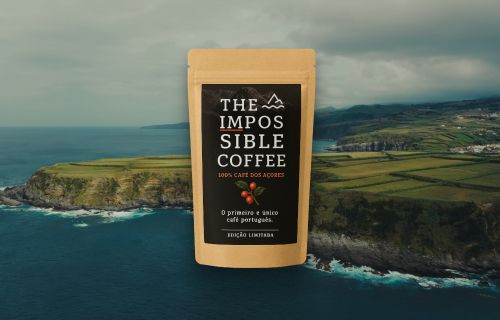
Looking to the future, Delta is also investing in coffee production in the Azores, in partnership with the regional Coffee Producers Association. This project will not only reduce the sector’s ecological footprint, but also enhance national resources, with the goal of introducing Azorean coffee to the market between 2023 and 2025.

Sixty years later, Delta continues to grow and innovate, while remaining true to its legacy. As Rui Nabeiro told his granddaughter in a recent interview, the family that carries this name has the responsibility to preserve what was built and to make it grow every day. The future of Delta is built with the same steady, rigorous, and courageous spirit that has always set it apart.
Rui Nabeiro

If we all wished for it, the world would be wonderful

Rui Nabeiro

1931 — 2023

Image
Image
Image
Image
Image
Image

Thank you, Sir Commander.

“Delta has become much more than a coffee brand: it has become a feeling, a brand with a soul.”

Inspiring the world has always been about more than just selling coffee. Rui Nabeiro believed that a company should exist to serve people, care for the community, and transform local connections into real value. He taught us that what is close can have a far-reaching impact — even on a global scale.

His simple yet powerful vision continues to resonate today: quality infused with soul, business conducted with humanity, and innovation grounded in responsibility. Rui Nabeiro’s legacy is not merely a brand; it embodies a way of life that unites generations, fosters connections, and positions Delta as a gathering place for friends.

Today, our mission remains unchanged: to inspire the world to become an extraordinary community through our coffee.

Image
Image
The Delta Coffee House Experience arrives in Paris in 2025, after transforming the neighborhood coffee experience.

The Delta Coffee House Experience arrives in Paris in 2025, after transforming the neighborhood coffee experience.

Image

The Coffee House Experience is where coffee brings people together

— 2021

Delta The Coffee House Experience was established in 2021, with locations in Lisbon and Porto, to redefine how we enjoy coffee. More than just a place to have an espresso, these coffee houses provide light meals, brunch, and drinks throughout the day in a welcoming environment that encourages customers to pause and savor their time. Amidst rich aromas and thoughtfully designed decor, visitors can explore various brewing methods, including specialty coffee and slow coffee techniques, transforming the ritual into a unique experience. Open daily from morning until night, the concept offers an extensive selection of coffees and beverages, along with diverse food options, ranging from artisanal breads and cheeses to homemade yogurts, scones, and carefully prepared eggs. In addition to café and restaurant services, the venues also sell coffee-related products and host workshops, enhancing Delta’s connection to culture and promoting the joy of sharing each cup.

Philippe Starck challenges conventional ideas about coffee making to create something remarkable.

— 2022 —
New Delta Q RISE machine by Philippe Starck

New Delta Q RISE machine by Philippe Starck

(The espresso of the future)

Delta Q Rise was created to transform our home coffee experience by combining innovation, design, and sustainability in one seamless gesture. The exclusive RISE (Reverse Injection System Experience) breaks with tradition by injecting water from the bottom up, which enhances the flavour and aroma, resulting in a more intense and balanced cup of coffee.

Designed to be both practical and elegant, the machine reflects Delta’s commitment to making technology accessible and providing affordable quality for all coffee lovers.

More than just a machine, Delta Q Rise symbolizes the evolution of a brand that believes in the power of innovation to bring people together. With its modern design, energy efficiency, and intuitive operation, it represents the future of capsule coffee. Each cup prepared with Delta Q Rise embodies the legacy of Grupo Nabeiro and its goal of inspiring moments of sharing, connection, and genuine pleasure, both at home and in public spaces.

In the Azores, coffee flourishes between the sea and the mountains

— 2023

The Projeto Açores marks a historic milestone as, for the first time, Portugal has begun producing coffee on its own soil. Launched by Delta in 2019, the project tested different coffee varieties and regenerative agricultural practices that are suited to the unique climate and soils of the Azores. In 2022, a technical study was presented to the Regional Government, and by October 2023, the first batch of coffee grown entirely in the Azores was released.

This project not only represents innovation but also promotes sustainability and national pride. Producing coffee in Portugal opens new opportunities for local agriculture, generates economic value in the region, and positions Delta as a pioneer in exploring this new path in Europe. It combines agricultural science, respect for nature, and a vision of creating products that resonate with the community and reflect Portuguese culture.

Image

Documentary about the coffee‑producing families in the Azores

Image

Towards  Our commitment for the next decade: securing a place among the world’s Top 10 coffee companies.the  World's  Top  10 

Facts of
season
1 / 7
Image

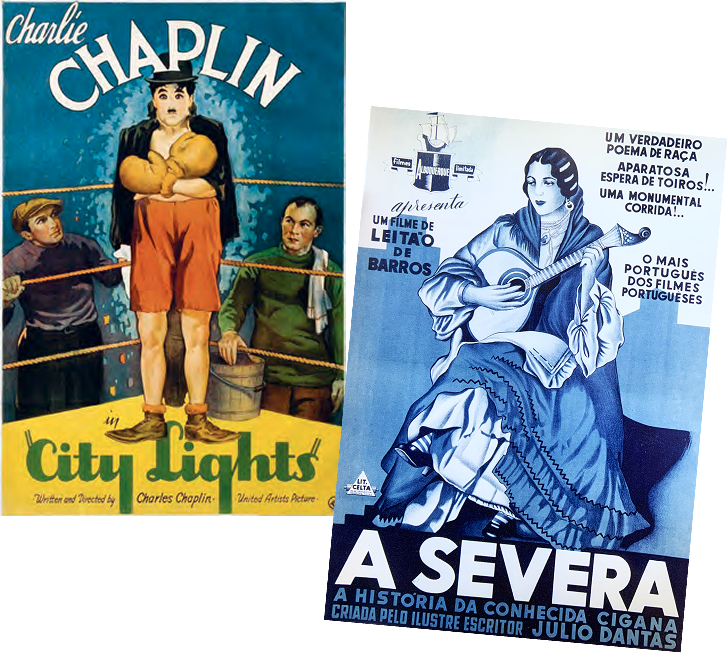
Two films that defined the year:

City Lights and Severa

In that year, while the world enjoyed Chaplin’s film City Lights, Portugal celebrated a major milestone with the premiere of its first sound film, A Severa, directed by Leitão de Barros.

Facts of
season
2 / 7

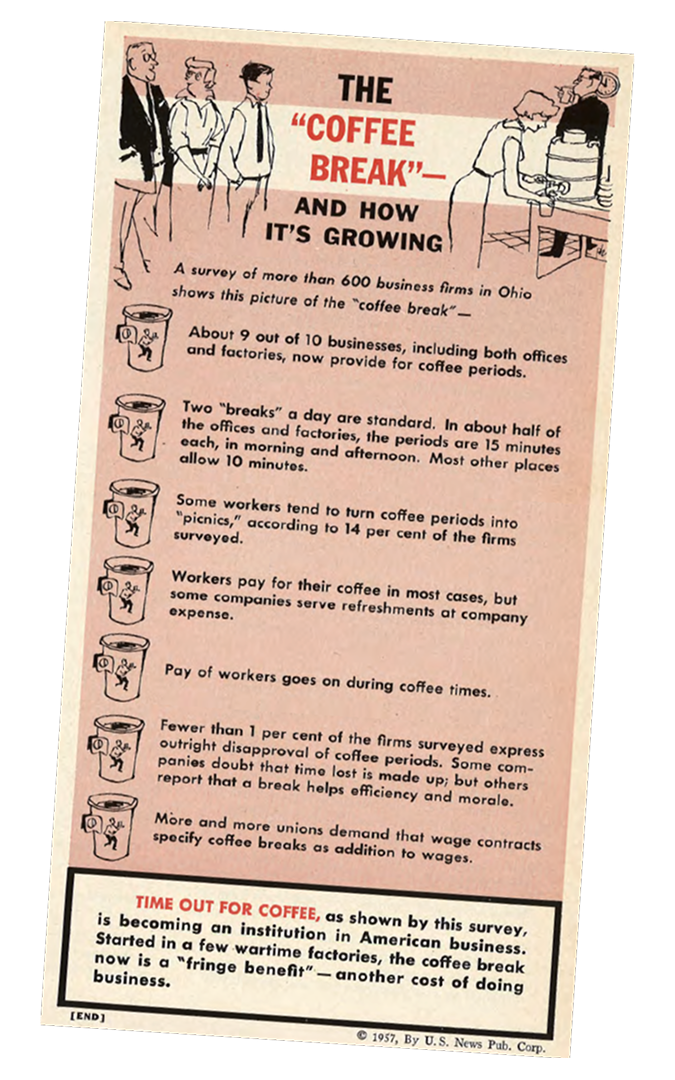
International Fashion:

The Coffee Break

The concept of the coffee break is believed to have originated in 1880 in the small town of Stoughton, Wisconsin, which still hosts an annual festival in its honour.

The women, primarily of Norwegian descent, who worked at the local tobacco factory would leave their stations once or twice a day to take a break, returning refreshed. As production demands grew, this break was formalized and extended to all workers.

Image
Facts of
season
3 / 7
Image

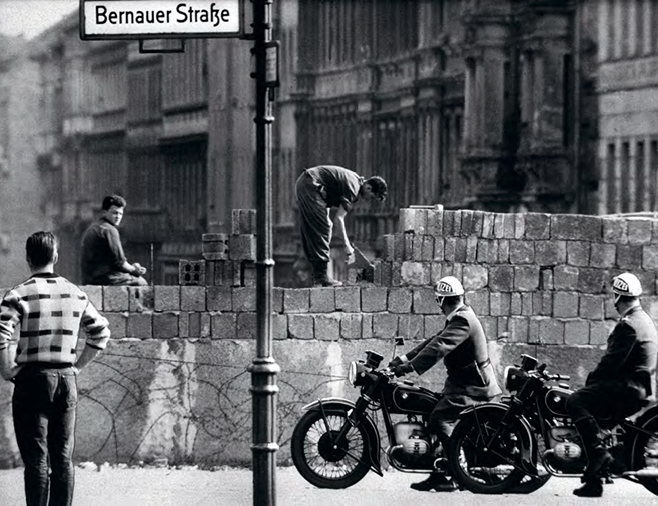
Construction of the Berlin Wall begins

In the early hours of August 13th, the Wall is built, creating a division between the western and eastern zones of Berlin that will last for the next twenty-eight years. This structure spans 66.5 kilometers and includes 302 watchtowers and 127 electrified metal barriers. It is patrolled by East German soldiers, who have been ordered to shoot anyone attempting to escape to the western sector of the city.

Facts of
season
4 / 7
Image

Twenty homes for Delta workers (and their families)

For posterity, the commemorative plaque remains, inscribed: “To His Excellency, Mr. Manuel Rui A. Nabeiro, with gratitude from the employees he made it easier for to acquire these homes.”

Facts of
season
5 / 7
Image

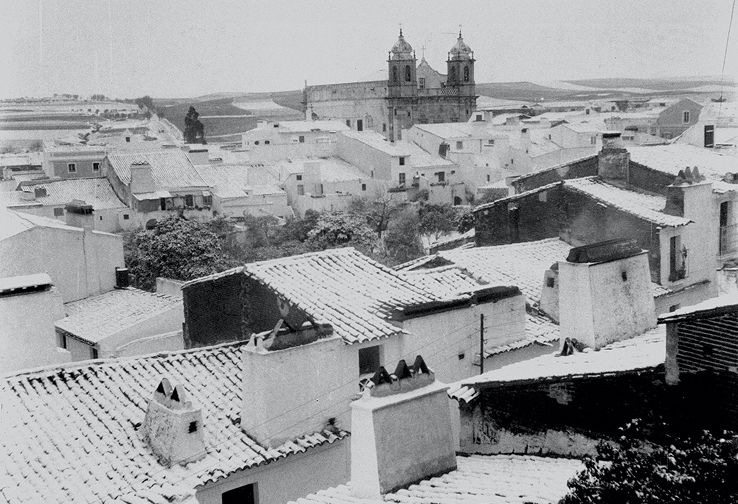
Campo Maior dressed in white

Snow has blanketed the village multiple times in the last century. People recall games interrupted, falls in the streets, and sardines that nearly froze.

Facts of
season
6 / 7
Image

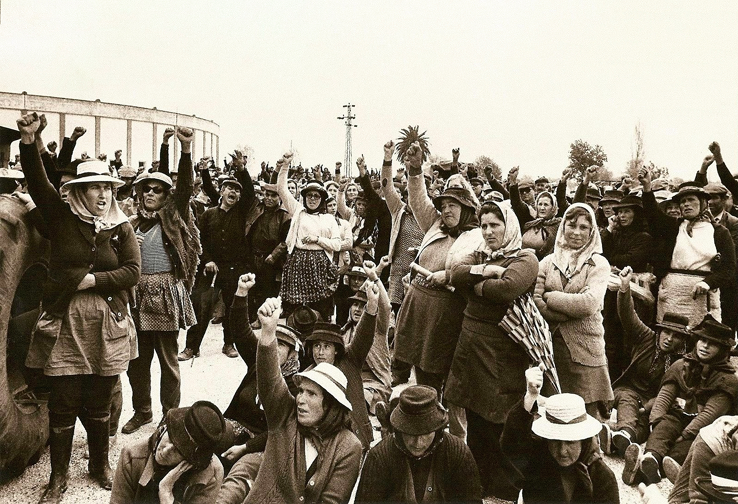
25 April in Campo Maior

Following the 25th of April revolution, Campo Maior experienced significant social and economic changes. Small groups attempted to seize control of Delta's roasting plant, but Rui Nabeiro, with the support of the workers, successfully prevented the occupation. The company continued to grow, providing jobs for many individuals, including an increasing number of women, who had been part of Delta's workforce since the 1960s. Maria Alcide Caramelo, one of the company's earliest employees, began working in the factory and, in 1974, became the first woman to work in the goods warehouse, where she remained until 2015.


Facts of
season
7 / 7
Image

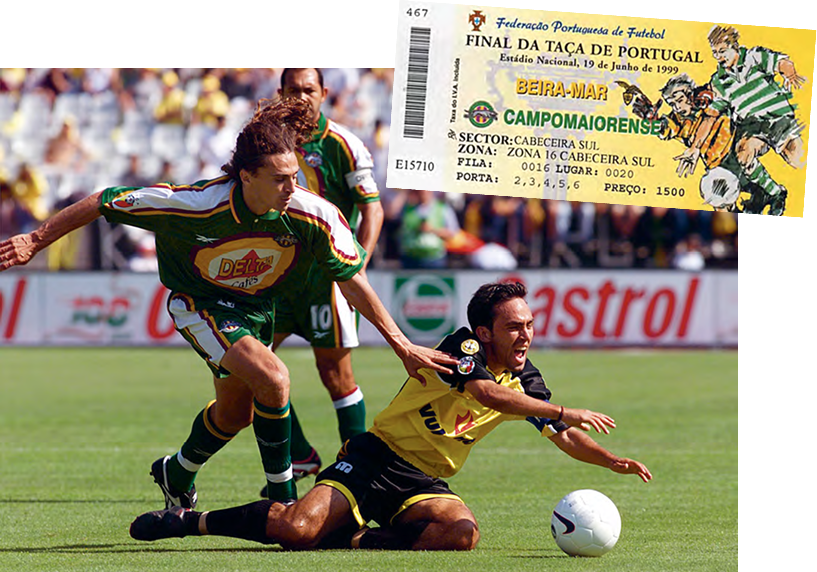
Celebration at Jamor: Campomaiorense reaches the Taça de Portugal Final

Under the presidency of João Manuel Nabeiro, Sporting Clube Campomaiorense experienced rapid growth in the 1990s, with notable achievements such as promotion to the 1st division in 1995 and a historic appearance in the Taça de Portugal final in 1999. Despite the defeat to Beira-Mar, the celebration and unity of the supporters, who filled Jamor to capacity, stand out as one of the greatest moments for the region, more than the result of the match itself. For João Manuel Nabeiro, the true victory was the celebration and the shared experience of the fans.

Image
Image
Image
Image

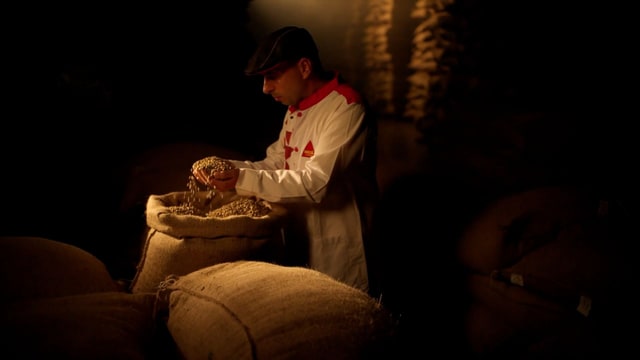
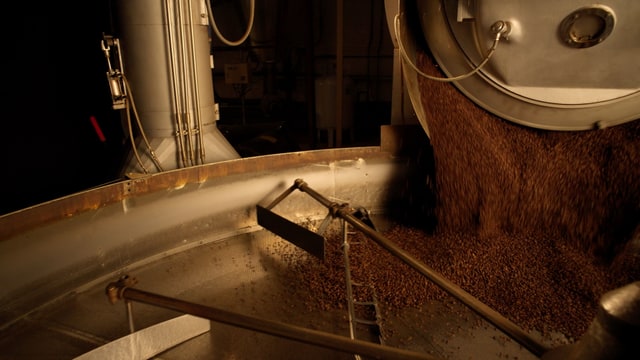
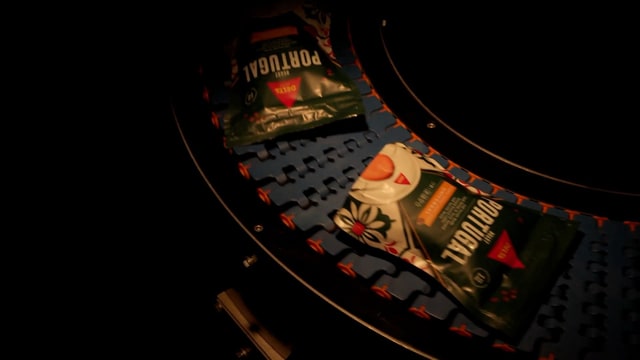
Coffee Cycle

OriginsRoastBlendConsumption

Qual é o café que combina consigo?

Faça o Quiz
Delta — Delta Cafés