To mark the 10th anniversary of CCC, we present 10 key works from its collection and the same number of reasons to visit.
Video
Helena Nabeiro
At the Centro de Ciência do Café since the first day
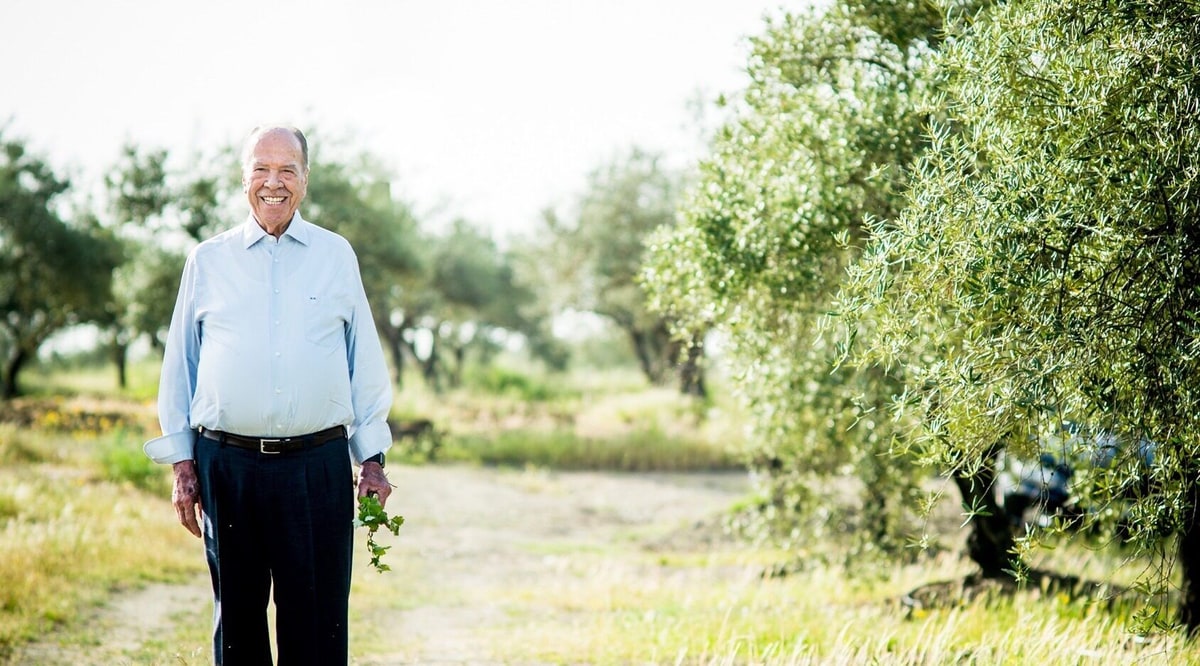
The Centro de Ciência do Café was a long-held dream of Rui Nabeiro, fulfilled on the day he turned 83, on 28 March 2014. “I am a dreamer of knowledge. Each person owns their own attitude, and mine is knowledge and sharing it with other people,” he stated at the inauguration of the 3,500-square-metre building designed by architect João Simão.
The glazed façade facing the Adega Mayor vineyard, next to the Delta factory facilities, two minutes from Campo Maior, marks the evolution of the former Museu do Café – expanded, modernised, and transformed – into the Centro de Ciência do Café, exactly 10 years ago. And it took only one more year for it to be recognised by the Associação Portuguesa de Museologia with the Prémio Museu Português, a distinction earned by those who have cared for the Centre from the beginning and by its team: Helena Nabeiro.
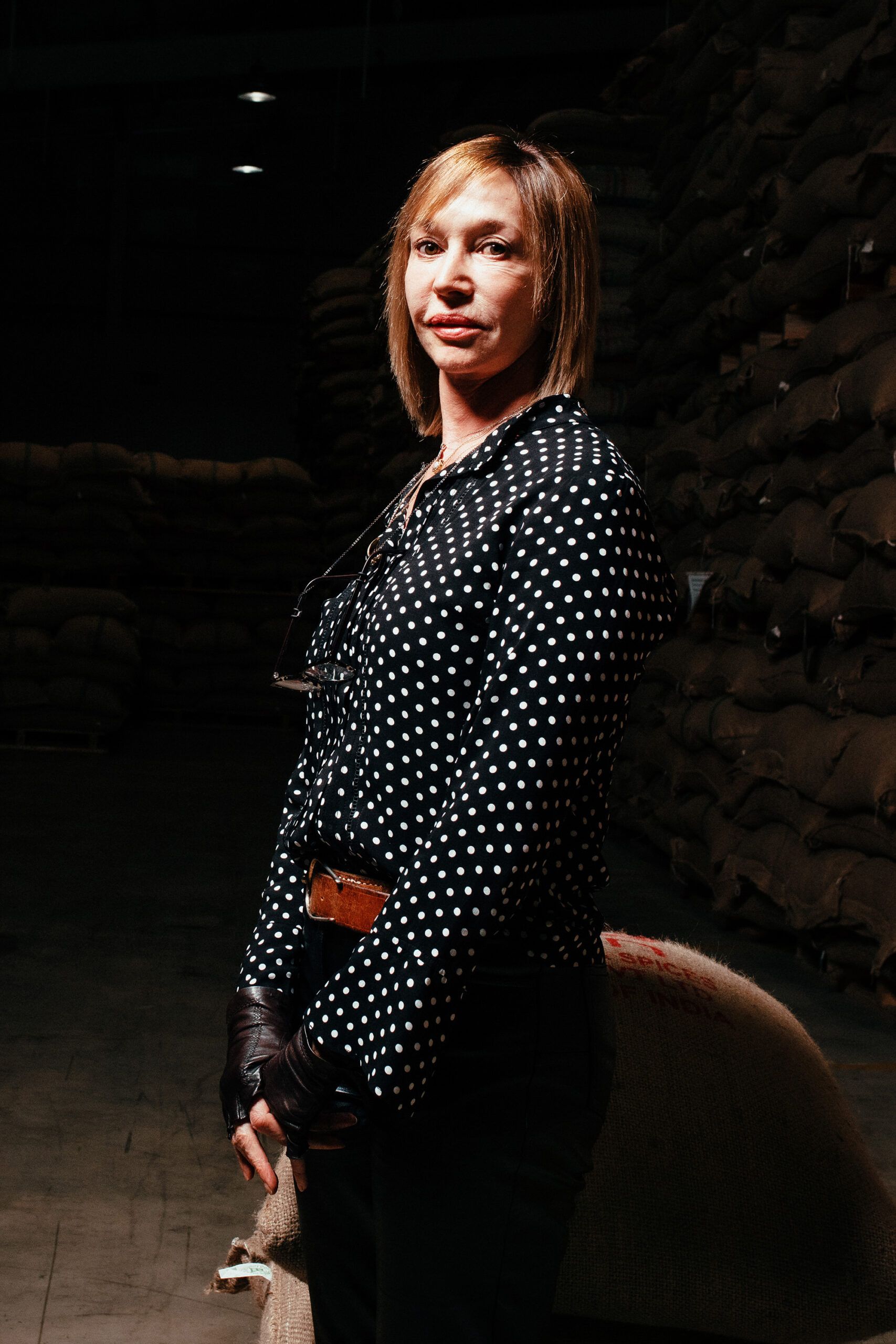
The current interpretation and science and technology outreach centre is one of the projects that the administrator of Grupo Nabeiro has embraced with greatest dedication. It was already so before the Centre became a Centre – it was Rui Nabeiro’s daughter who was given the task of inaugurating the former Coffee Museum, in December 1994. For almost 30 years, Ms. Lena – as her friends call her – has been responsible for everything related to the Group’s museum space, its activities, temporary exhibitions, and the curation of the permanent collection.
“Centro de Ciência do Café aims to be a meeting place for people from many different fields and interests,” explains the manager, “offering for this purpose a temporary exhibition space where, side by side with science, we intend to promote the dissemination of art and culture.”
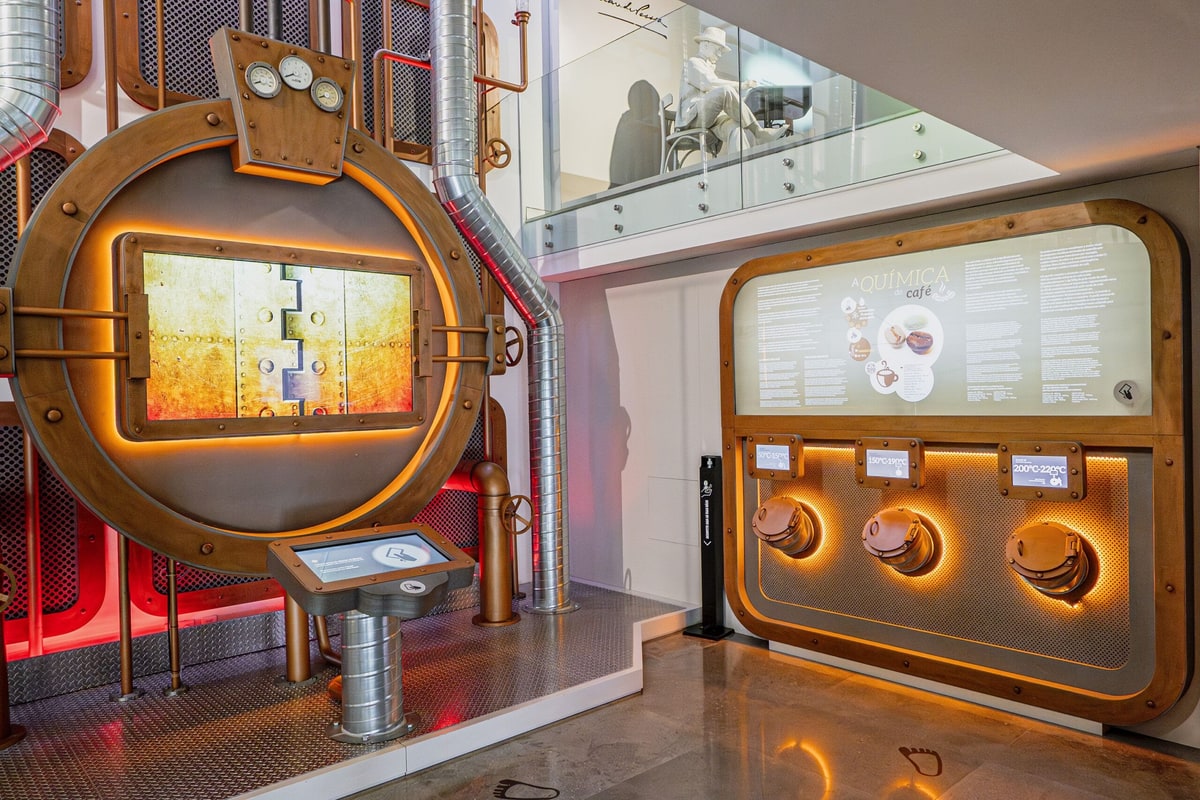
It is a space designed for all visitors, with interaction, multimedia components, and exhibitions that tell the story of coffee and everything around it. At the entrance, the floor shows the footprints of the Mico Estrela, a small rodent that is a frequent visitor to coffee plantations in Brazil and the mascot of the Centro de Ciência do Café. Its footprints mark the route. Let us follow them.
"CCC aims to be a meeting place for people from many different fields and interests," says Helena Nabeiro, "offering for this purpose a temporary exhibition space where, side by side with science, we intend to foster the dissemination of art and culture."
Fauna and flora
Like a coffee plantation, but indoors
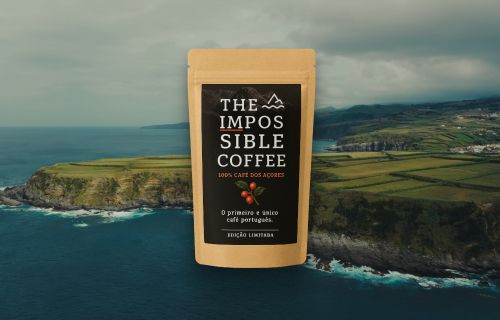
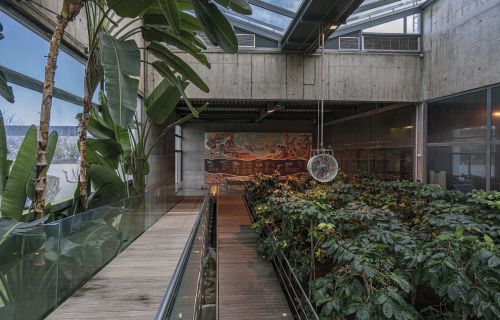
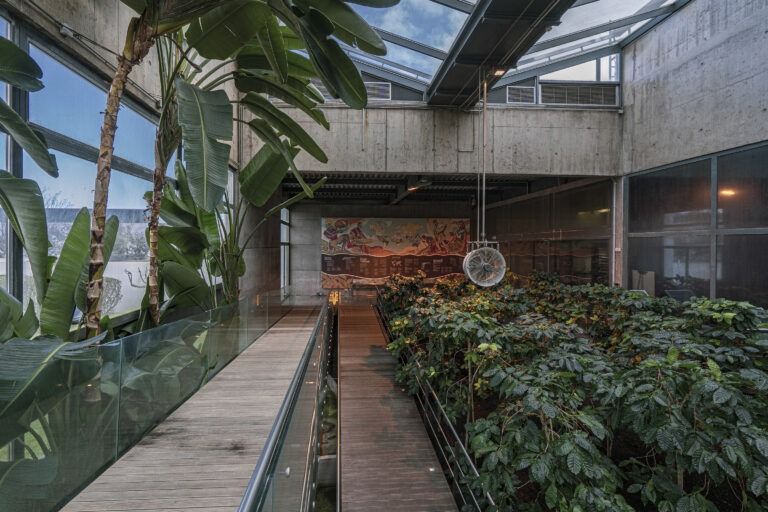
The Mico Estrela footprints first lead us to the greenhouse area, where the humid climate of a coffee plantation is recreated, with striking coffee trees of the arabica and robusta species. Here, visitors can see something unique in Europe: coffee plants bearing the fruits that will become the green beans to be roasted, ground, extracted, and served in a cup. It is something unique, but only in mainland Portugal, since in the Azores archipelago the climatic conditions now allow Delta to do something once thought impossible: produce coffee at scale.
Beyond the heat and humidity in the air, and the smell of the soil, twice a year the greenhouses gain an added interest: the chance to see coffee trees in bloom in person. It is a phenomenon that lasts only three days, says Cristina Gameiro, museologist and curator of the Centro de Ciência do Café.
The experience is complemented by infographics and supporting texts placed throughout the Centre. In this case, they explain planting systems, pruning, soil conditions, the coffee cherry, the harvest, and what happens next to the coffee beans. “People also come to get to know the plant, the flower, the fruit, and to become aware of that tropical climate.”
With the question of flora resolved, the focus turns to fauna. As visitors leave the greenhouse, passing walls lined with encyclopedic information about coffee culture around the world and the largest producing countries, a smaller room invites a closer look. It is the insectarium room, which reveals the insects found in coffee plantations. “Each one has its role,” explains the museologist. “We have the good insects and the bad ones, those that introduce pests and those that clean the roots of the coffee trees, eat the rotten fruit, and pollinate the plants.” As a point of interest, all the insects on display come from Portuguese‑speaking coffee‑producing countries, such as Angola, São Tomé, or Timor.
Beyond the heat and humidity in the air, and the smell of the soil, twice a year the greenhouses gain an added interest: the chance to see a coffee plant without blossom in person. It is a phenomenon that lasts only three days.
The history of coffee…
From the origins of the drink to its arrival in Portugal
The route offers visitors several sensory experiences, such as stepping into the role of a green coffee bean during roasting by entering a roasting sphere that simulates the process. Before that, however, a short animated film of just seven minutes, The Legend of Kaldi, presents the ancient origins of coffee, which emerged in the 14th century in the so‑called “Horn of Africa”, most likely in Ethiopia.
We reached the upper floor, the wing dedicated to History, explaining how Portugal, although not a producer, has a long tradition in coffee. The short answer is: it was in the reign of King João V, at the beginning of the 18th century, that the coffee trade began to develop. Here is the long answer: because the king, having learned that the French and the English traded coffee in international markets, unlike the Portuguese, sent Francisco de Mello Palheta to French Guiana with the mission of taking coffee plants to Brazil, where the climate would be favourable for production.
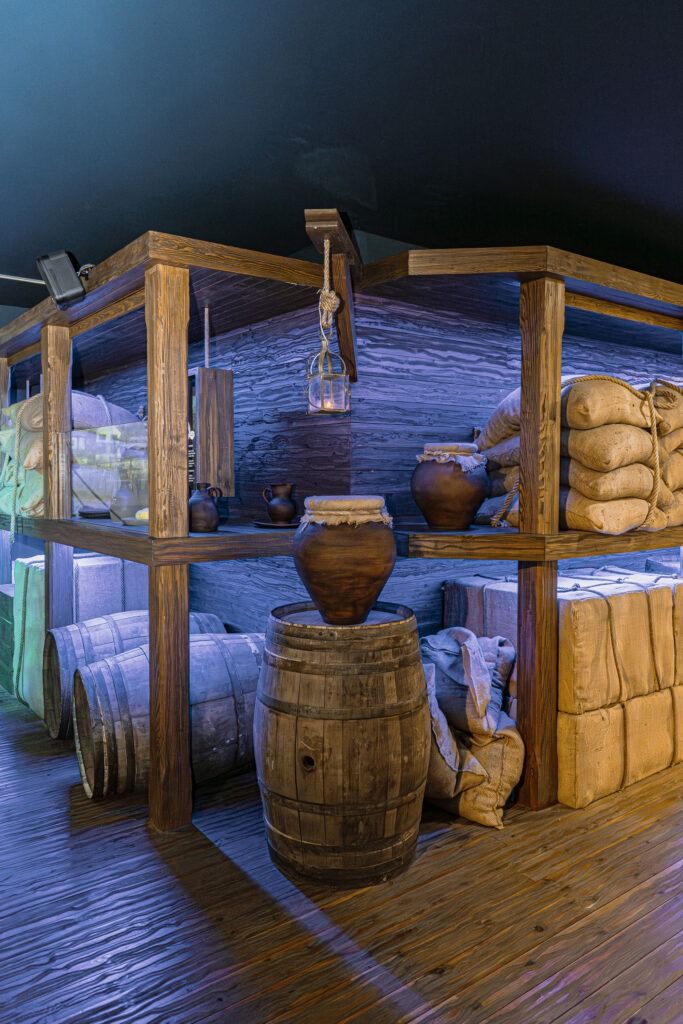
"It is said that Francisco de Mello Palheta arrived in French Guiana, but he could not get the governor to sell him the plants. However, during his stay he formed a strong relationship with the governor’s wife, and it was she who, when she realized he was going to return to Brazil without the plant, offered him a bouquet of flowers – and hidden in it were the little cherries, the fruit that yields the coffee seeds," says Cristina Gameiro, who holds a degree in History and a postgraduate qualification in Museology. "Even today the Palhete coffee brand is still sold in Brazil."
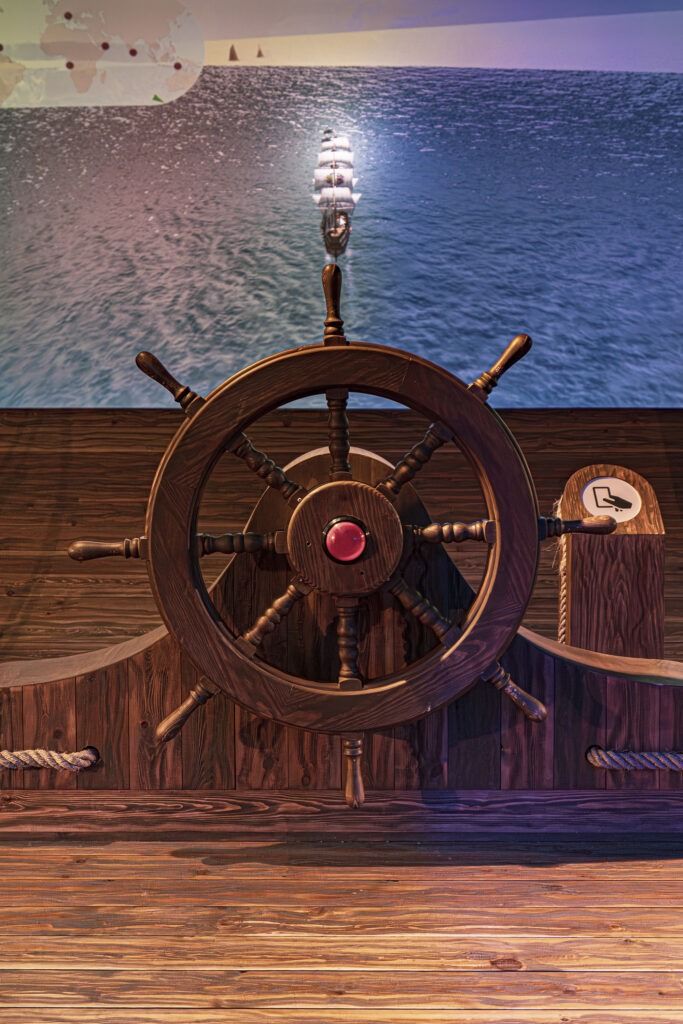
An interactive video simulates sea voyages on board a galleon. As they travel from port to port, visitors learn a little history. They learn, for example, what life on board was like. The food that rotted. The importance of the water carrier, the person responsible for rationing and distributing water to the crew. They also learn – or are reminded – that it was not only coffee that came from the colonies to the capital of the empire: in different periods of Portuguese maritime expansion, the ships arrived loaded with gold, diamonds, spices, cocoa, or enslaved people. An interactive video simulates sea voyages on board a galleon. As they travel from port to port, visitors learn a little history.
… and coffee in history
From the most emblematic cafés to smuggling on the border
For Cristina Gameiro, one of the main attractions of the Centro de Ciência do Café (https://www.centrocienciacafe.com/pt) is the interactivity and modern character of the space and its museography. All the content was designed in a didactic and playful way so that people of all ages can learn while they enjoy themselves. “The space is 10 years old and during this period it has been constantly improved, the software updated, and the heritage preserved in the best possible condition.”
An example of this is the table placed in front of a green screen in the historic cafés area. Visitors are invited to sit down and have their photograph taken with a digital background that virtually transports them to the country’s most emblematic cafés, such as Majestic in Porto, Martinho da Arcada in Lisbon, or Luiz da Rocha in Beja. The photograph is sent automatically to their email or social media. “It serves to remind us that cafés once meant much more than simple places to have a drink,” he says. “Today they are very focused on tourism, but in the past they were meeting points for politicians, intellectuals, artists, students, and businesspeople.”
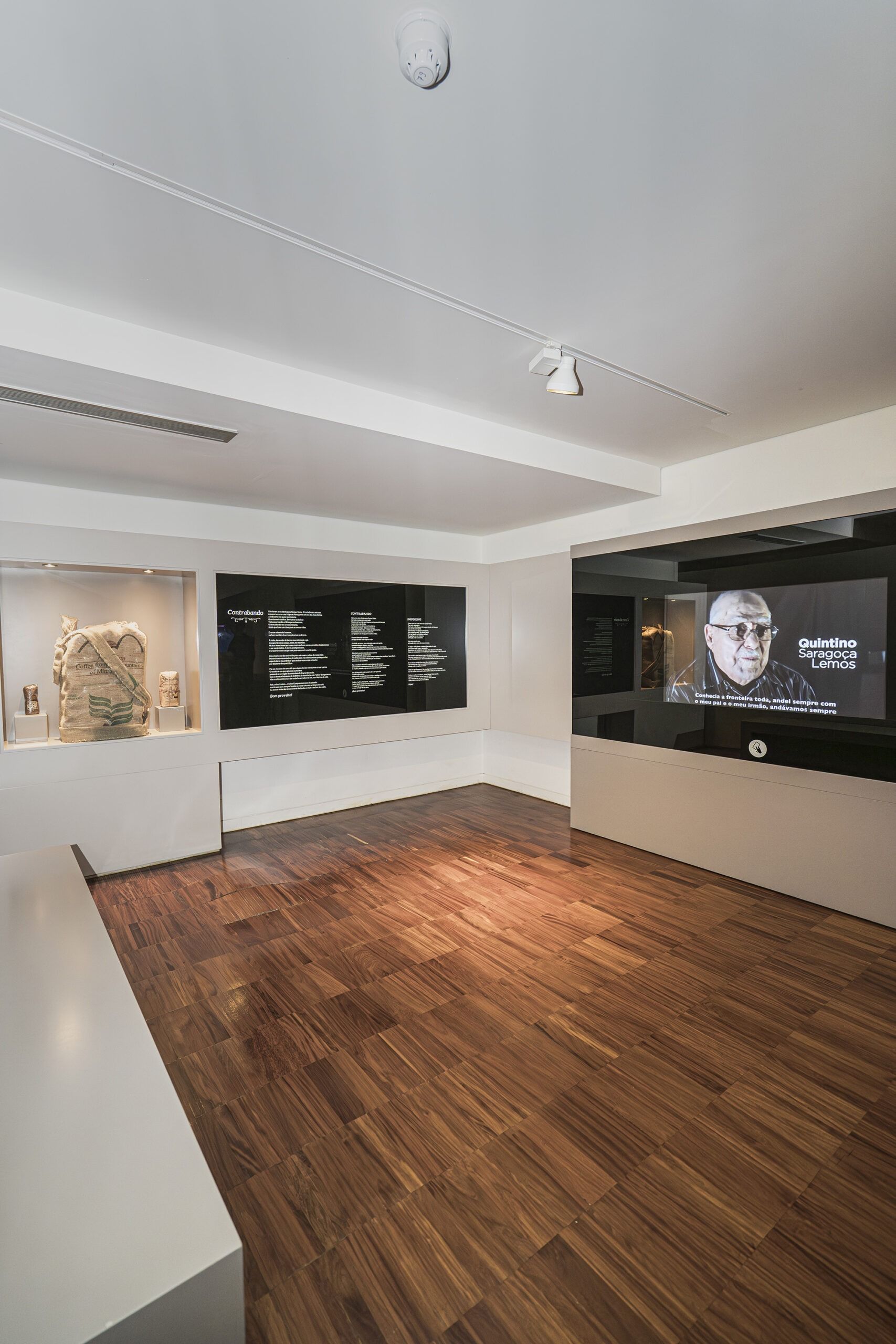
In another room, still on the upper floor, you can hear the stories of those who devoted their lives to coffee smuggling, an activity that supported entire families in a time of hardship, from the 1930s to the 1960s. “Smuggling along the border was the foundation of economic development not only in Campo Maior, but across the whole region,” the museologist recalls.
Here the analogue merges with the digital. At one end there is a coffee sack with an adapted handle that allowed it to be carried like a backpack, and the belt-sling that could hold one kilo – if the guards appeared, the sack was dropped to speed up the escape, but not the belt. At the other end there is a video game for two players, in which we become smugglers: the goal is to follow a route while escaping the guards, until the players manage to get coffee across the border. The faster they are, the more points they earn.
In another room, still on the upper floor, you can hear the stories of those who devoted their lives to coffee smuggling, an activity that supported entire families in a time of hardship, from the 1930s to the 1960s.
The former museum
Art, culture, and the collections on display
“Of all the cafés in the world, you had to walk into mine,” says Humphrey Bogart’s character to Ingrid Bergman’s in Casablanca. In La Dolce Vita, Federico Fellini shows the lively cafés on the elegant streets of Rome. The actress Jeanne Moreau gives one of her finest performances in The Lovers of Montparnasse, which showcases the historic Café Domme, a classic among Parisian cafés. These are only three examples of cafés that have left their mark on the seventh art. An interactive panel on the ground floor shows film scenes – from these and others – in which movie stars share the spotlight with cafés.
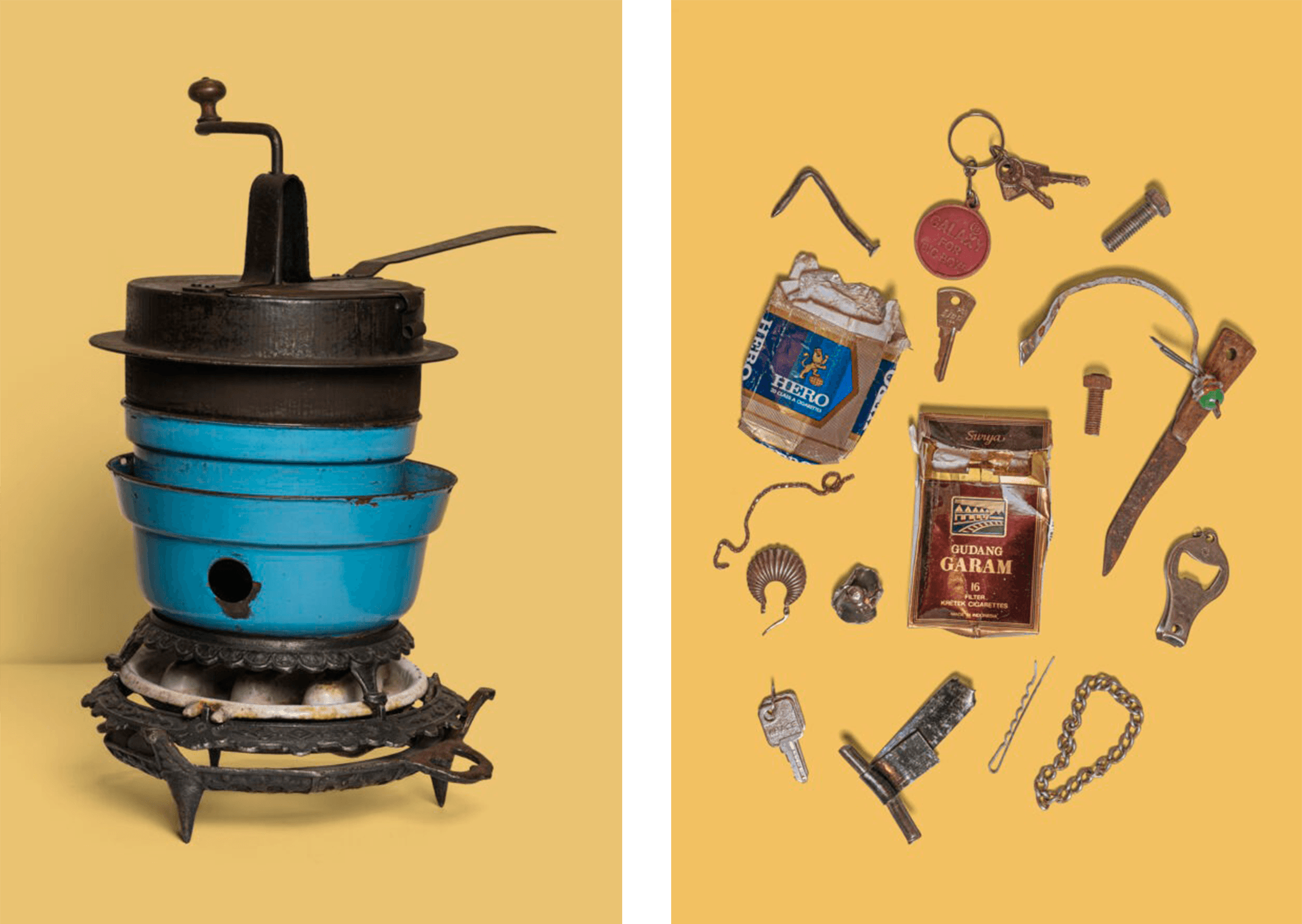
After the film session, visitors enter the museum space of the Centro de Ciência do Café, where collections of historical, cultural, and technological objects associated with coffee are on permanent display. It has been this way since the days of the Museu do Café, which operated between 1994 and 2014, the year CCC opened. “We moved from an old museum with 800 m² to this Centre with 3,500 m²,” notes Cristina Gameiro, who began her connection to Grupo Nabeiro precisely in 1994.
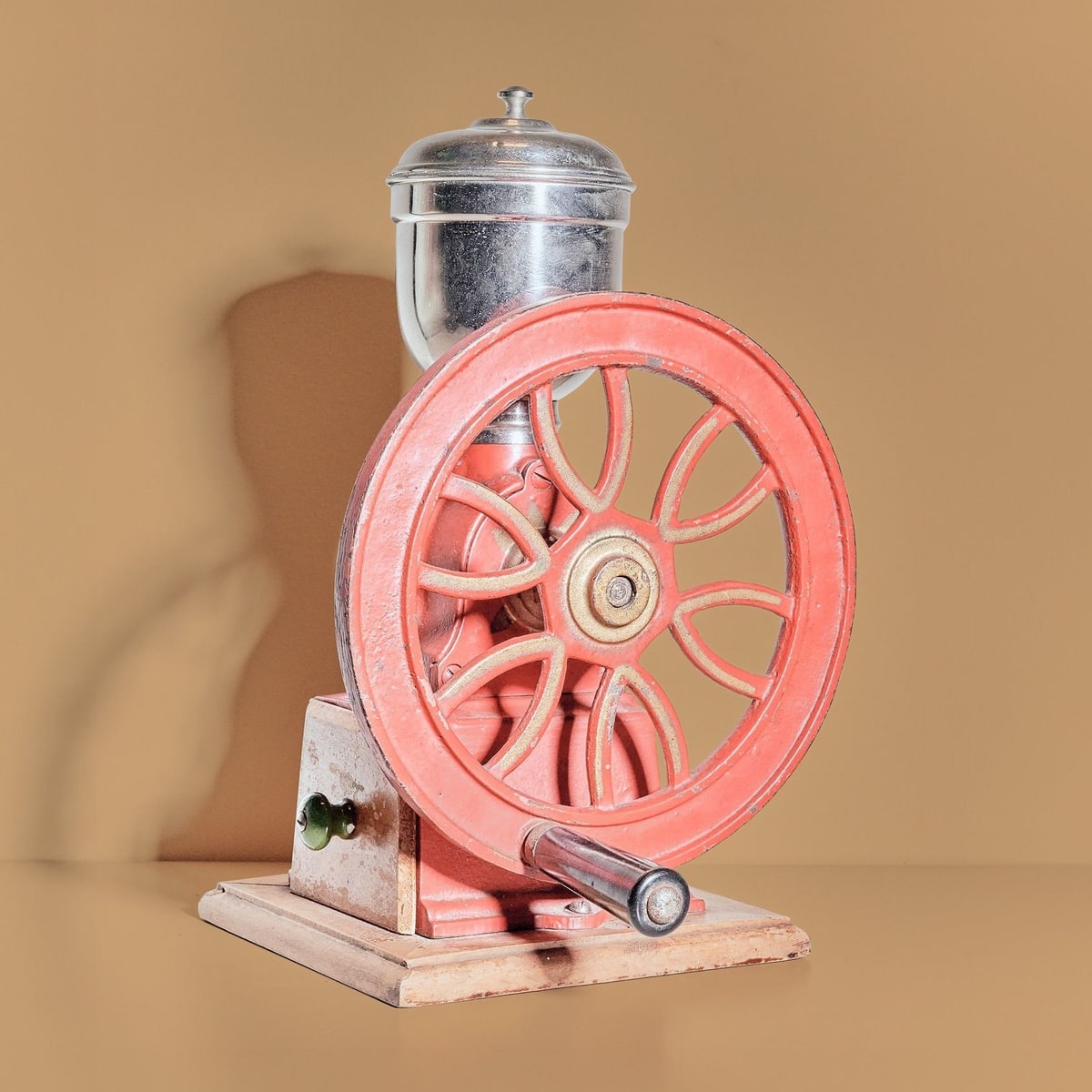
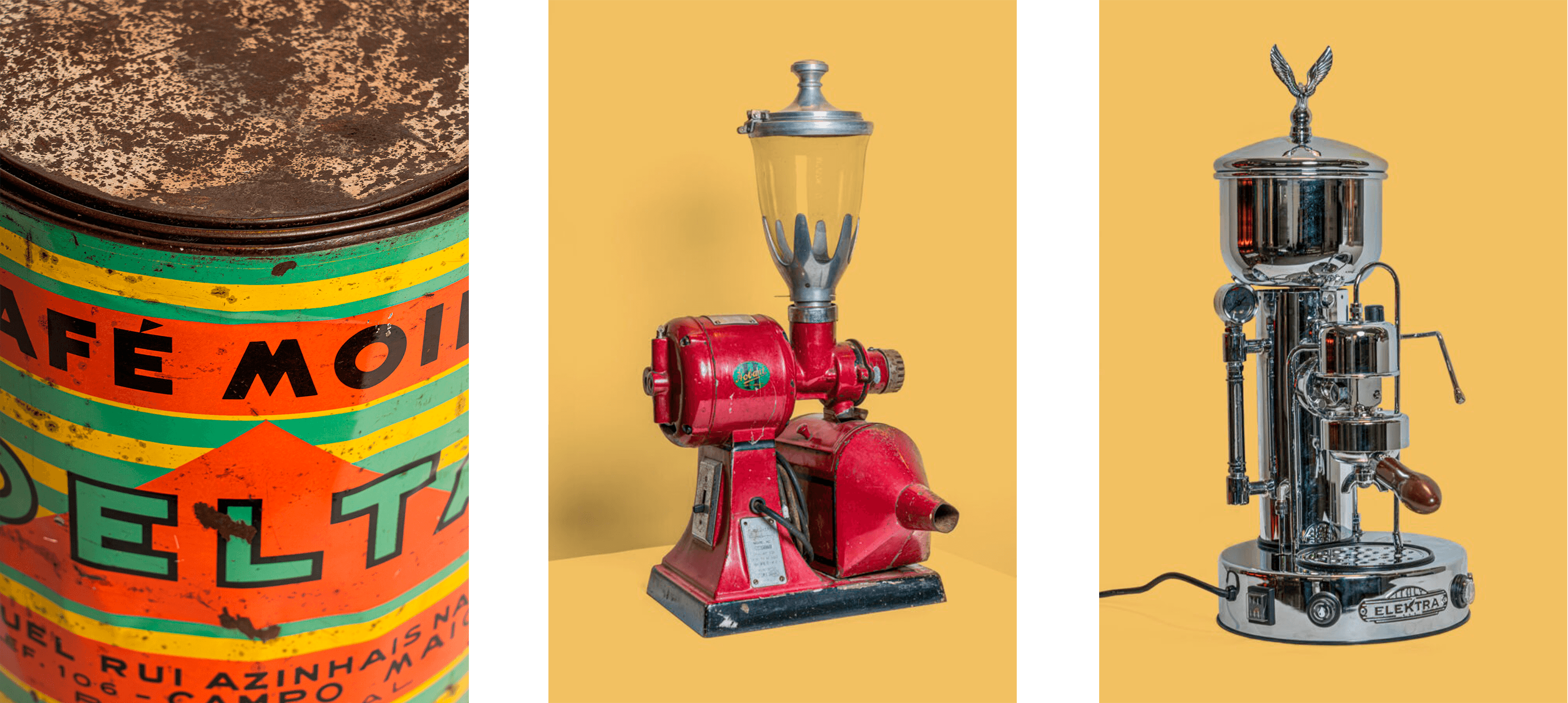
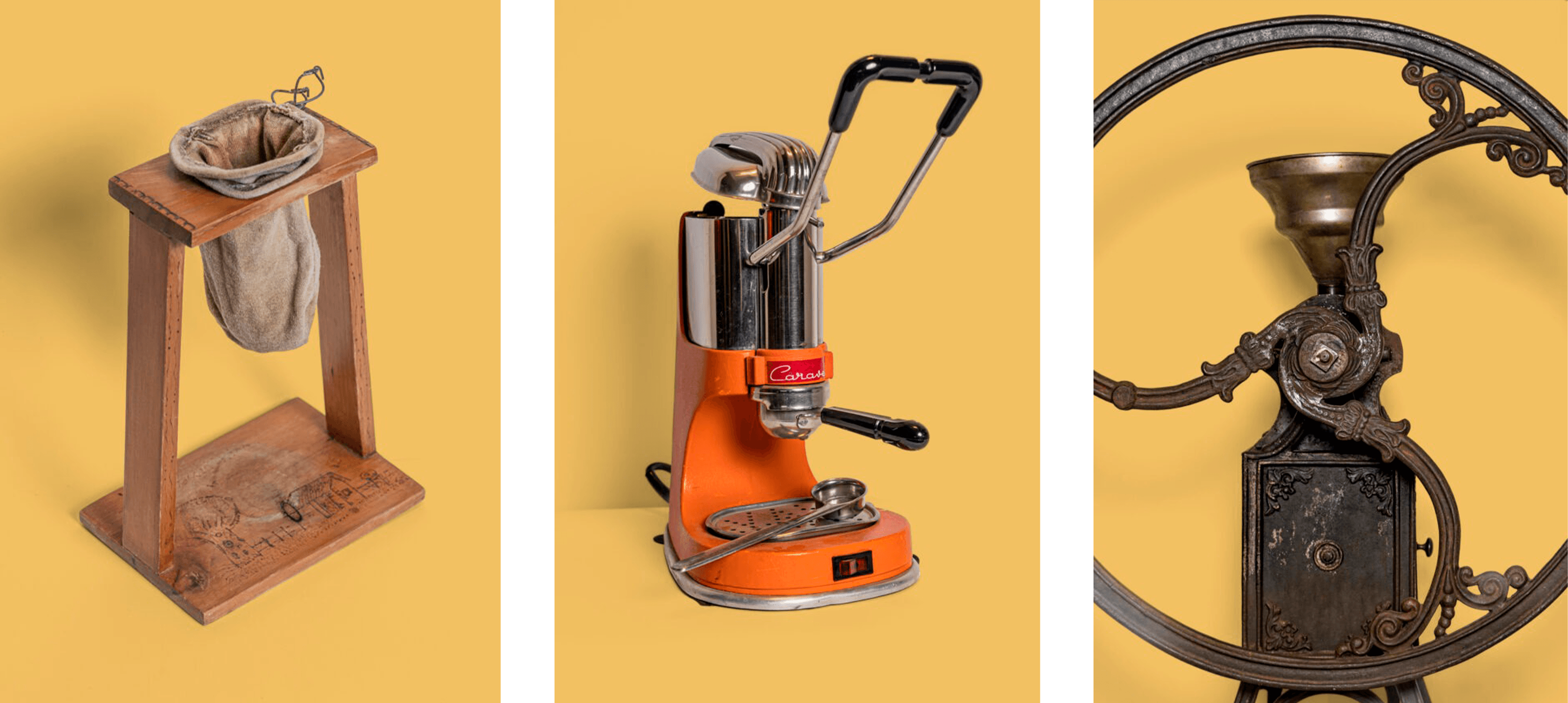
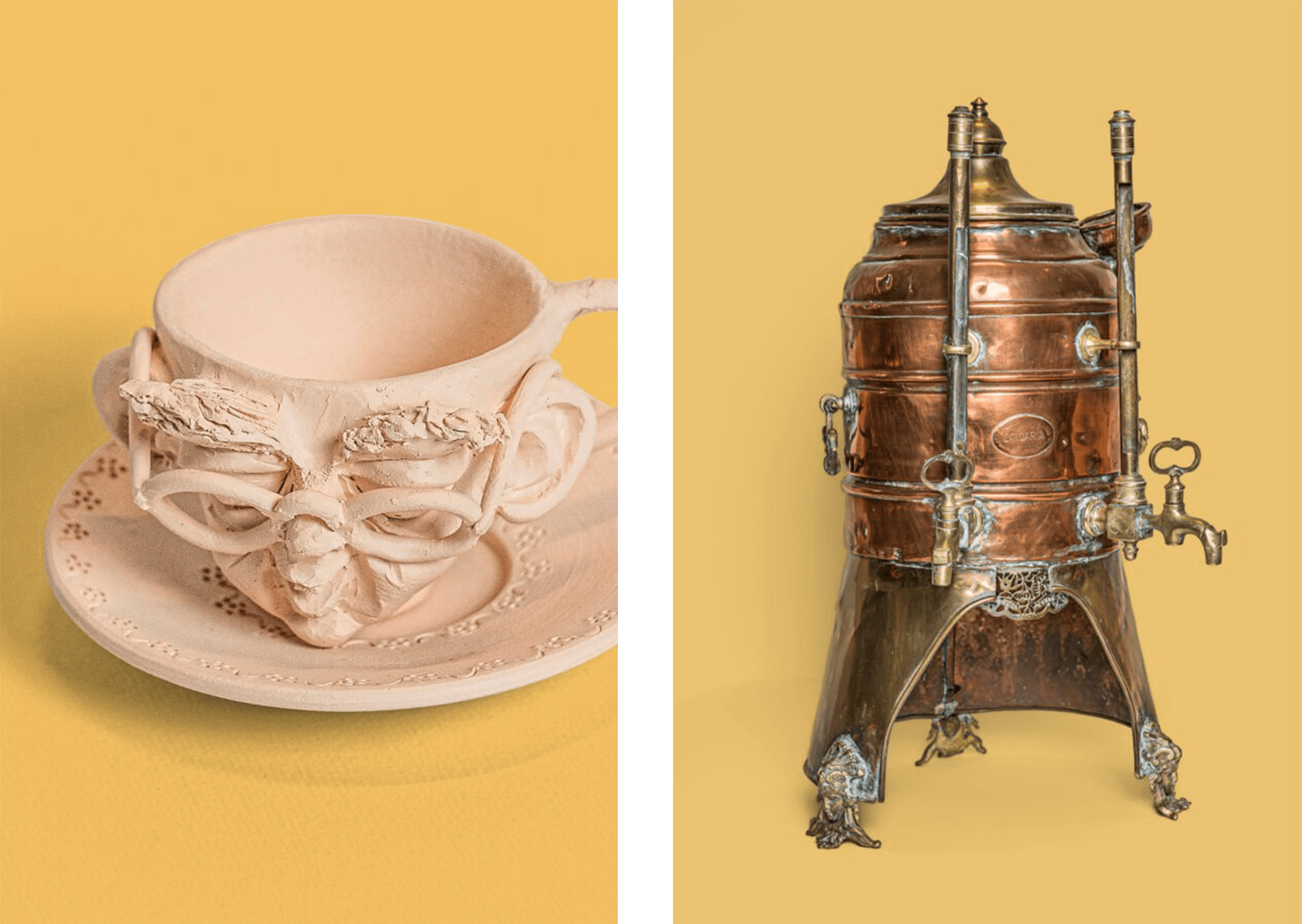
The Museum collections – such as old roasters, grinders, sack coffee machines, balloon machines with oil lamps, and other domestic and industrial coffee machines – were moved to the Centre. On display is Delta’s heritage, such as the first earthenware cup from the 1970s, but also many cups from competitors, because, as the museologist explains: “This is not the Delta Science Centre, it is the Coffee Centre.”
Again on the upper floor, but now above the reception and facing the vineyards, there is a space that hosts temporary exhibitions. There is also a small library dedicated to the usual theme, with specialist books and magazines, and a reading room.
The Museum collections – such as those of old roasters, grinders, sack coffee machines, balloon machines with oil lamps, and other domestic and industrial coffee machines – were transferred to the CCC.
Sensory experience
The Coffee Science Centre is a place to experience with all your senses.
At the Aroma Table, visitors face a blind test. “It is no different from a wine tasting,” says Cristina. The difference is that nothing is drunk; everything is smelled. Under each tap on the table, there is a mirrored surface and a button. When the button is pressed for the first time, a scent is released. You bring your nose close and try to identify it. Vanilla, mint, hazelnut, jasmine, cinnamon, and lemon are the options. Think you know it? Press a second time and the mirrored surface reveals the answer.
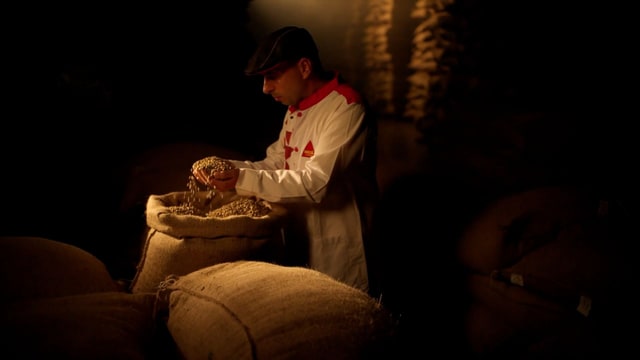
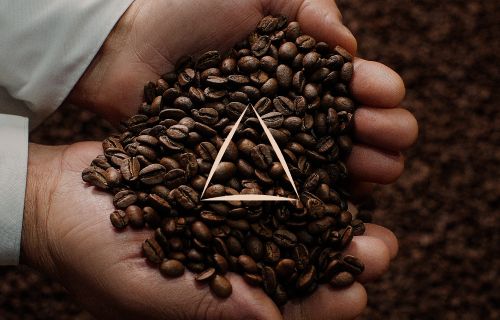
After using your sense of smell, it is time to see with your hands. That is, to fill your hands with coffee beans of the arabica, robusta, and mocca varieties, and to feel the differences. And nearby, continuing to engage the senses, there is a sensory analysis of the coffee, exactly as the Delta technicians carry out in the laboratory to assess the quality of the beans. Visitors are invited to taste 100% arabica coffee and 100% robusta coffee. The spittoon is only used if you wish, but be aware that it is part of the process.
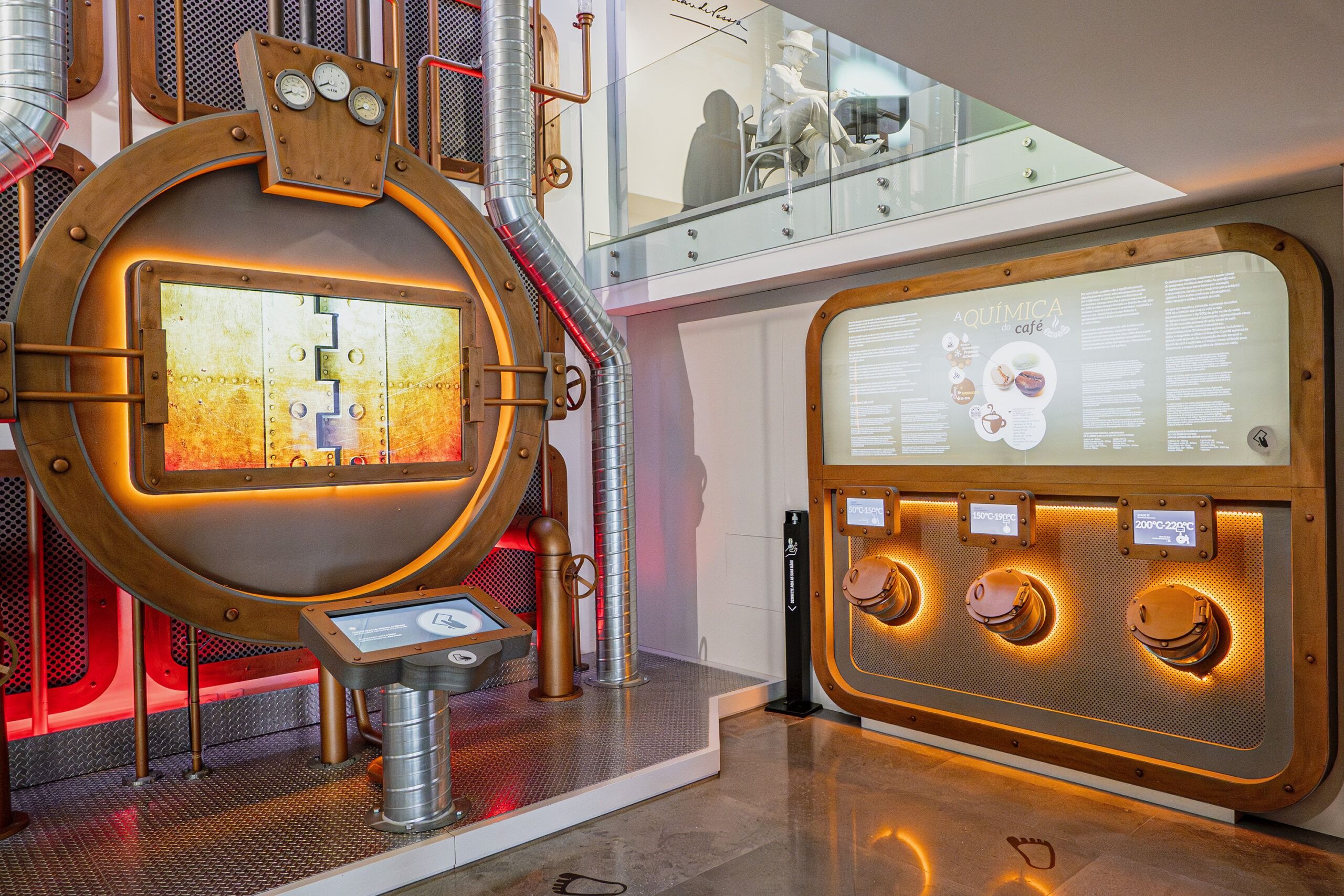
If you do not suffer from claustrophobia, the virtual roasting chamber is an experience not to be missed. It is, in fact, very likely that you will not have another chance to put yourself in the place of a green coffee bean while it is exposed to the extreme temperatures of roasting – unless you return to the Coffee Science Centre. Whether you are coming back or visiting for the first time, children are more than welcome. In fact, Cristina Gameiro notes that at weekends many parents come at their children’s request.
Coffee Kids is to blame: a space dedicated to the youngest visitors, where they can jump into a giant cup-shaped ball pit and draw on the walls with digital pens that leave no ink, but tell the ceiling projector where to cast the “digital paint”. Meanwhile, adults can take the opportunity to learn how to pull the perfect espresso, understand the benefits of coffee, or debunk myths about
decaffeinated.
After using your sense of smell, it is time to see with your hands. That is, to fill your hands with coffee beans of the arabica, robusta, and mocca varieties, and to feel the differences.
Eternally Rui Nabeiro
The legacy of the Comendador and coffee, always coffee
It is always worth recalling that the Centro de Ciência do Café focuses on a universe that goes beyond the already vast boundaries of Grupo Nabeiro. In other words, this is not Delta’s science centre. Even so, and unsurprisingly, Delta coffee also inspires pilgrimages – in more than one sense.
“Many people arrive and ask about the factory. They want to see the place where the coffee they drink every day comes from,” says Cristina Gameiro. “As the factory cannot be visited, because food processing facilities have restricted access, they come to the CCC to gain an idea of the journey the coffee takes before it reaches the cup.”

There are also those who visit because of Senhor Comendador. “In this year since his passing, the Centre has begun to receive visits from people who never met him in person, and who now want to understand his legacy better,” says Cristina Gameiro. The museologist recalls a recent visit from a retired military couple: “They came here, had lunch at Herdade dos Adaens, visited the Centre and Adega Mayor, and even went to the cemetery to leave a flower.”
Since 28 March, the birthday of Rui Nabeiro, it has been possible to learn more about the legacy of the founder of Delta without leaving the Centro de Ciência do Café. On that day, the first phase of an exhibition dedicated to his life and work, “E/Ternamente Rui Nabeiro”, was inaugurated. The exhibition will expand over the year with new phases and can be visited until 28 March 2025.
Then there are those who return almost every week. They are the loyal admirers of a coffee blend created by Rui Nabeiro, whose arabica and robusta ratio is a secret, and which is sold only here, at the Alquimia do CCC shop. They come back to replenish their coffee stock at home – it is sold in bulk, as whole beans or ground on the spot, just like the other specialty coffees from various origins – and they also take the opportunity to order it in the cup, prepared by baristas with specific training that allows them to extract the coffee in a way that makes full use of its qualities.
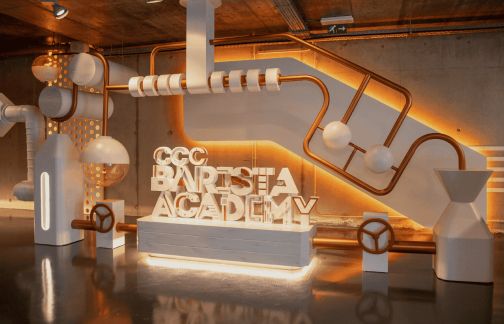
Anyone who wants to learn how to pull the perfect espresso is in the right place. In addition to Academia Barista, which trains professionals and enthusiasts who wish to deepen their relationship with coffee, the Alquimia store also offers workshops and tastings. For coffee lovers, there is no other place like this.
Some people return almost every week. They are the loyal admirers of a coffee blend created by Rui Nabeiro, whose arabica and robusta ratio is a secret, and which is sold only at CCC.