1931-1950
The early years of Rui Nabeiro
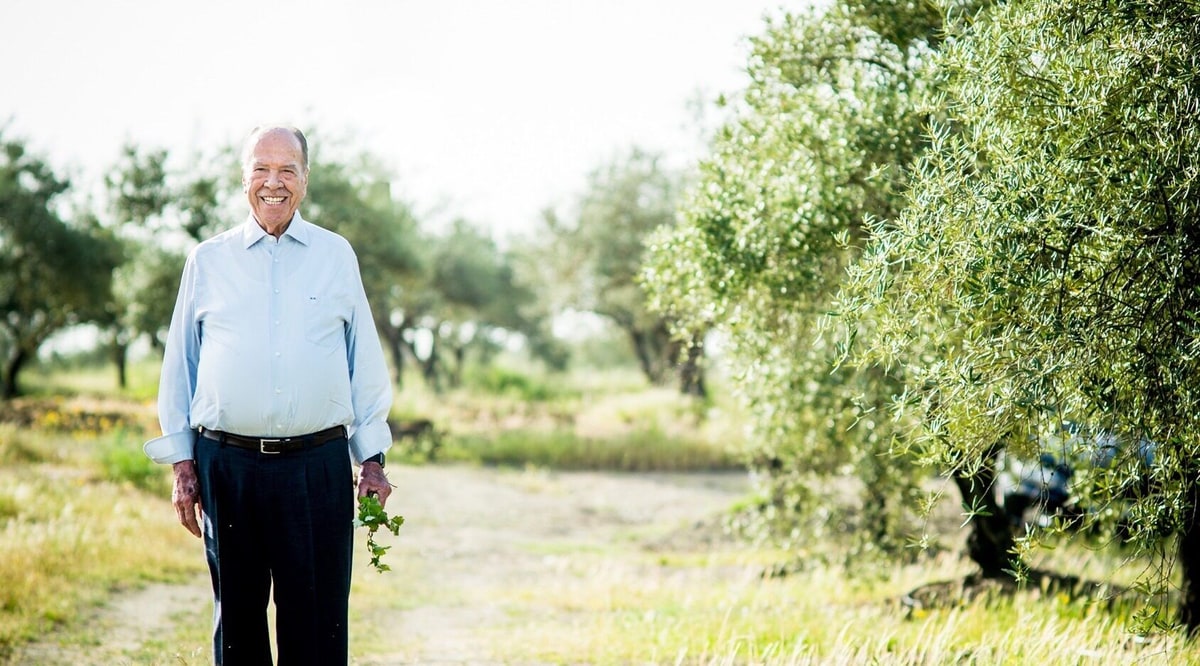
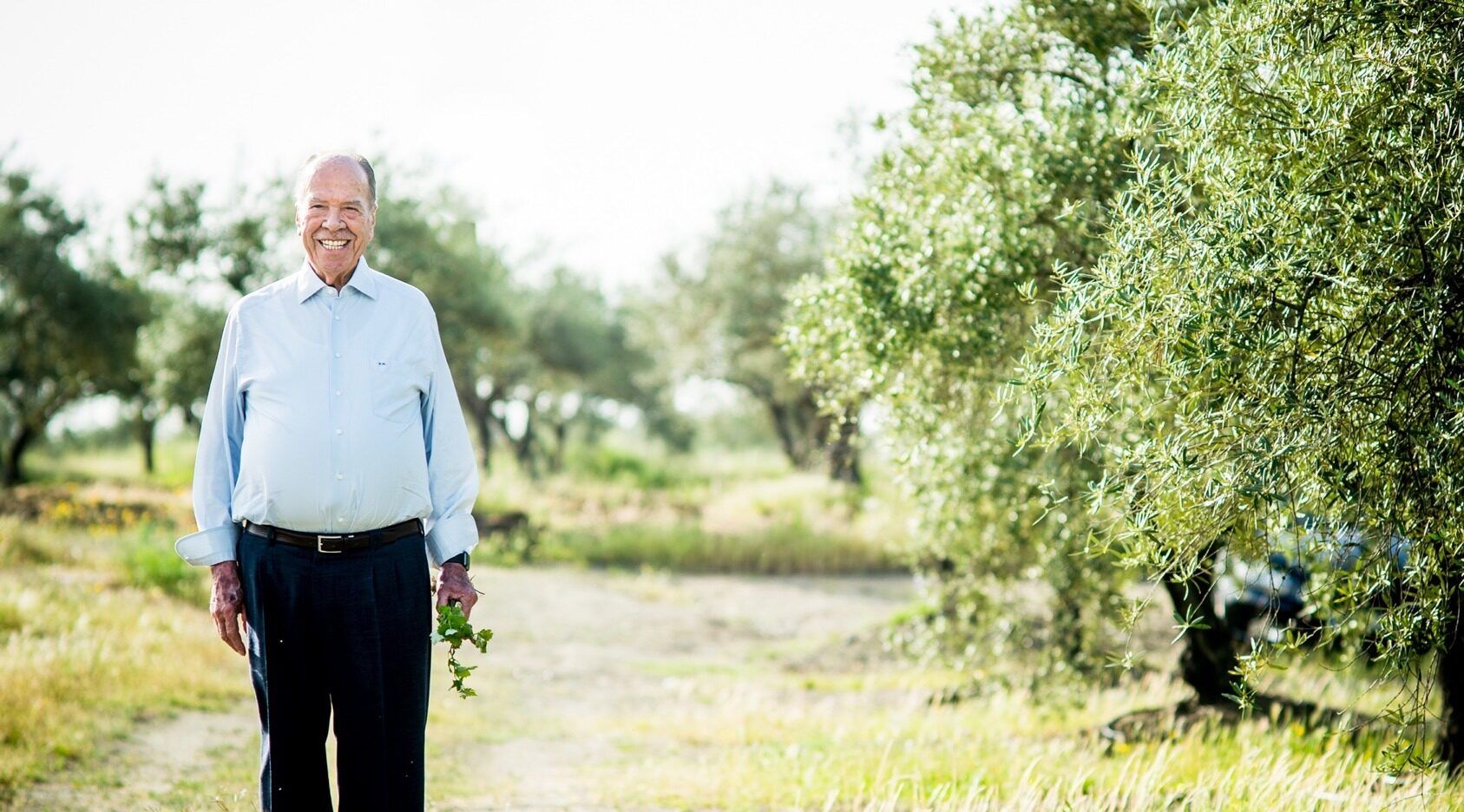
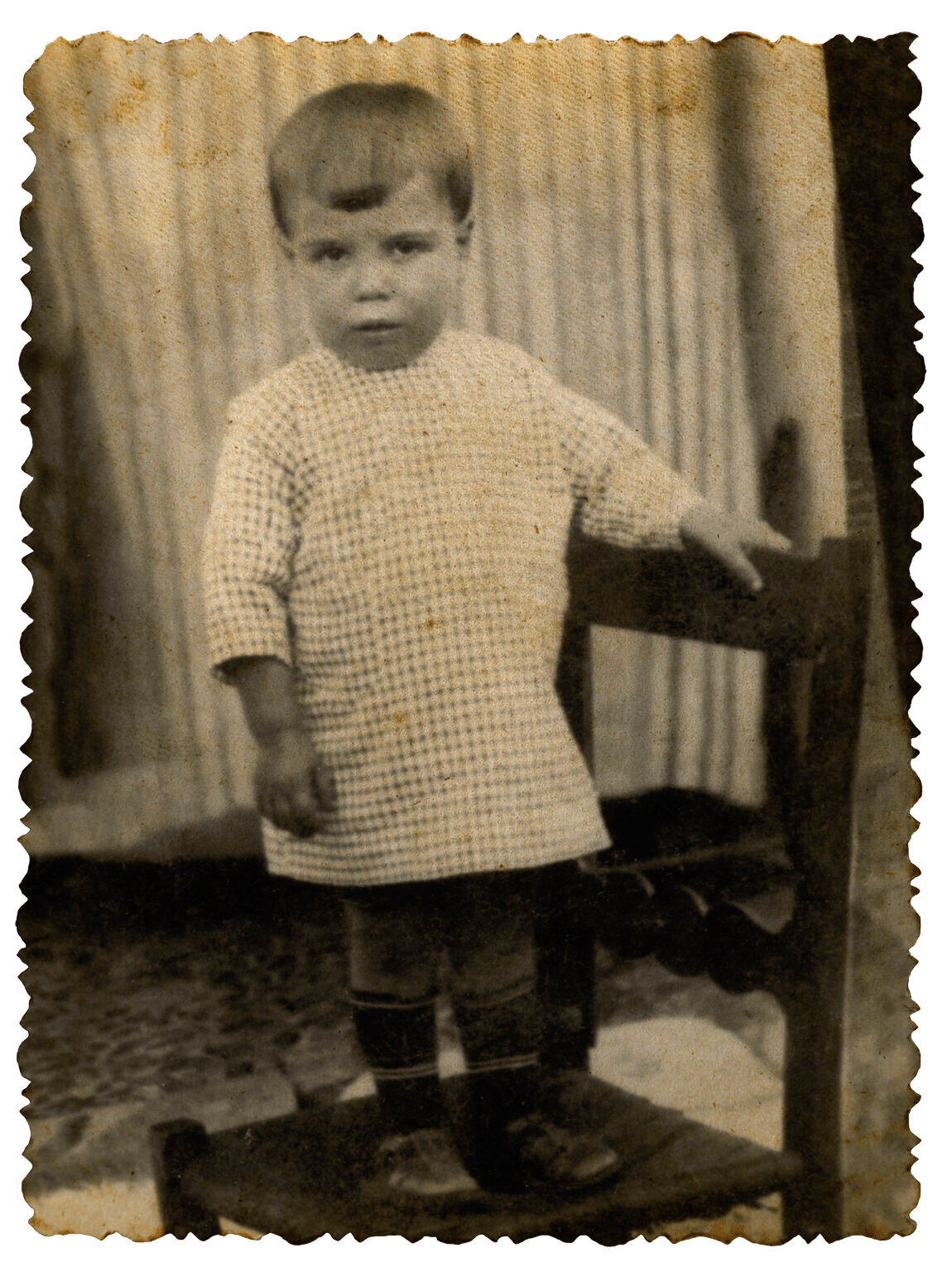
Manuel Rui Azinhais Nabeiro is born on 28 March 1931, in Campo Maior, into a family of country people, humble – “but not poor”, as the Comendador always made a point of stressing in his interviews.
His mother, Maria de Jesus, is illiterate, and his father, Manuel dos Santos Nabeiro, learned to read while he was in the army. He knows how to sign his name and little more, but that allows him to get a driving licence and become the driver for a doctor who is also a farmer. Leaving agricultural work is already a way of moving up in life. Manuel Rui – whom everyone calls simply Rui – remembers him as “a born worker”, “a man who sacrificed himself”, who works from sunrise to sunset so that his family never lacks anything.
Rui Nabeiro has four siblings – with him, there were three boys and two girls – but one of the boys dies very young. At home there are no sweets and cakes except at Christmas, it is true, but Rui and his siblings go to school and wear shoes, which is not so common. The parents’ sacrifices have a purpose: the children must finish the fourth grade. When he recalls his childhood, Rui Nabeiro says:
“Here in Alentejo there was no life to be lived. There was only a life of passing time working and struggling, always for someone who did not recognise us. Today it is not like that; there has been an extraordinary improvement. The most humble people here in Campo Maior work, but they also live. This is the greatest change: we have begun to be more human.”
Located in the easternmost corner of the Portalegre district, the town of Campo Maior is far from everything, it is true. But, on the other hand, Spain is just next door. In a straight line, it is only 15 kilometres to Badajoz. “Being on the Raia makes Campo Maior different from most places. Here we walk to our neighbour and our neighbour walks to us in search of better days.”
When goods are scarce, on one side or the other, people ignore borders and challenge the authorities. “It was just as well there was smuggling, which served the interests of both countries. That is why the smugglers crossed the border freely. When there was little work here and there, taking coffee to Spain was a profession,” Rui Nabeiro told the Spanish newspaper El Diario.
The birth of a new brand: Cafés Camelo
The Nabeiro family’s connection with coffee did not begin with Rui Nabeiro, but with his uncle Joaquim. In the 1930s, Joaquim dos Santos Nabeiro moved green raw material (raw coffee) from Portugal to Spain to be roasted there, illegally. Realising the potential of the business, Joaquim cut out the middlemen and invested himself in coffee roasting, and created the brand Cubana which, after being targeted by the Economic Activities Inspectorate, ended up being sold.
It was then, in 1937, that Joaquim persuaded his brother Manuel (father of Rui Nabeiro), and a brother‑in‑law, Vitorino Silveira, to join him in creating a new coffee brand, Camelo. Why the name Camelo? “My uncle was a man who took major risks and created Camelo looking somewhat at Camel tobacco. Camelo is still today almost a photograph of Camel. There were some issues with the company, Philip Morris, but we managed to reach an agreement between the parties, ensuring that we only produced coffee.”
The teacher who changed your life
While the generation above was starting out in the coffee business, Rui Nabeiro sat at a primary school desk in Campo Maior and learned to read and to count. There, when he was “nine or ten years old”, Rui Nabeiro met the person who would become the woman of his life. At first, classes were not mixed. Boys on one side, girls on the other. But in the final year, in 1940, the teacher pulled a “trick” and made the bold decision to bring them together.
“When we reached fourth grade, that was when we first had classes with boys and girls together, and everyone found a boyfriend or girlfriend. We started going out—or rather, saying we were going out! And it has lasted until today.”
Professor António Joaquim Oliveira, a man with “a well-developed social imagination”, is important to Rui Nabeiro for other reasons as well. He sees that the boy wants to learn and challenges him. He chooses him to look after the class when he has to be away, asks him to explain the subject matter to classmates who struggle more, and also to help him set up a canteen for the most disadvantaged students. “You have a lot to give, you will go far,” the teacher is said to have told him. Rui Nabeiro acknowledges: “School gave me a certain liveliness and a certain desire for life.”
“I hardly had a childhood. I did nothing but work.”
“During primary school, my concern was to help my parents. We were four children, and there was a lot of hardship,” said Rui Nabeiro in an interview with Anabela Mota Ribeiro in 2002. In Campo Maior, at that time, it was only possible to study up to the fourth grade. After that, you had to go to Elvas, Évora or Portalegre. But few children had that possibility. Once primary school was over, almost all the kids started working. In the Nabeiro family, the girls learned to sew, and the boys looked for work outside the home.
Rui, still a child, is early to want to help his parents. “I was not the kind of boy who played in the street,” he says. And he does a bit of everything. They always call him whenever the town crier is ill or cannot carry out his role – and off he goes, at eleven years old, walking the streets of Campo Maior and shouting the news and the notices from the Town Hall. He also sells fish, runs errands, and is always looking for a chance to earn a few more coins.
“Sometimes couples have their imbalances, and those imbalances are almost always economic. At eleven years old, I became aware of situations. Whatever work I could do outside to bring something home, I did. I directed my small help to my mother. As long as my mother had no problems, the couple had none either.”
In the following year, with the help of his father’s employer, Manuel and Maria de Jesus opened a small grocery shop called Alimentação e Salsicharia Sr.ª Maria Azinhais. Rui then devoted himself to helping his mother. He went with her to Elvas by bus to collect goods, carried boxes, stacked them, and cleaned. “I hardly had a childhood. I did nothing but work,” says Rui Nabeiro.
Uncle Joaquim, an example for life
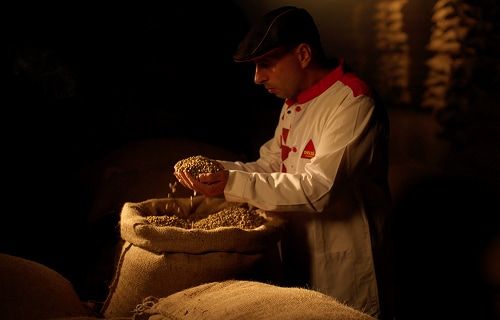
In 1944, Rui Nabeiro goes to work with his uncle Joaquim, at Camelo. He moves the sacks of green coffee in a wheelbarrow, between the railway station and the factory. Each sack weighs 20 kilos and the young man carries four at a time. The influence of this “extraordinary uncle” on his path is immense. And not only because he was the one who brought the coffee business into the family. “I was born, I grew up and I became a man in the shadow of my uncle Joaquim. He let me work and he let me have ambition,” says Rui Nabeiro.
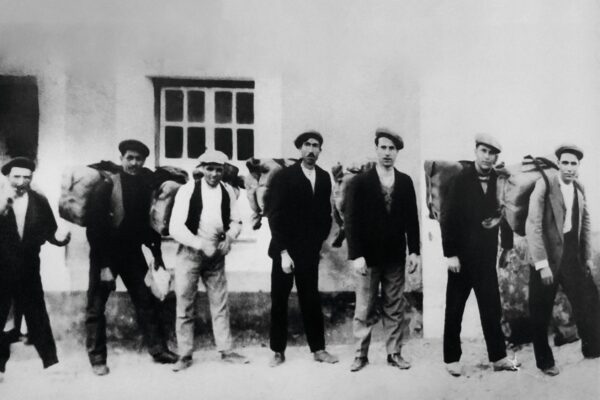
Joaquim dos Santos Nabeiro, also known as Joaquim d’Olaia, was “a man of audacity who, almost illiterate, taught himself to write his own name. He was an intelligent and hard‑working man.” Very early on he decided that he did not want to work in the fields. At 14 he left his parents’ home. “He wanted a different life for himself; to stay there as a digger, no.”
He turned to Spain and devoted himself to transporting goods, legally or illegally. “He was a trusted man at the border and knew its workings well.” With a sack on his back, uncle Joaquim was one of the pioneers in smuggling green coffee that came from Angola, Timor, São Tomé and Cabo Verde to factories in Spain. There was one time when uncle Joaquim and his brother-in-law, Vitorino Silveira, were caught. “The two of them were taking coffee to Spain, they were arrested by the guards, taken to Madrid and from there sent to the front line [during the Spanish Civil War].”
His life was in danger, the family lived in constant alarm. They went through many hardships until the relevant ministries and the government intervened so that the Portuguese could return. They came back to Lisbon by sea. I was very young, but I remember it,” recalled Rui Nabeiro in one of his interviews. It was when he saw, in Spain, how a coffee roasting plant worked that Joaquim had the idea of setting up his own factory in Campo Maior.
Joaquim was a trader and also an entrepreneur. Rui Nabeiro admires his determination to always achieve more and to never depend on anyone. Uncle Joaquim “never did anything other than work for himself,” he says. And that is one of the lessons he teaches his nephew. “He was the person who opened the way for me,” admits Rui Nabeiro.
Hard work in coffee roasting
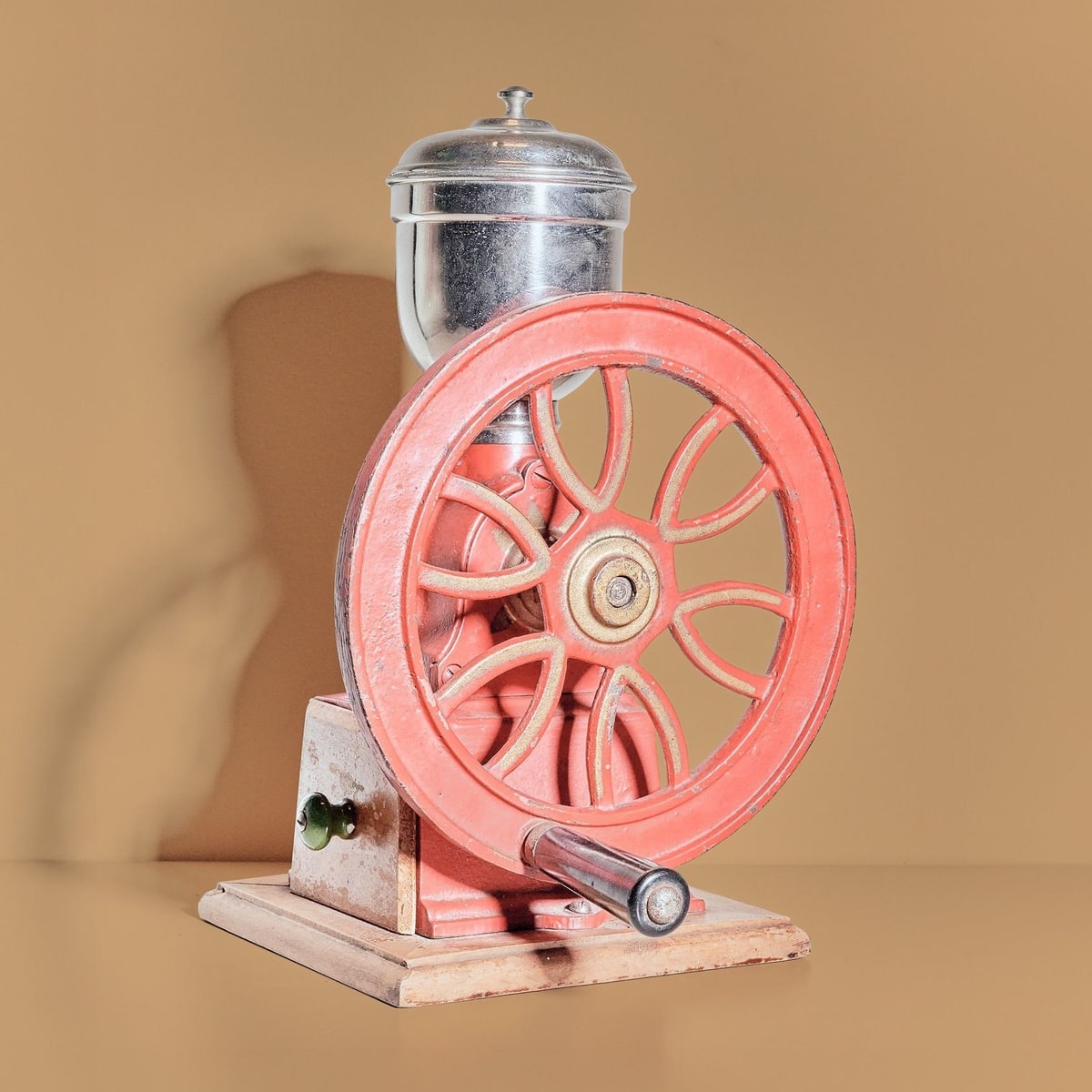
At the age of 14, Rui Nabeiro moves from handling the loads to turning the crank at the front of a small manual roaster in his uncle’s factory. It is here that he truly begins to learn the secrets of coffee.
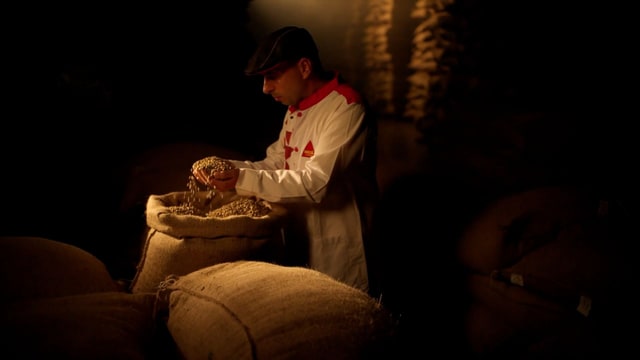
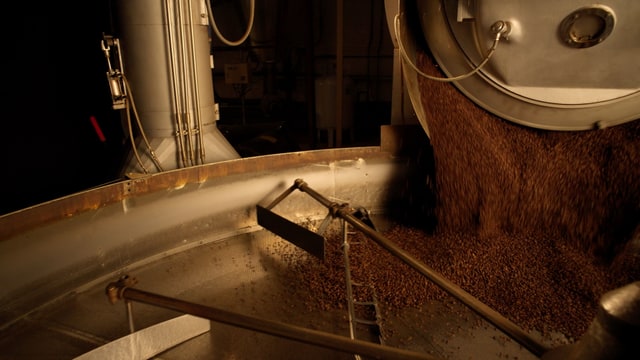
Roasting consists of placing the raw beans in contact with heat, by injecting hot air into the roasting chamber. This must be done with great care, balancing the amount of coffee in the machine, the inflow and outflow of air, the temperature (between 190 and 240 °C), the humidity level, and the duration of the entire operation, so that the roast reaches the perfect point, without leaving the beans raw and without burning them. As soon as the coffee begins to crack, it is a sign that it is starting to roast. Different roast levels produce coffee with different flavours.
Rui Nabeiro works from morning to night. “I was young, but I already worked like a grown man. I did very hard work, mainly physical,” he recalls. He woke up before dawn to go to work and stayed in the factory all day. “I had no time for hobbies or entertainment. My hobby was coffee.”
Learning the ins and outs of the business
Unlike his uncles, the young Rui Nabeiro no longer had to walk with a 30‑kilo sack of coffee on his back and cross the hills to Spain. He is “luckier”, he admits. “I already had a small privilege. I had two uncles who made their lives walking along the border. I no longer walked with the rucksack on my back,” he said in an interview with Ana Sousa Dias. What he had to do was find the people who would do that work, supply them, and coordinate the operation. Then, “find the customer on the other side so that someone could make the crossing. It was a task that required less effort. We already had part of the technique; I only had to ensure that there were customers and supplies. I went to Spain and then the products appeared there, by car, or there were people who crossed at certain points.” At this time, smuggling was already a more organised activity, carried out in gangs. His role was to coordinate it, “on one side and the other”. It was 1947.
The physical effort is smaller, but this is still risky work. “There were people who were arrested and mistreated, both on the Portuguese side and on the Spanish side. The border gave you a shirt and took a shirt away,” says Rui Nabeiro. Smuggling allows him to live a little better, but “no one made a fortune near the border.” “So I stuck to coffee, nothing else.”
The entrepreneur Rui Nabeiro
With his father’s death, Rui Nabeiro is “pushed” to take on his position in the family company. Having no children, Joaquim d’Olaia finds in his nephews the “interest and support to continue the business”, and in 1950 Rui begins to stand out for his commitment and capacity for work. “I did not have a youth. I had to take on my father’s position in the company where he was a partner. That was when I truly began to shape my own life,” he recalls.
At this time, the coffee business has several main figures, but almost all of them have the surname Nabeiro, explains Luís Cunha in the work Memória Social em Campo Maior: “Of the first generation, with two of the three brothers deceased, Joaquim d’Olaia and his brother‑in‑law Silveira remain.” They are now joined by the nephews, Fernando Lopes (son of João Nabeiro), Manuel Rui and his brother António Azinhais. “Although not restricted to these names, the activity of processing and trading, legal and illegal, of coffee in the town of Campo Maior finds in them its main references, those which, it should be stressed, are still recalled today. Joaquim and Silveira lived to an old age and are remembered as pioneers of coffee smuggling, never having rejected that past. Rui Nabeiro appears as the one who continues the work of these men, even if, compared with the previous generation, his action is surely more entrepreneurial than adventurous.”
1951-1970
The mother's letter to the President of the Republic
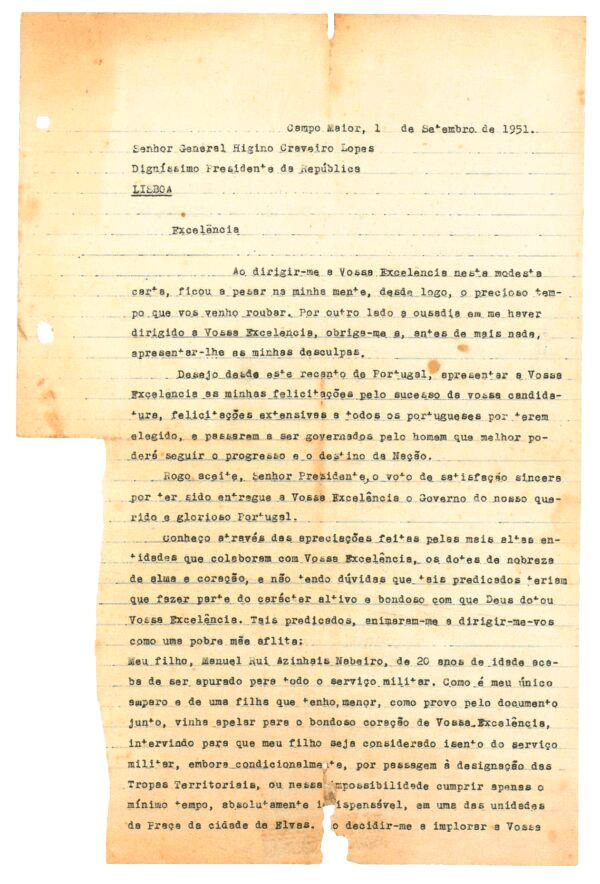
On 1 September 1951, the mother of the then young Rui Nabeiro wrote to the President of the Republic, General Craveiro Lopes, appealing to his “kind heart” to intervene and exempt her son from military service, arguing that he was her “only support”. The reply, sent from the Office of the Presidency of the Republic, was, however, negative: “The description as support in no way contributes to a given young man being considered exempt from performing military service.”
Universal compulsory military service is established in Portugal with the Republic, in 1911, and confirmed by the 1933 Constitution. All young men must serve in the army, even if they are the “support” of their mother. After the request of Maria de Jesus is refused, soldier Manuel Rui Azinhais Nabeiro reports to the Elvas Barracks on 29 April 1952 to perform his military service in the Batalhão de Caçadores 8, until 10 August 1952, for a total of 103 days.
Your specialty is telemeter observer. You measure distances with a rangefinder.
Congratulations to the newlyweds
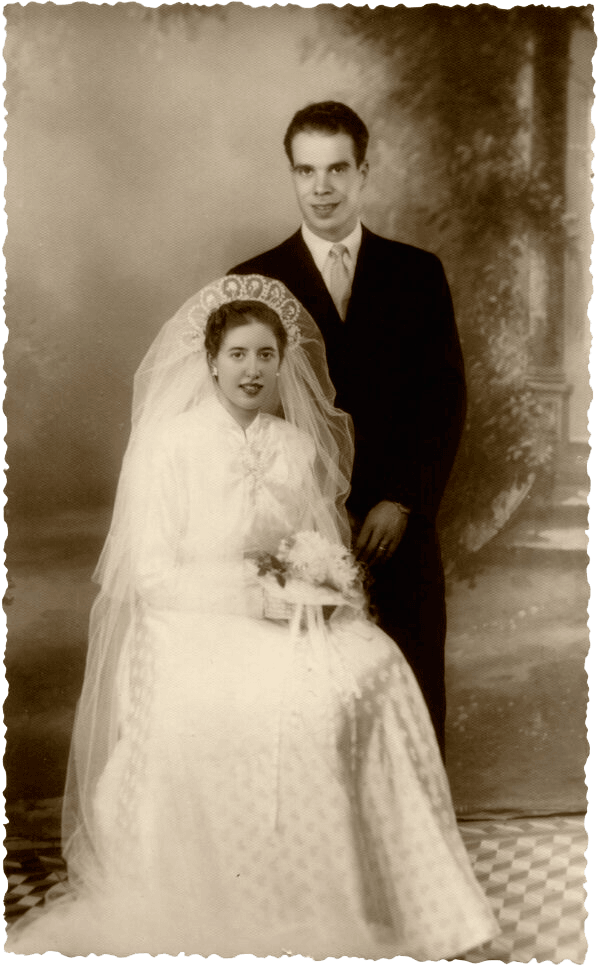
With military service completed, it is time to marry. Alice and Rui have been together since primary school. “That was not love, it was nothing, it was a fondness. We started when we were eight years old and it lasted a lifetime,” said Alice Nabeiro in one of her rare public appearances.
In 1953, they are both still young, but Rui Nabeiro is already a working man, an entrepreneur with no time for courtship or flirtation. The wedding takes place on 25 October, in Campo Maior. They have two children: João Manuel and Helena Maria Gonçalves Nabeiro.
“The secret of our relationship is understanding, from there comes friendship and love,” Alice Nabeiro would say, without sparing praise for her husband: “He is understanding and I also have a little understanding for him. He is an exceptional person and caring towards everyone. A good father, a good husband, a good friend, and anyone who comes to him will only see a request go unanswered if it is truly impossible for him to fulfil it.”
The firstborn of Rui and Alice Nabeiro
It is on Rua de Badajoz, right next to the Estádio do Campomaiorense, that the first child of Rui and Alice Nabeiro, João Manuel, is born. A sign of what his future would be, leading the local club. Before that, however, he studies in Lisbon. His time at Instituto Superior Técnico, in the Electrical Engineering course, coincides with his father’s bold move when, in 1975, he brings from Luanda a ship loaded with coffee. “That was our launch pad. Seeing the satisfaction of our customers and us serving them when there was no product on the market. From then on, we grew exponentially,” he recalls.
This exponential growth forces him to divide his time between his studies and Delta. “I started to have one foot in Técnico and the other in the company. I did both things. We had a sales director, a few guys in hotel sales, and I joined them regularly. Then, from one day to the next, I stopped going to Técnico, because it no longer worked for me to live both lives.”
It was in the late 1970s that João Manuel Nabeiro began working full time at Delta. He was responsible for the first major advertising campaigns and communication initiatives. “It was my role to liaise with the agencies. I remember working a lot with Neovox and with our dear João Correia. At the beginning we did a lot of radio and many newspapers. And from very early on we started to invest in football.”
This commitment to football gains a new dimension in the 1990s with the Sporting Clube Campomaiorense project. Leading the club, João Manuel takes it to the top tier of national football and to an unprecedented appearance in the Taça de Portugal final in 1999. Meanwhile, with the end of senior football, he decides to place the facilities where the players recovered at the service of the community, by opening the Clube de Saúde.
More recently, after overseeing the renovations of the ApertAzeite restaurant and the tourism project at Herdade dos Adaens, he took on the role of Chairman of the Board of Directors of Grupo Nabeiro. Always with his family’s greatest example in mind. “I have always tried to be a faithful follower of my father’s footsteps. And that has filled me with love and joy.”
It’s a girl!
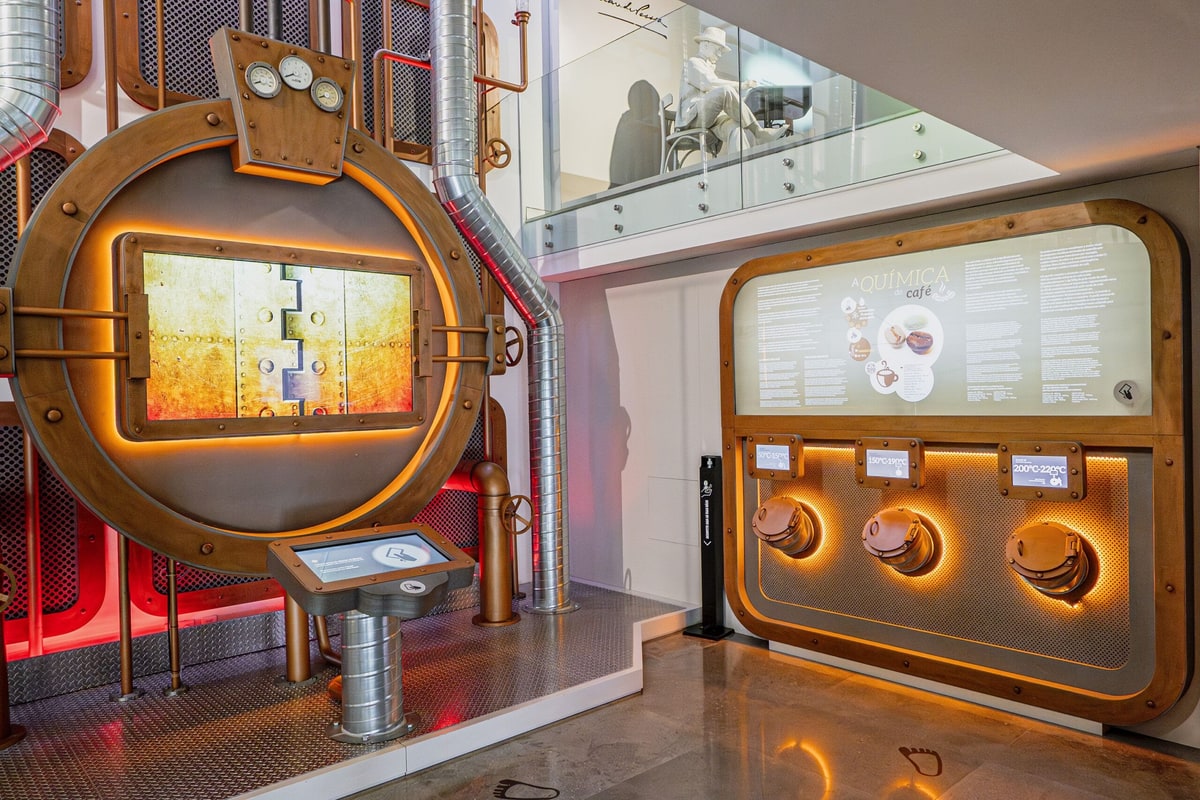
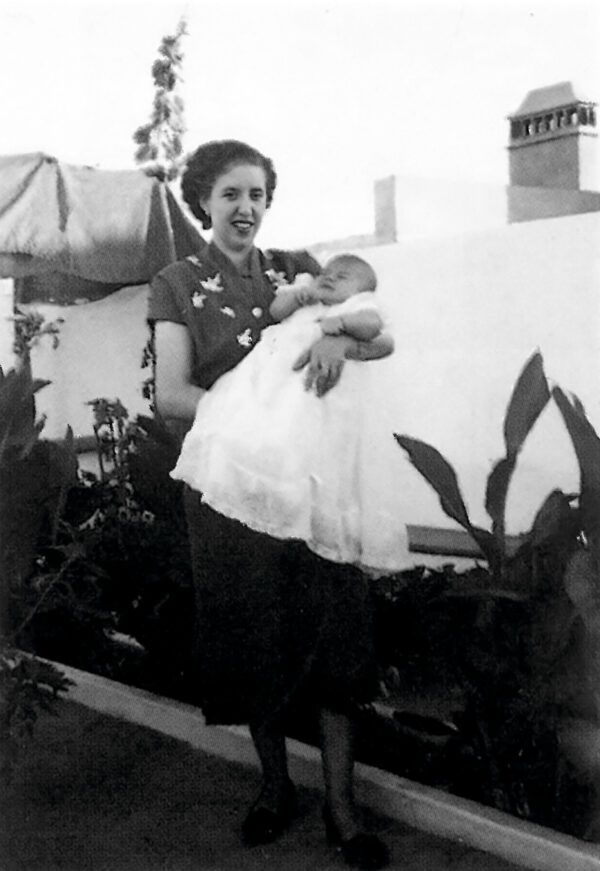
In 1959, Helena Maria was born, daughter of Alice and Rui Nabeiro. Like her brother, João Manuel, she also grew up closely following her father’s business activity, and went on to play an important role in the family company. The current administrator of Grupo Nabeiro was entrusted with the task of inaugurating the Museu do Café on 21 December 1994 – a unique space in the country (and one of the few in Europe), where the history of coffee is told, as well as the history of the Nabeiro family itself. This task was later extended to the current Centro Ciência do Café, inaugurated in 2014, which today serves as a centre for interpretation, scientific and technological outreach, and also as a passport to the world of Delta.
Mother of Ivan Nabeiro (current administrator of Grupo Nabeiro) and of Marcos Nabeiro Tenório (horseman), Helena Nabeiro is herself also a horse enthusiast, having founded her own stud farm more than 20 years ago. Between 1987 and 1990, she even took part in national championship events in the discipline of endurance riding. Even away from competition, she has never distanced herself from this world, which she shares with her husband, Joaquim Manuel Carvalho Tenório, known as Joaquim Bastinhas, who was one of the most acclaimed Portuguese bullfighting horsemen.
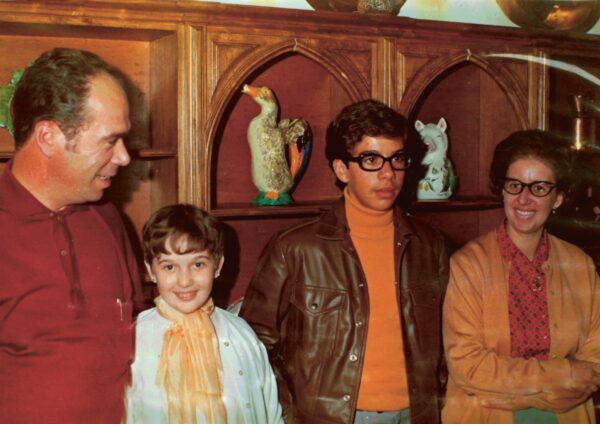
The first victories of Delta
From 1961 onwards, the story of Rui Nabeiro begins to merge with the story of Delta. The first year is not easy. The national market, naturally small, offers little room for new brands. It is perhaps the time when Rui Nabeiro hears the word “no” most often, which never stops him from moving forward. On the contrary.
Officially inaugurated in February 1961, in a warehouse of 50 square metres, with three employees and only two roasting drums, Delta was forced to look for creative solutions to survive. “At the beginning, I could not sell a single kilo of coffee. But imagination helped me, and I started by selling barley coffee, which was the product that ordinary people could afford,” recalls Rui Nabeiro, who, in these first years, combined the new challenge with his job at Torrefação Camelo. “I got up at 3:30 in the morning and went to work.” With him, in the new company, there were only three workers, all of them already retired. “Two had worked in the gnr and one in the Guarda Fiscal.” The start-up funding came from the savings that Rui Nabeiro already had at the time, to which he added two bank loans.
Once the project was viable, it was necessary to choose the name of the new brand. “My intention was to give it my own name. I presented two options to the company that handled our patents and trademarks [J. E. Dias Costa], and they were the ones who suggested the name Delta.” The pleasant acoustics and the ease of pronunciation – and in different languages – convinced Rui Nabeiro, who entrusted the same company with the task of designing Delta’s first visual identity.
He takes care of everything else. When he realizes that his competitors do not travel to customers, do not provide assistance, and do not offer credit, he decides to change the existing trade system. “I studied the whole situation and saw there was a gap. Little by little, we started to sell because we made credit easier, we made the machines easier; product deliveries were made to the customer’s doorstep… Did it cause losses? It did. But later it made money.”
Arrival in the capital
The heart of Delta is in Campo Maior, but its area of influence quickly begins to extend across the entire country. It reaches Lisbon first, where it opens its first commercial warehouse on Avenida Gago Coutinho, in 1963.
It is there, in a house first rented to a friend and later purchased, that Delta sets up its office in Lisbon. “We also had a warehouse in the Graça area, at number 92 on Rua da Verónica, where we unloaded coffee onto a carpet rolled out in the basement. Later, we moved to Infante D. Henrique, where we still are today,” says Rui Nabeiro.
In a small country with limited road infrastructure, these depots are essential to shorten distances. National roads are usually congested and not always in good condition. Motorways are almost non-existent. The A1 – still regarded today as the backbone of the Portuguese road system – was created to link the capital to the city of Porto, but at this time it is still limited to two sections: the first, 23 kilometres long, built between Lisbon and Vila Franca de Xira in 1961, and a second, only 3.5 kilometres long, between Carvalhos and Santo Ovídio, opened to traffic in 1963.
Journeys in My Homeland
Three years after the creation of the brand, Delta continues to grow and, after Lisbon and Coimbra, opens its commercial warehouse in Porto. Based in Senhora da Hora, it is established in 1964 with storage and distribution functions, supported by a small team of salespeople who ensure commercial transactions.
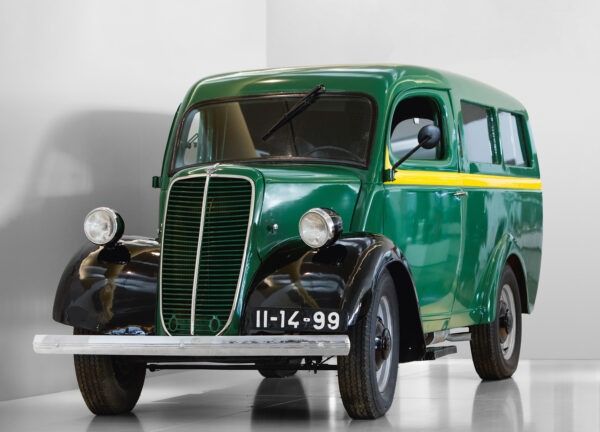
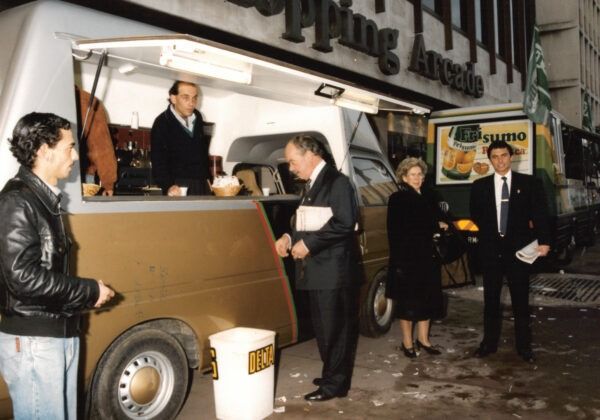
Rui Nabeiro may not need to go to the North every week, but he also wants to stay as close as possible to all his workers, even if that means long seven-hour journeys from Campo Maior. Journeys made in what is the first vehicle in service for the company – a robust and reliable green and yellow Ford Fordson, bought second-hand by his uncle Joaquim.
It is in this van that he travels across the whole country, almost always for work. But even when parked at Delta’s facilities in Campo Maior, the van is ready for contingencies and emergencies, whether visiting a client or taking someone to the hospital. A car for every task, which time has turned into a museum piece: today it is one of the main attractions at the Centro de Ciência do Café.
The first international journeys
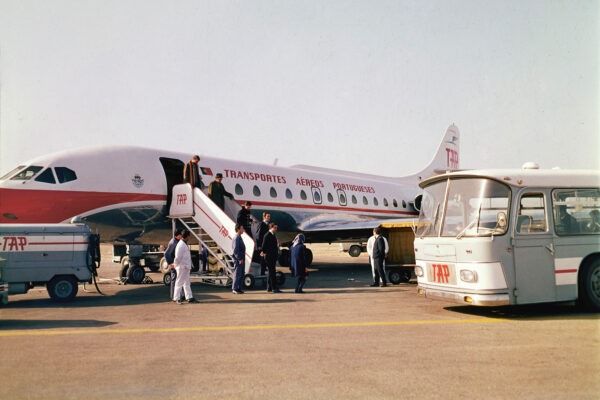
Travel is a constant in the life of Rui Nabeiro, who in 1966 begins to make his first international trips. Spain, France, Germany, and Italy are some of the destinations that would later become frequent, but also Brazil, a country from which he keeps special memories.
“I remember, for example, the trips to the Coffee Congress in Guarujá, near Santos, in the state of São Paulo. It was a place that filled me with hope. We worked and we also went for walks – there was always an excursion here or there provided by the event organizers. But I am also very fond of the Nordic countries, especially Sweden, and of course I must mention the United States and that intense lifestyle that I never had, except when it comes to work.”
É nas viagens que encontra inspirações, importando depois os modelos de negócio, mas também o equipamento que faz da Delta uma empresa de sucesso: “As ideias também nascem daí, de ver muitas coisas e de falar com muita gente. A pessoa que é humilde ouve e regista, e eu ando sempre com um papelinho para apontar”, conta à neta Rita Nabeiro, numa conversa publicada na primeira edição da DDD. Os “papelinhos” foram entretanto substituídos por post-it, não fosse Rui Nabeiro um fervoroso utilizador dos pequenos blocos de notas amarelos, também eles uma prova de que as ideias mais simples são, muitas vezes, as mais surpreendentes.
“When others were only just going, I was already on my way back” is the phrase that Rui Nabeiro often used about his competitors. The founder of Delta had an inexhaustible curiosity, which lies at the origin of many of his ideas.
The beginning of a dream
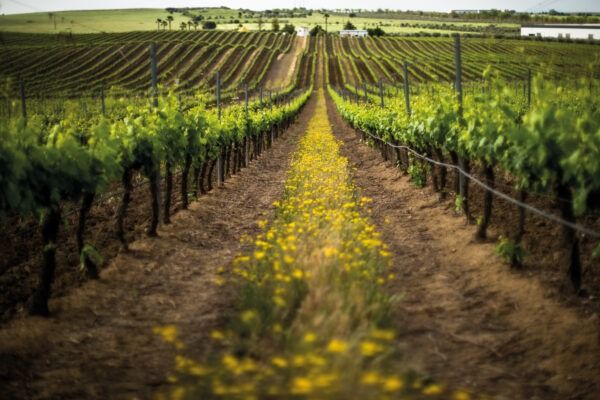
In 1968, Rui Nabeiro bought the Herdade das Argamassas, where he would later install the Novadelta industrial complex. It was also on this land that he fulfilled his dream of becoming a wine producer himself, inscribing his name in an ancient practice, both in the region and in his own family. “Campo Maior has always had a tradition in wine production. Poor people in this area made wine to drink at home. Almost every family had a small plot of land that they divided into two areas: one for bread, the other for wine and olive oil. There is in all of us a tradition, or at least a longing, for the way our ancestors lived, which was, in fact, a good example of a sustainable trade.”
This was how it was in the inland Alentejo, which Rui Nabeiro remembers as a place of many hardships, but also as a blessed land, where even the poorest people had the means to survive. “My grandparents and great‑grandparents had that privilege of having a small piece of land, certainly left by their parents, and they made their own wine. I followed the tradition I saw in others. My intention was to create something. And I did.”
These 106 hectares mark the beginning of a new chapter in the history of Rui Nabeiro and of the company itself, which sees its scope taking shape from early on. At the same time, they carry a symbolic and emotional weight that refuses to be silenced: “As a boy, I used to contemplate the landscape of Herdade das Argamassas. I walked there with my maternal grandparents, light on my feet and with a persistent idea of doing more for my family and for my land. Even then, I was fond of those fields and I never imagined that one day they would be mine. It is an estate that means a great deal to me, that touches me to the depths of my soul.”
The first supermarkets
One year after the company Sociedade Armazéns de Mercearias M.R.A. Nabeiro Lda was founded, a grocery warehouse opens in Setúbal, created in the image of the one already operating in Campo Maior which, at this time, supplies the entire district of Portalegre. It is 1970, and the aim is to replicate a proven model and, at the same time, strengthen the group’s expansion into new business areas.
To achieve this, Rui Nabeiro again uses a strategy that has long been his own: placing trusted people (almost always from Campo Maior) in key positions, especially in those that are geographically furthest from the heart of the company. It is another successful decision: three years later, the warehouse becomes a supermarket, similar to those in the capital where, throughout the decade from 1961, successive and multifaceted retail spaces opened, designed to operate “at the service of housewives and the household economy”.
1971-1990
25 April in Campo Maior
With the end of a five-decade dictatorship, it is time to carry out a complete legislative and political restructuring, as well as a renewal of the social fabric itself. Until then deeply asymmetrical, the society of Campo Maior is slowly changing: cooperatives are inaugurated and new job opportunities emerge.
At Delta, where 77 people work, a small group of employees begins to mobilise to take over the roasting plant, but they are quickly dissuaded by Rui Nabeiro himself, who, always present and close to his team, is not caught off guard. He steps in on time and calms tempers. Then he goes out into the street, with his people. “I walked, I shouted and we held our march,” he recalls.
Delta grows exponentially, providing jobs for many workers. With the 1974 revolution comes the opportunity for more women to enter the labour market, even though at Delta they had already been present since the late 1960s.
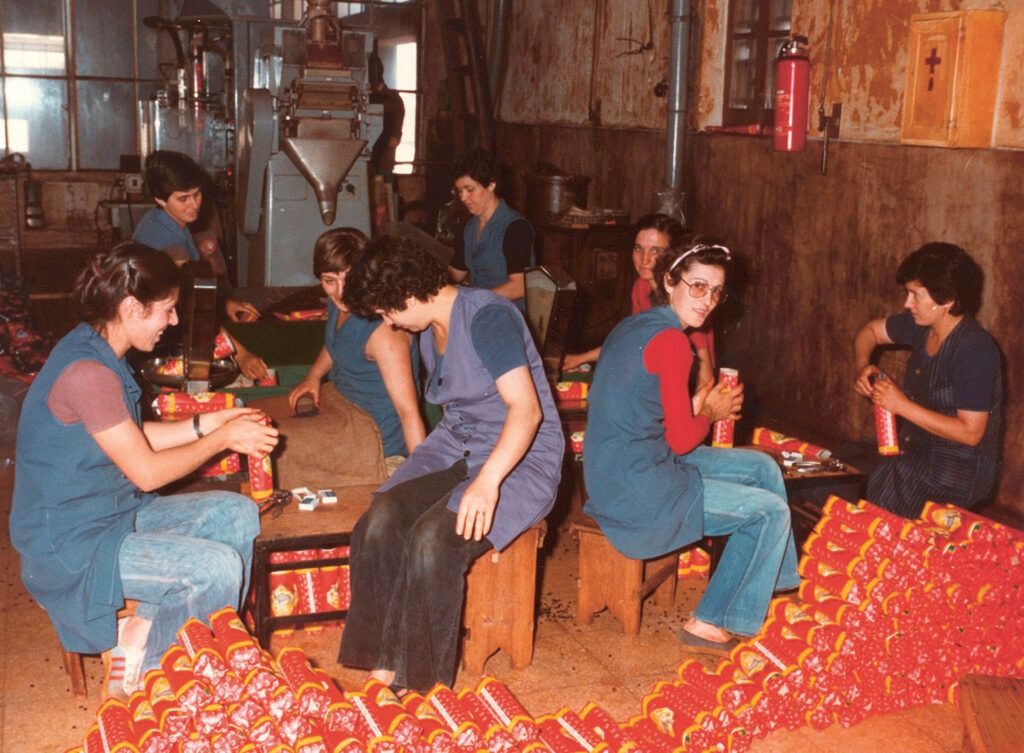
Maria Alcide Carapinha Caramelo is one of the first workers to join the company’s staff. She starts work on 20 November 1969, at only 16 years of age, in the coffee factory. “I loved the roasting work. There, the women, and there were already a few of us, did a bit of everything: we handled the roasting, but we also filled the coffee packets. At that time everything was done by hand.”
In 1974, Rui Nabeiro challenges her to move to the goods warehouse that supplies the entire district, where, at the time, only men work. Maria Alcide does not hesitate to be the first. She stays until 2015, the year she leaves the company where she worked all her life: “I always felt at home. At Delta we are one big family.”
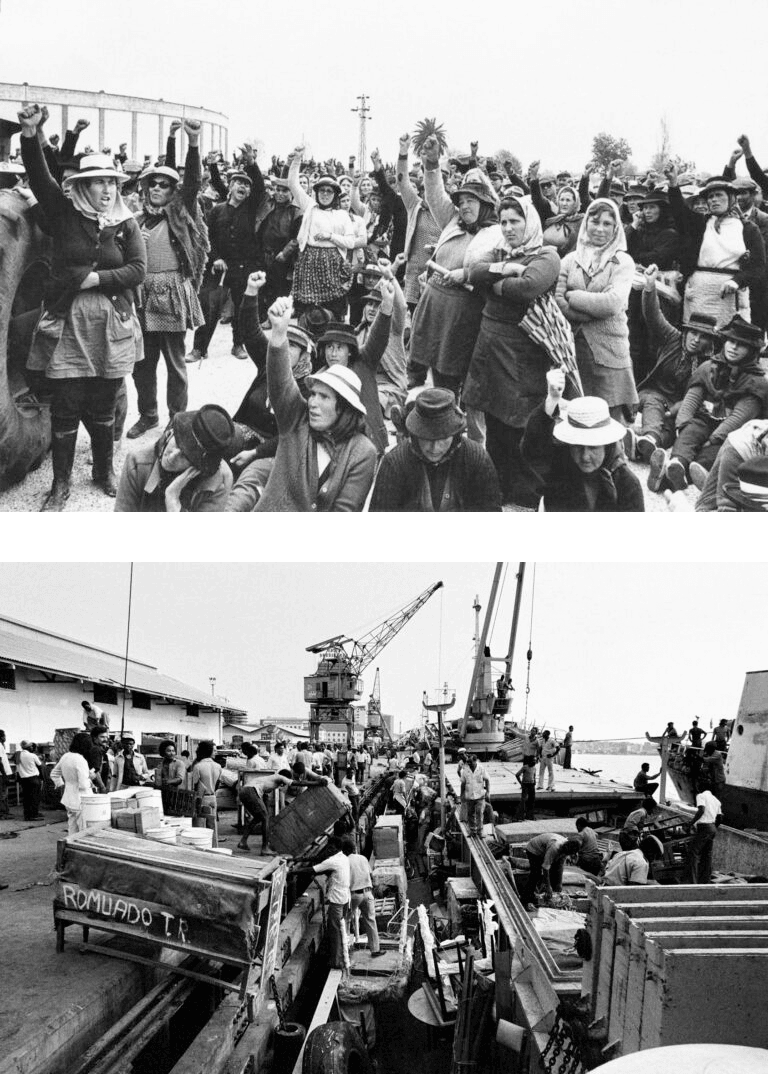
Fortune protects the bold.
10 November 1975. On the eve of Angola’s independence, officially formalised in February of the following year, Rui Nabeiro returns to Portugal, bringing to a close what would prove to be one of the most crucial and successful journeys of his life, and also another excellent example of his business intuition.
At a time when most Portuguese people were leaving Africa, Rui Nabeiro did the opposite and set off for Angola, where he ended up staying for five months. “At the airport I met some friends who said to me: ‘But where are you going? You’re out of your mind…’ And I replied: ‘Well, if it goes well, very well; if it goes badly, I will have to accept it.’” It went very well.
Aware of how much the national market depended on Angolan production in the coffee sector, and anticipating major political changes in the African country, he decided to go there himself instead of sending a representative, taking risks and enduring the many constraints that were felt at the time. A bold and courageous move that would make all the difference. Or, in the words of Rui Nabeiro, “a ray of light that shone on me.”
But first, it was necessary to transport the load of tens of thousands of coffee sacks to Portugal: Companhia Nacional de Navegação could not meet the request, so it was necessary to subcharter a Greek ship that Rui Nabeiro himself helped prepare for the return journey. Once again, it was the friendships cultivated throughout his life that proved decisive, ensuring that everything fell into place and led to a happy outcome.
In the end, he did not need to travel by boat with the coffee he had managed to buy and was determined to protect at all costs. He even had his suitcase on the deck, but he eventually bought a plane ticket that brought him home, victorious. The result: while the competition struggled with coffee rationing, Delta had its warehouses full and its customers supplied.
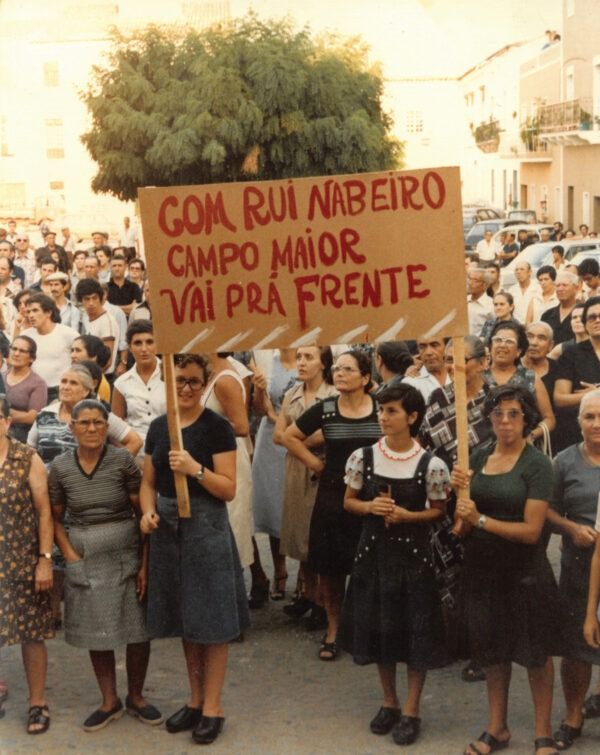
Five-time President of the Chamber
Rui Nabeiro runs for the Campo Maior Municipal Council as the Socialist Party candidate in the elections of 12 December 1976, the first local elections after 25 April. The result leaves no room for doubt: a clear victory with 57% of the votes, well ahead of the candidate of the Frente Eleitoral Povo Unido (FEPU) – the former coalition formed by PCP, MDP/CDE and Frente Socialista Popular (FSP) – who obtained 35.5% of the vote.
After the victory in the 1976 election, a new success followed in 1979, with 56.6% of the vote. As the saying goes, “things come in threes”, and in the 1982 local elections the result was very similar, once again well above 50% (and he remained in office until 1986). In fact, Rui Nabeiro did not lead the local authority three times, but five.
His political career – if the term can even be applied, since he never made politics his full‑time life or profession – begins even before the Revolution, when he was appointed president of the Câmara on two occasions. He did not complete his term in either of them. In 1968, he was asked to leave “because they wanted me to work slowly and I worked more in a hurry.” In 1972, he left of his own accord, in conflict with the civil governor of Portalegre.
“I was a very original Mayor. At that time, before 25 April, mayors were appointed and it was difficult for a person from the people, and humble, to get there. I served in the local authority as mayor, as councillor, as deputy mayor and, on an interim basis, in the presidency during the 1960s. In 1972 I returned again, trying with my drive and attitude to do my best. It was something wonderful, I always felt the Municipal Council as something excellent and, why not say it, as a form of advancement. I must say that anyone who holds public office is obviously promoting themselves,” we read in the book O Homem, Uma Obra – a de Rui Nabeiro, by Tereza Castro Ribeiro Reis.
The beginning of the third generation
The first grandchild of Rui Nabeiro, Rui Miguel, is born in Lisbon on 23 January 1979, and his sister Rita arrives almost two years later, on 18 December 1980. Delta is a vivid childhood memory for both of them. “I clearly remember, as a child, going with my grandfather to the factory. Right at the entrance there were the forklifts, everything more artisanal, where Camelo is today,” says Rui Miguel. Rita recalls the times spent with her brother and cousins “playing hide-and-seek in the warehouse where the coffee sacks were,” and also the Alentejo farm that existed where the factory stands today, “which had a cowshed and a chicken coop.”
Both grow up and study in the capital, while their father, João Manuel, heads the Lisbon department. Visits to the office are frequent. Rui Miguel amuses himself by scattering the small balls from the telex records, with the complicity of Beatriz Mourato, a “very important, central figure at Delta”.
Time goes by, and the siblings graduate: Rui Miguel Nabeiro in Business Management; Rita Nabeiro in Communication Design. While Rui Miguel’s academic path is directed from early on toward applying his knowledge at Delta, Rita’s path shows a long-standing wish for independence. Rui starts at the company earlier, in 2003, and almost immediately becomes involved in the Delta Office project, a brand aimed at small offices. “We did not work in that segment, only with large offices, and I felt there was an opportunity there.”
Rita, on the other hand, starts working at an advertising agency. But when the opportunity arises to develop a wine brand for Grupo Nabeiro, she asks to submit a proposal. “I asked them to let me do it and then tell me what they thought, with no favours.” She schedules a meeting as if the family were just another client, and the proposal is approved. Adega Mayor is born.
From that moment on, while Rita remains connected to the world of wine, learning about it on the job, Rui Miguel Nabeiro moves forward with the creation of the Delta Q system of machines and capsules. “Without a doubt, the most defining project, because of the scale it achieved,” he acknowledges.
With his grandfather, they both keep learning every day. Rui Miguel says: “He always has a sensible word and the ability to move people’s emotions. If someone aims to grow 5% and grows 20%, he tells that person to keep their feet on the ground. But if someone aims to grow 5% and grows only 1%, he congratulates them, asks for renewed spirit, and encourages them.”
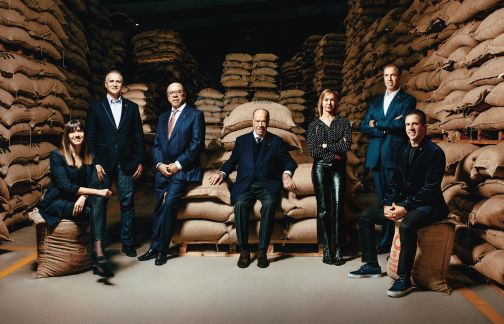
Today, Rui Miguel Nabeiro is CEO of Grupo Nabeiro, Rita is CEO of Adega Mayor and a member of the Group’s Board, like their cousin Ivan – and the three sit on the Group’s Executive Committee. His father, João Manuel Nabeiro, chairs the Board of Directors.
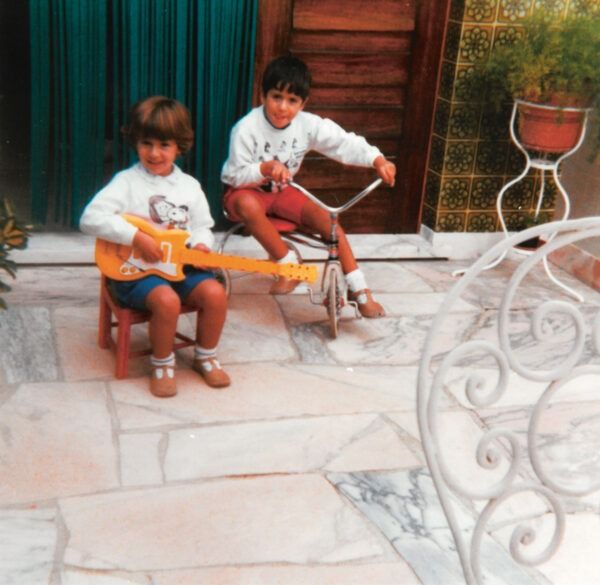
How about an all-expenses-paid holiday in the Canary Islands?
Delta is already a company of considerable size when, in 1981, Rui Nabeiro begins a tradition that will remain in the memory of its employees for decades: excursions organized to sunny, attractive destinations such as Madeira, Palma de Mallorca or the Canary Islands, which welcome the delegation from Campo Maior at the start of the 1980s. Emídio Caramelo, then a simple truck helper – and, later, Rui Nabeiro’s private driver – remembers that trip well.
“I was in the army at the time and I had to ask for leave so I could go. I had to make the most of it, right? Back then, who would go for eight days to the Canary Islands with everything paid by the company?” And that is exactly how it happens: they exchange escudos for pesetas at Delta for extra expenses, they take one of the several chartered buses to the airport, and off goes Cardoso towards the mild waters of the Spanish archipelago.
Leading the tour was none other than Rui Nabeiro himself. “Mr. Rui always went in front, he accompanied us in everything,” recalls Emídio. “He was always nearby, asking if everything was all right, helping to ensure there were no drunken scenes or anything like that, everything was done in the best way,” adds another participant, Adelino Cardoso. “The spirit of camaraderie, of a family company where everyone knows each other and everyone helps each other, from the management to the warehouse workers, is strengthened on these occasions, brightened by various performances organised by Delta’s own workers.”
The brothers Ivan and Marcos
The year 1983 begins in the best possible way for the Nabeiro family. On 3 January, Ivan is born, Helena’s son and Rui Nabeiro’s third grandchild. Ivan Nabeiro graduates in Business Management from Universidade Lusíada and, at 24, joins Delta. He works in every area, from the factory to management, and in different departments, which gives him a deep understanding of how every part of the operation works. He completes training in marketing and sales, learns everything there is to learn about coffee in Brazil, and draws closer to his grandfather in the company’s daily life, absorbing his charisma, teachings, and influence. Today he is one of the company’s directors and, like his cousins Rita and Rui Miguel, an active voice of the new generation, who will be responsible for safeguarding Rui Nabeiro’s legacy.
The year in which Delta opens its first international department, in Badajoz, is also a year of growth for the Nabeiro family. On 1 June 1986, Marcos Nabeiro Tenório is born, son of Helena, brother of Ivan, grandson of Rui Nabeiro.
Unlike his brother and cousins, Marcos did not follow in the professional footsteps of his grandfather Rui. Instead, he followed those of his father, the great horseman Joaquim Tenório “Bastinhas”, one of the leading names in national bullfighting, and of his paternal grandfather, Sebastião Tenório, a great aficionado and passionate devotee of the equestrian art.
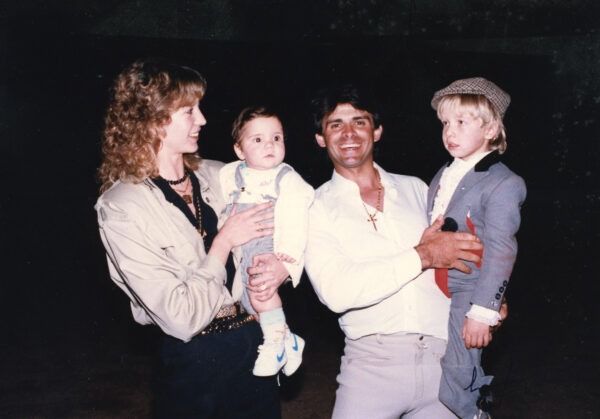
Emídio Caramelo, the loyal driver
It is a special year for Portugal. In February, Cristiano Ronaldo is born; in June, the accession agreement to the EEC is signed; and, somewhere in between, Emídio Caramelo becomes Rui Nabeiro’s driver.
Caramelo, a man from Campo Maior in body and soul, started at the company in July 1978 as a truck assistant. He travelled the country’s roads and backroads delivering coffee to wholesalers, 10 to 14 tonnes of product divided into 60‑kilo sacks, which he did not only transport but also stacked and unstacked as needed. “Emídio was one of the best at building stacks of coffee sacks. There were no straps; the stacks were made on top of wooden pallets, and they had to be perfectly straight. He was very good at that; everything was lined up,” recalls Adelino Cardoso, head of roasting.
His talent does not spare him from military service, however. Shortly after he returns to the head office, Rui Nabeiro makes him an offer: “Instead of the trucks, you will come with me. We will try it for a week; if we get used to each other, you stay.”
They adapted quickly, despite the boss’s demands. “Mr Rui has his own way of being. He demands as much from himself as from others. At the beginning, we would agree to meet at eight in the morning, I would arrive 15 minutes early, and he had already left with the car at half past seven. I had to catch him at the next stop,” he says. “Today I already know that when we agree on a time, in fact it means we are to meet 15 minutes earlier.”
On one of the first trips, Rui Nabeiro asked Emídio if he did not have a tie. “Me, ties, only in the army,” he recalls, laughing. “He went to his room to get one and tied the knot for me. He gave me that tie and a number of others; in total Mr. Rui must have given me about 50 ties.” The trips run at a steady pace, several times a week, in a good atmosphere. “We always talked about everything. Mr. Rui kept working, dealing with paperwork. Later, when mobile phones appeared, he also used them to negotiate with the brokers.”
In recent years, there have been fewer trips. But Emídio Caramelo continued to drive Rui Nabeiro wherever his presence was needed. And he always arrived before the agreed time.
1991-2000
Leadership in coffee and a museum, to remember later
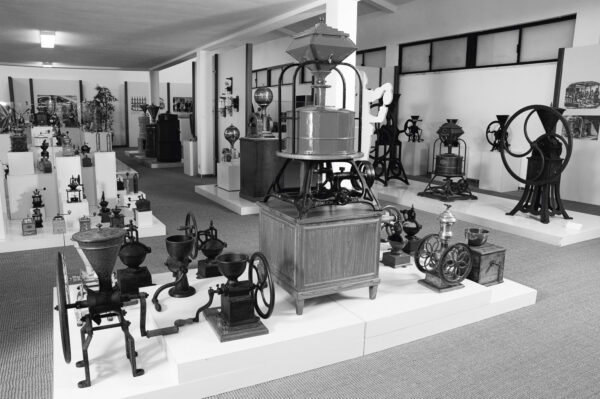
Thirty-three years after its founding, Delta becomes the leading market brand in Portugal in the coffee segment. To celebrate, there is another opening, on 21 December 1994. On that date, the Coffee Museum opens its doors, an old idea of Rui Nabeiro, who, with the help of his wife and children, had built up a remarkable collection in this field.
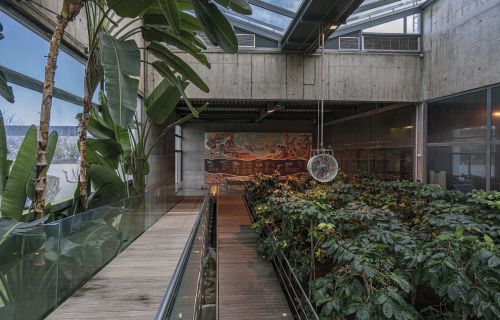
At Herdade das Argamassas, very close to the Novadelta factory, any visitor can now learn more not only about the origin of coffee, but also about its history and the importance it has had in the world, in Portugal, and specifically in Campo Maior, with due emphasis as well on the path of Delta Cafés itself. Machines, grinders, cups, the first roasting drum and the first coffee delivery vehicle are presented to the public, who can also visit a greenhouse of coffee plants and learn about the intricacies of coffee smuggling in the first half of the 20th century, in the border region. And almost ten years later, on 28 March 2014, the museum will be integrated into the new Centro de Ciência do Café.
The Commander
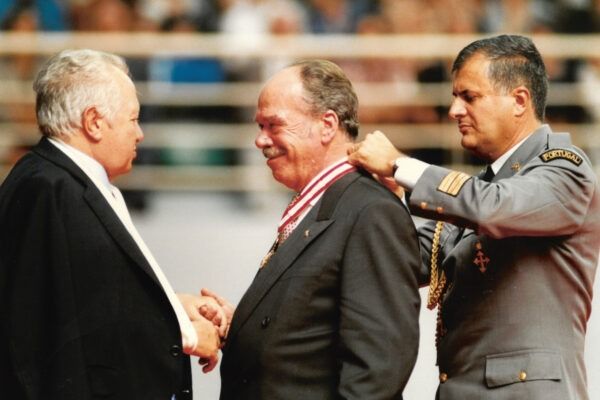
For most people who deal closely with him, Rui Nabeiro is “Mr. Rui”, addressed in this way, simple, affectionate, and respectful. There are, however, many who often add the title “comendador” to this form of address. It has been so since at least 9 June 1995, the day on which Rui Nabeiro received his first distinction of this kind, from the hands of the then President of the Republic, and his long‑time acquaintance, Mário Soares. “When they called me from the Presidency of the Republic to ask whether I would be available to receive an honor, to be presented by the President of the Republic, I was overjoyed,” he recalls. His business merit then earned him the rank of Comendador of the Civil Order of Agricultural, Industrial and Commercial Merit. And, above all, it earned him the title – comendador – that would forever be associated with his name. Even more so because, in 2006, he would receive another distinction of the same kind, this time from President Jorge Sampaio. On that occasion, he received the rank of Comendador of the Order of Infante Dom Henrique.
Twice a Comendador, but with the same humility as always: “I have always fought not to have these honours, but to have a position, a personal achievement. As I went on and as I redesigned my life, things started to appear; it was friends who kept remembering me.”
The first vines are planted
If coffee is Rui Nabeiro’s life, wine is an old passion, whose memory goes back to the time of his grandparents.
“They were people of the land and they had their small plot. At that time, everyone had a bit of land and lived from it. But the wine disappeared. And our land here always had conditions that many others did not.”
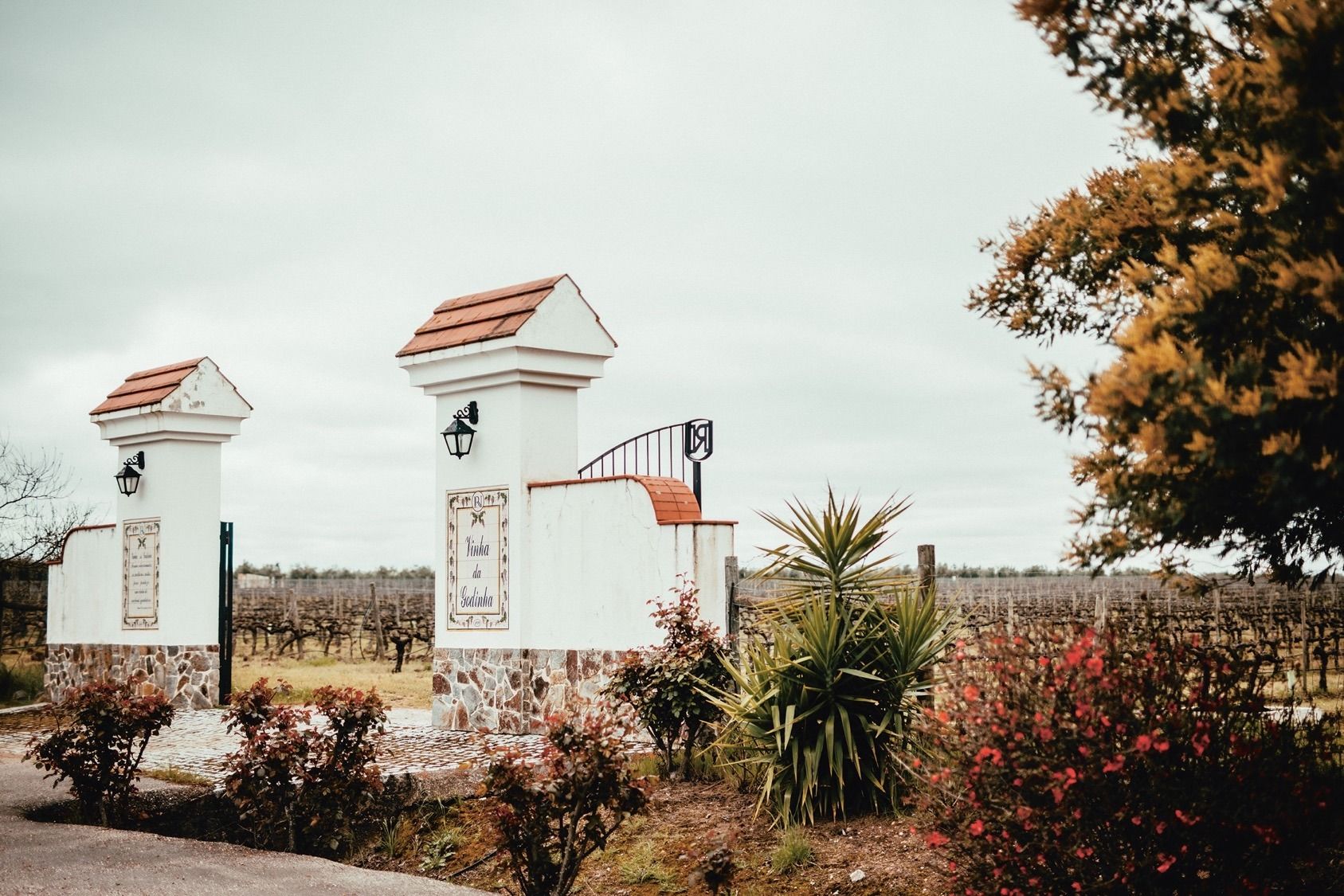
The words do not mislead: owning his own vineyards was, for Rui Nabeiro, a dream. Or, as he calls it, “a dream of longing”. Determined to make it real, he puts his hands in the soil. So, in 1997, the first vineyards of what would become the Adega Mayor project are planted. They are not, however, planted at Herdade das Argamassas, where the winery designed by Siza Vieira would later rise, but 15 kilometres further south, on another estate, Herdade da Godinha, next to the Group’s awning factory.
And why there? Because that area, located near the Caia river, which marks the border between Portugal and Spain, had long been known for producing wines of excellent quality. In those sandy-origin soils, 11 hectares of vineyard were then planted, with grape varieties typical of Alentejo: Aragonez, Trincadeira, Castelão and Alicante Bouschet for the reds, and, for the whites, a blend of Roupeiro with Arinto.
The remaining vineyard is planted three years later, already at Herdade das Argamassas, and the first wines appear in 2002. Just in time to fulfil Rui Nabeiro’s long-held dream.
Expo’98 and a statue
22 May 1998. There is enormous anticipation around the opening of Expo’98, an impressive project that renews the entire eastern area of the city of Lisbon. Riding on the commemorations of the 500th anniversary of the Portuguese Discoveries, Expo’98 adopts the theme “The Future of the Oceans” and captures the full attention of the country.
Delta had to be there: it is the official coffee of Expo’98. Present at 137 points across the entire site, the Campo Maior brand serves more than six million espressos over the four months of the event. It is a key moment for the brand, closing a decade of strong growth.
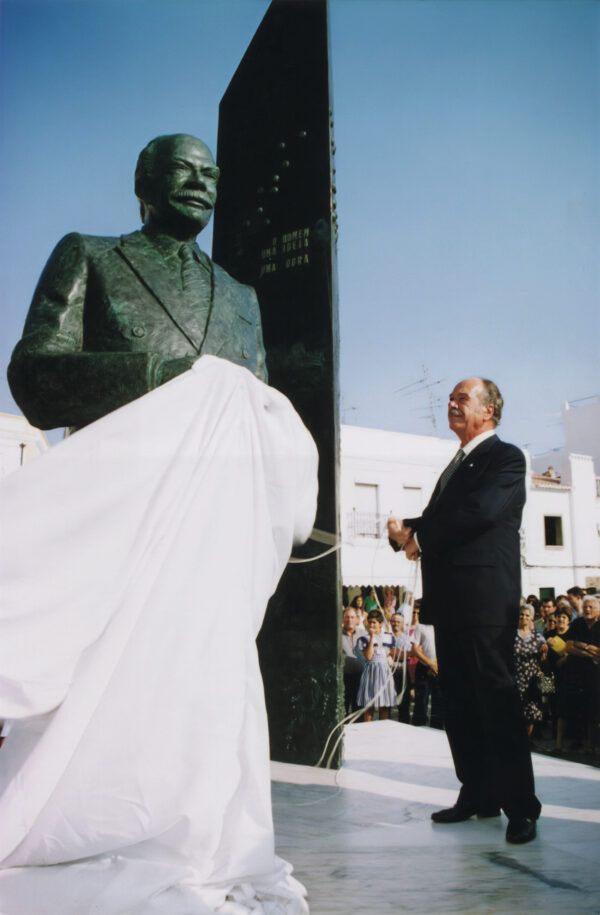
But 1998 brings more reasons to celebrate. In Campo Maior, in the late afternoon of 15 August, a statue of Rui Nabeiro is unveiled on Avenida da Liberdade, sculpted in bronze by Laureano Ribatua, a tribute that local people wished to pay to one of the town’s most distinguished sons. It shows Rui Nabeiro calm and approachable, and it is precisely this will to serve others and to support Campo Maior that Rui Nabeiro speaks about, moved, at the moment of the inauguration.~
A café for Timor Lorosae
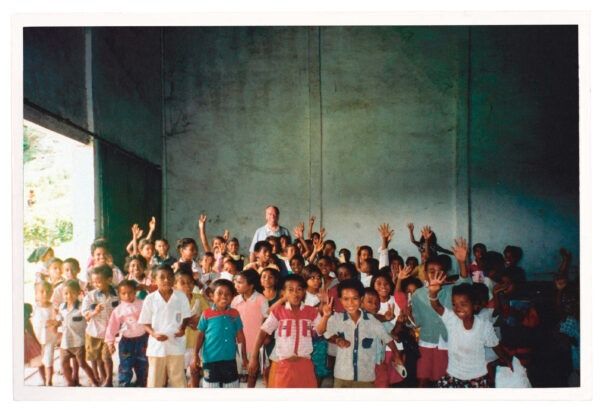
It was around three in the morning, on a night in 1999, when Rui Nabeiro received a phone call from a Portuguese friend living in Timor. “He apologized for the late hour, explained that he was with Xanana Gusmão and that they wanted to know if I could buy the coffee they had. I told him I first had to see the coffee.” The samples would never arrive in time and Rui Nabeiro suggested going there to see it. “He asked me, incredulous, if I was really able to do that. I answered that on foot I would not be able to, but by plane, perhaps.”
On this journey, Rui Nabeiro finds a country at once in turmoil and in euphoria, after more than two decades of Indonesian occupation. The entrepreneur travels across Timor from end to end, often in the company of Xanana Gusmão, a politician and pro-independence activist who had just been released after seven years of political imprisonment. Despite his desire to help, Rui Nabeiro brings little coffee back to Portugal, due to the poor conditions in which local people kept it. Nabeiro would not give the Timorese fish, but rather rods, so that they could fish for themselves.
A team is sent to Timor to encourage the work of local cooperatives and institutions, providing them with some essential equipment and the know-how needed to produce, store, and market quality coffee. Alongside this field effort, which would continue over the following six years, the “Um café por Timor” campaign is launched in 2000, inviting the Portuguese public to contribute directly to this cause. For each pack of Café Delta Timor sold, the brand donates 50 escudos, which are allocated to the construction of schools in the country. The public response is clear, and the amount raised is enough to finance the construction of the Escola Primária Rui Nabeiro in Fahité, in the district of Liquiçá, and also to support the rehabilitation of the schools of Gleno, Leorema, and Tibar.
In 2003, the solidarity campaign is recognized worldwide by Social Accountability International with the Positive Community Impact award. In the following years, Timorese coffee, organic and with unique characteristics, succeeds in establishing itself in the international market – with Delta continuing to purchase and market it to this day.
2001-2020
“Within an unspoiled, beautiful landscape”
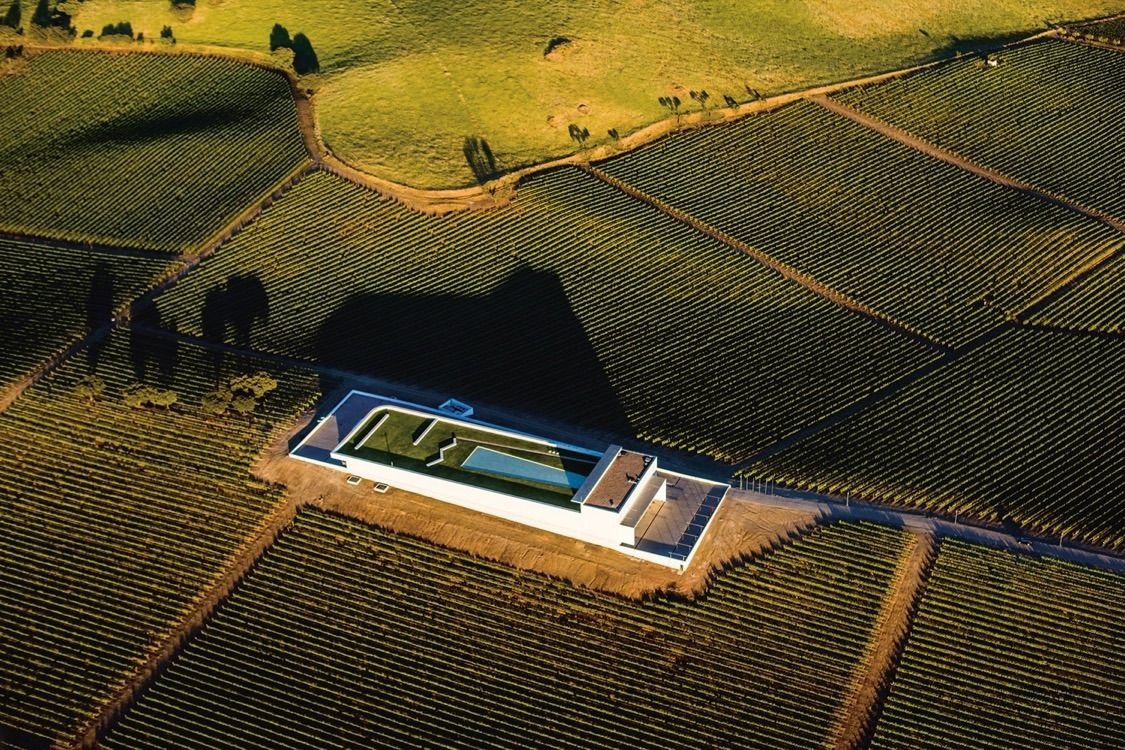
The “wine project” began to take shape in December 2004, when architect Siza Vieira was invited to design the space that would only open three years later, in 2007. In Portugal’s first signature winery, the building’s simple, refined lines blend with the Alentejo plain where it stands. The surrounding land stretches over 350 hectares and, from the top of the panoramic terrace, visitors can see the full extent of this vast landscape. Beyond the vineyard and the olive grove, the view reaches the Serra de Portalegre and even Spain. “It is not easy to find the opportunity to build within a beautiful, untouched landscape,” says Siza Vieira about Adega Mayor. “And it is also an enormous responsibility.”
In 2014, Siza is honoured with a limited and exclusive edition wine, with labels designed by him. At the time, Comendador Rui Nabeiro explains that it is a symbol of friendship for the “many years working together on the Adega Mayor project.” He adds: “the architect is an extraordinary person, who has his whims, as I do too, but we always knew how to talk and respect each other’s whims until we became friends.”
(The enormous) Delta Heart
It was as a tribute to Rui Nabeiro that, back in 2002, a group of Delta employees created Um Coração Chamado Delta. The project, which worked directly in the community through volunteering, set the tone for the creation of Coração Delta on 31 January 2005.
Created to develop projects that respond to the needs of the Campo Maior community, Coração Delta – Associação de Solidariedade Social do Grupo Nabeiro – grows over the following years and, like any good heart, expands to create space for everyone. The initiatives reach children, teenagers, young adults, and older people.
Work with younger children takes place through the Centro Educativo Alice Nabeiro (CEAN), founded in 2007, which currently supports 180 children and helps them turn their dreams into reality. The work begins in the Sala Mágica (for pre-school pupils) and continues in the Centro de Talentos (after-school programme), and also includes the entrepreneurship handbook for children and educators Ter Ideias para Mudar o Mundo (2008). This handbook has been implemented in schools from the north to the south of the country and was recognised in 2013 as an innovative project by the European Union.
There is also support for young adults through Promove-te, a five-month program that strengthens skills and supports entry into the job market. There are also support services for the development of young people with greater difficulties, with professionals such as speech therapists and psychologists.
Coração Delta also works with older people through the Tempo Para Dar program. With home visits, it reduces isolation and improves each user’s quality of life, adapting their homes to their needs, carrying out small repairs, or providing support for medicines or food.
“10 Steps to Reach the Top”
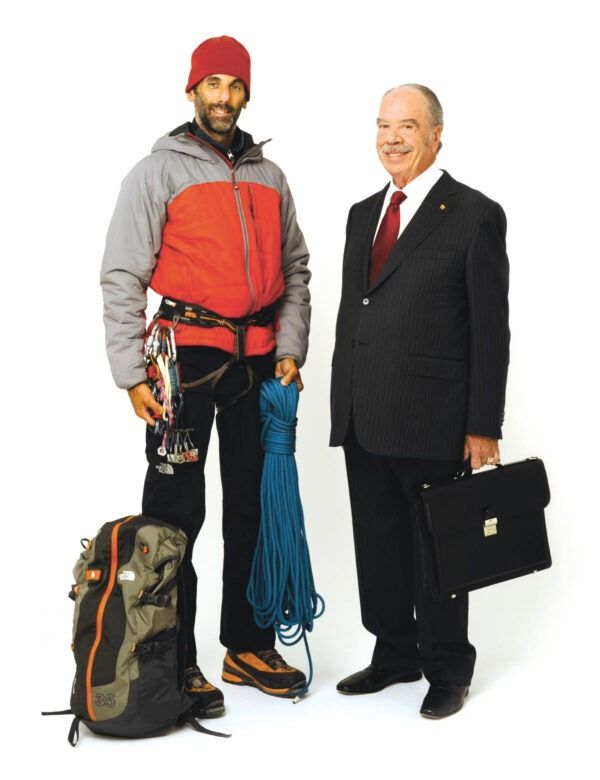
“It is not the oldest, nor the one with the most equipment, nor the most handsome. In mountaineering, as in life, only those who make an effort reach the summit.” This is the lesson from João Garcia and it sets the tone for 10 Passos para Chegar ao Topo, a book written four-handed, in a partnership between João Garcia and Rui Nabeiro.
The invitation comes from the publisher Caderno itself, which challenges the Alentejo businessman to join the Lisbon mountaineer in this venture. “For me it was something new, it was a challenge,” Rui Nabeiro tells Expresso. “I have no training to write a book. I simply poured out my affection, my will, and my experience.”
Over the course of 207 pages, this unlikely pair shares lessons and practical stories that present the 10 essential steps to being successful – whether in mountaineering or in business. And despite the clear differences between their fields of expertise, in nine out of the ten points the authors’ views match perfectly, with divergence arising only over the “weight” one carries in the “backpack”. João Garcia explains: “I believe that, on an expedition, I have to lighten my logistics, and this gentleman at my side has his very humanist view that value lies in people, that human capital is his best asset.”
Delta Q kicks up dust and wins at Dakar
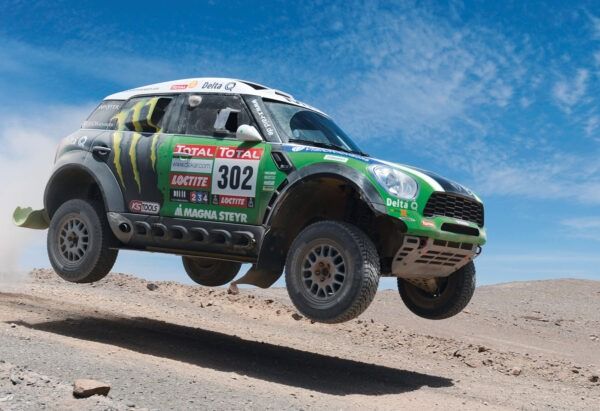
“I am certain that with this team we will be on the path to victory.” These are the words of Rui Nabeiro on 7 October 2011, the day when Delta Q officially presents the team that will go to Dakar 2012 – and with which it reaches the highest place on the podium.
The presentation takes place at Herdade das Argamassas, in Campo Maior, and leaves in the air, besides dust, a great deal of enthusiasm. So much so that even Ivan and Rui Miguel Nabeiro suit up properly for a few laps of pure adrenaline in the Mini All4 Racing. But the real performances of the day are those of the drivers Stéphane Peterhansel (French), Ricardo Leal dos Santos (Portuguese) and Nani Roma (Spanish), introduced as “highly competitive and ambitious” by Rui Miguel Nabeiro.
The CEO of Delta Cafés also adds that sponsoring the X-Raid team, “which speaks Portuguese but is international,” takes the brand further and supports its international expansion. “It will probably be the first time that a Portuguese brand stands on the podium of this competition.” That is what happens.
The Dakar takes place from 1 to 15 January 2012, in Argentina, Chile and Peru, and Delta Q becomes the first Portuguese brand to win the competition as the official sponsor of the X-Raid team. The leader of the trio, Stéphane Peterhansel, takes first place on the podium, while Nani Roma finishes second and Ricardo Leal dos Santos eighth. The results ensure public exposure for Delta in the 190 countries that follow the event on television.
The inauguration of the Coffee Science Centre
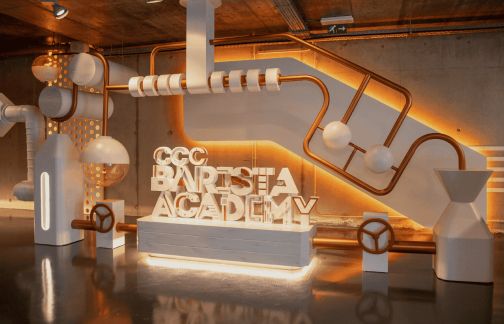
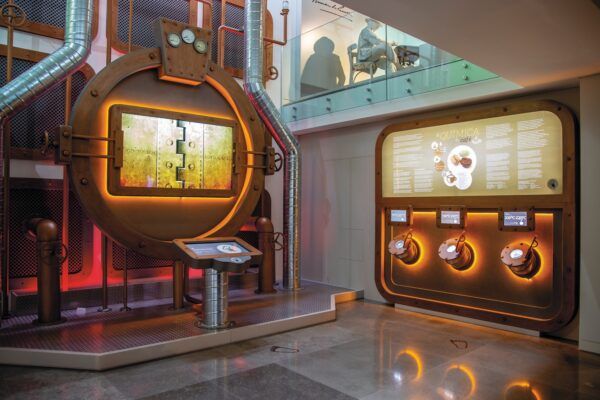
On the day of Rui Nabeiro’s 83rd birthday, 28 March 2014, the former Museu do Café gave way to the new Centro de Ciência do Café (CCC). Within just one year, it was distinguished with the Portuguese Museum Award, granted by the Associação Portuguesa de Museologia.
The new Coffee Science Centre is a space for interpretation, scientific and technological outreach, and tourism promotion by Delta Cafés. It has a clear goal: to become a reference in scientific, technological, educational, tourism, and cultural development.
Located in Herdade das Argamassas, the building has a total area of 3,426 square metres, divided between two floors organised into different exhibition areas, an auditorium, a shop and, as could not be otherwise, a cafeteria. Visitors are invited to follow the history, culture and science of coffee, from plant to cup, in an interactive journey that presents the Delta collection and its cultural heritage.
Manuel Rui Nabeiro Avenue, in Badajoz
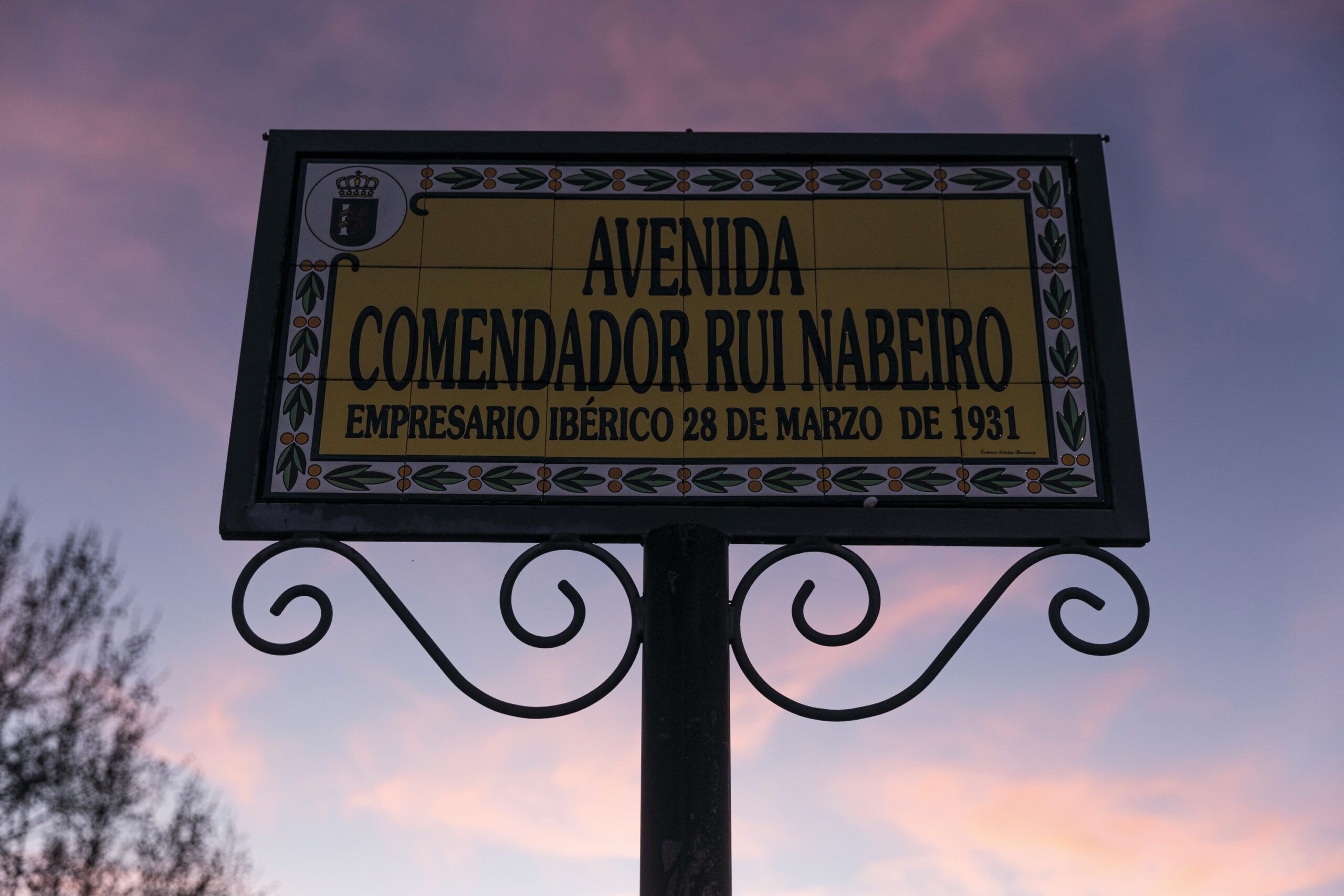
On 17 November 2016, the Spanish city of Badajoz paid tribute to the founder of Delta by inaugurating “Avenida de Manuel Rui Nabeiro (28 March 1931), Iberian entrepreneur”, as stated on the plaque that identifies the street.
According to the Spanish news agency EFE, in addition to his contribution to cross-border economic and trade relations, the “Portuguese entrepreneur benefited Badajoz by deciding to locate the Spanish branch of the Cafés Delta group in this city.” At the inauguration ceremony, the mayor of Badajoz, Francisco Javier Fragoso, highlighted the large number of families from the Portuguese towns of Elvas and Campo Maior (district of Portalegre), as well as from the city of Badajoz, who found work in the business group.
In this context, the Spanish city of Badajoz decided to give the name Manuel Rui Nabeiro to one of the avenues next to the grounds where the Hispano-Portuguese fair FEHISPOR is held. “The aim is that, when businesspeople come to the events, they see the name of an entrepreneur whom Badajoz considers one of its own.” For his part, Rui Nabeiro, who said he felt “pride” and “happiness” at the recognition, stated on the occasion that he considered himself “in debt” to the Spanish city, and that he would respond to this tribute “day by day.”
2021-2023
The key to the city is a honoris causa
Comendador Rui Nabeiro left a mark on Portugal through his human and entrepreneurial qualities, and the country thanked him with decorations, awards, commendations, and tributes. After he was made a Commander in 1999, he received an honorary doctorate Honoris Causa from the University of Évora in 2006. And if there were any doubts about the reach of Rui Nabeiro’s impact, in 2009 the King of Spain, Juan Carlos, dispelled them by granting him one of the highest distinctions of the neighboring country: the Grand Cross of the Order of Isabella the Catholic. Two years later, he was appointed honorary consul of Spain in Elvas and awarded the Medal of Extremadura.
The series of distinctions continued. In 2021, on the 90th birthday of Rui Nabeiro, Coimbra City Council awarded him the Medal of the City of Coimbra, Lisbon City Council honoured him with the Medal of Honour of the City of Lisbon, and Vila Nova de Gaia presented him with the Key to the City.
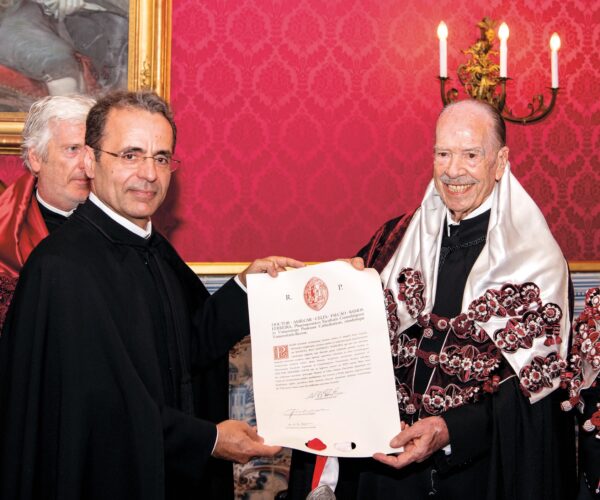
On 8 June 2022 he received “the highest distinction awarded by a Portuguese university, intended for citizens of unquestionable professional merit and human qualities that serve as an inspiring reference for the whole of society.” It was the day when Rui Nabeiro received the Doctorate Honoris Causa from the Universidade de Coimbra. “This is a moment of emotion. I see again people who have marked my life forever,” he said on the occasion, addressing words of gratitude to his parents, his family, friends, fellow citizens, and workers of the Delta group. This distinction “was a dream” that had never “crossed his mind” since his childhood in the town of Campo Maior, in Alto Alentejo.
The Golden Globe
When, on 2 October 2022, Coliseu dos Recreios dressed up for one of the most high-profile galas of the year – the XXVI Gala dos Globos de Ouro – one of the highlights of the evening turned out to be the Merit and Excellence Award given to Rui Nabeiro.
The award was presented by Francisco Pinto Balsemão, who highlighted the entrepreneur’s “entrepreneurial spirit, professionalism, and dedication to others”, as well as his “true leadership, a leadership that inspires at the age of 91”.