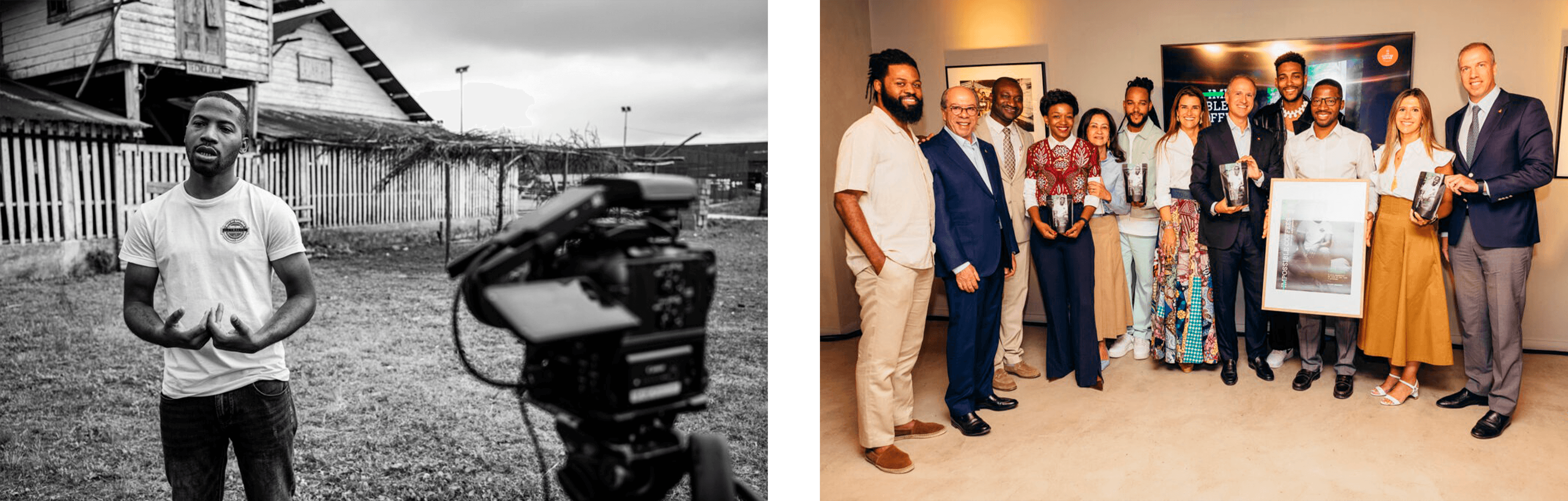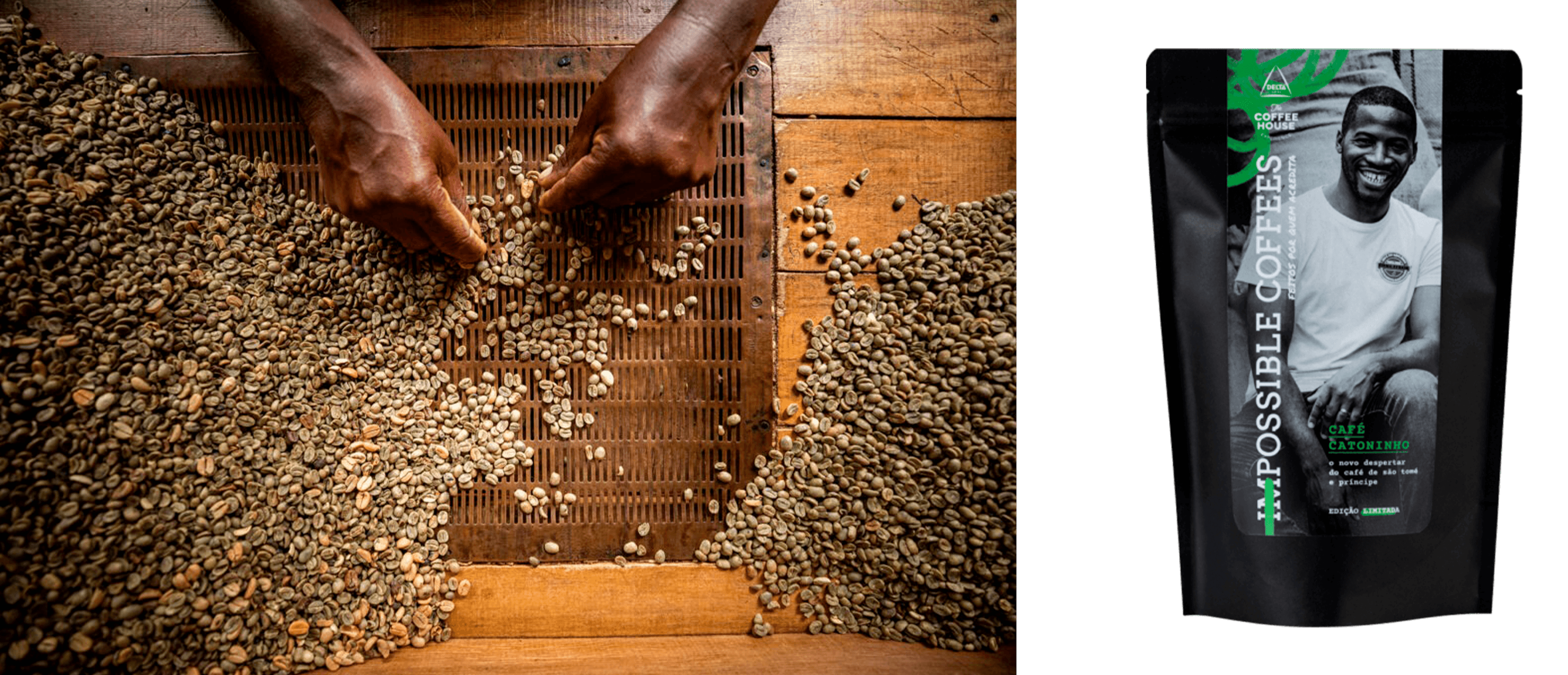
After the coffee from the Azores, Grupo Nabeiro once again works with micro‑producers to launch a rare coffee.
This is the case of Amedy Pereira, in São Tomé e Príncipe. “We want to present many other impossible cafés that are, above all, the result of dreams,” says Rui Miguel Nabeiro.
Video
DDD. Café Catoninho de São Tomé
First Meeting
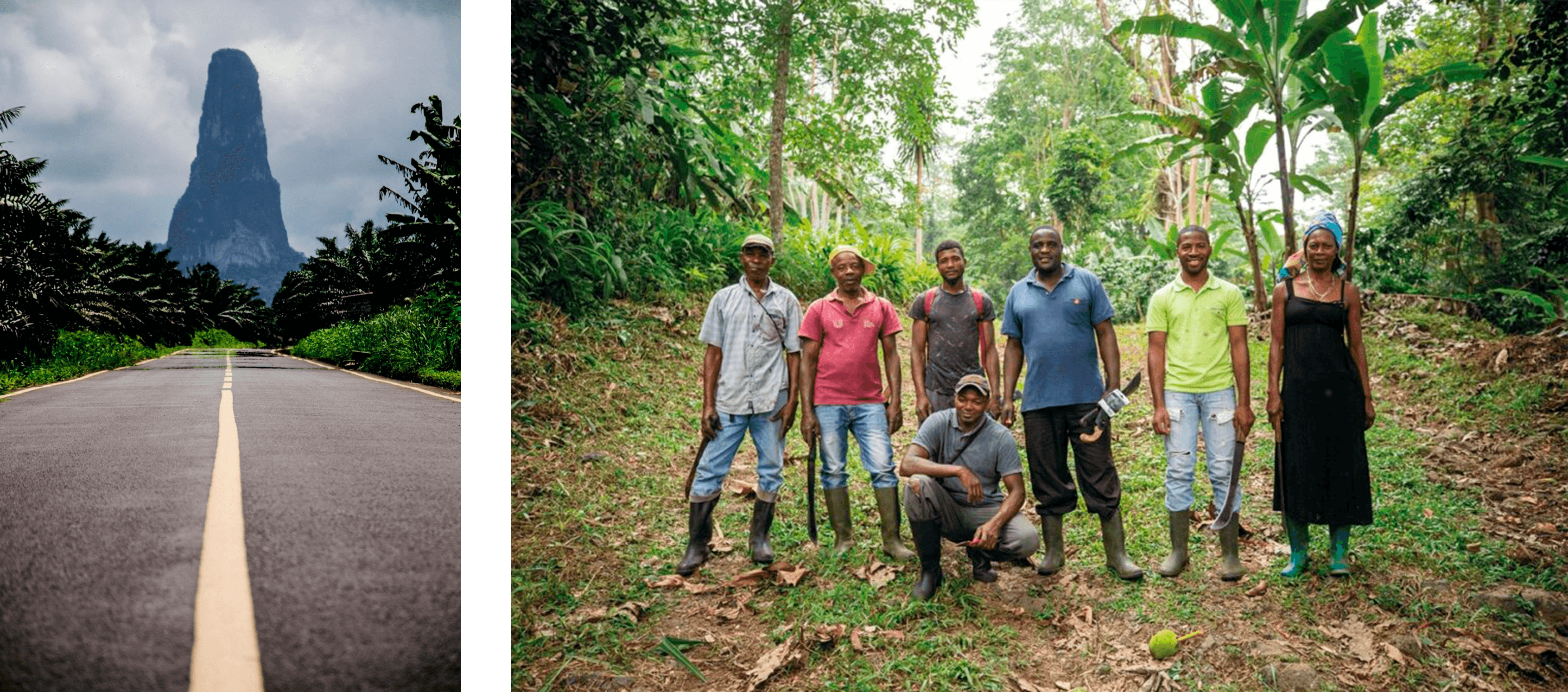
This story, long and full of details that give it meaning, begins in 2016, in one of the oldest plantations in São Tomé, Monte Café. It is there that Amedy Pereira, better known as Catoninho, produces cocoa and coffee, in a small family business to which he has given new meaning in recent years – but we will come back to that.
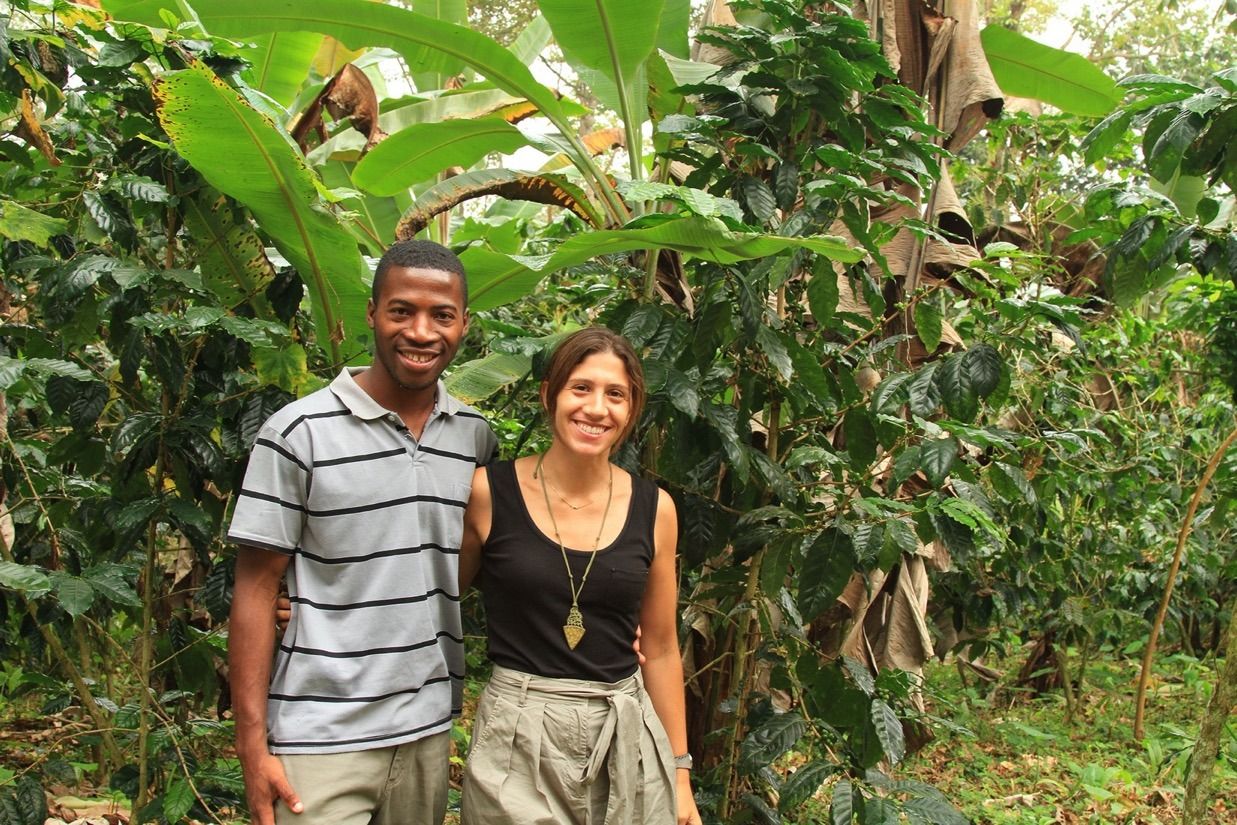
On a fine day like any other, Catoninho welcomed a Portuguese tourist to the plantation and gave her a full guided tour, showing, step by step, the life cycle and transformation of the coffee produced there. The tourist listened carefully and asked dozens of questions. At the end of the visit, she introduced herself: she was Rita Nabeiro, who was in São Tomé for six weeks of volunteer work and who, during that period, devoted herself to following the cocoa and coffee routes on the island. On that day, this path led her to the emblematic Monte Café plantation, to see the small-scale production up close. Amedy remembers it as if it were today: “We talked about all the points we had in common: families connected to coffee, with businesses passed down from generation to generation, and a shared passion for that very special product.”
The parallel between grandfather Rui Nabeiro, founder of Delta, and Amedy’s father, Manuel Catone Pereira, was immediate. Both had founded businesses that were passed on to their families, and both were inspiring figures. “I learned a lot from my father. He was always passionate about his work. He taught me how to manage the business, but also how to care for the product and respect every coffee bean,” recalls Amedy. After many conversations, the meeting ended with an invitation. “He told me not to hesitate to contact him when I came to Portugal.”
Delta Universe
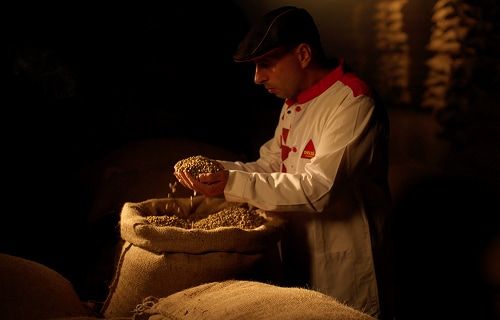
That is what Amedy did at the end of 2016, when he immersed himself in the vast universe of Delta Cafés, in Portugal. There were weeks of learning – on both sides. The São Toméan visited the offices and the factory, met workers and the Nabeiro family, and also completed a set of training courses related to his field. “I took a barista course, one on the physical chemistry of coffee and another on coffee machines and equipment, where I learned to use the tools correctly and to solve small breakdowns. I learned a lot from Mr. Adelino [Cardoso, coordinator of the Delta Café roastings, who made me realise that coffee is a science. It was very good.”
The stay culminated in a memorable meeting with Rui Nabeiro. “He received me in his office and gave me advice on how to cultivate the product, but also on how to cultivate passion in the business.” From that day, in addition to the advice, there remains the photograph of the Comendador handing the training certificate to Amedy. To this day, it hangs in the young entrepreneur’s office, right at the entrance, “for visitors to see” – especially the Portuguese, who “immediately recognize” the figure of Rui Nabeiro.
Catoninho is the name of the second impossible café,
launched by Delta Cafés, under the Impossible Coffees label.
The return to origins
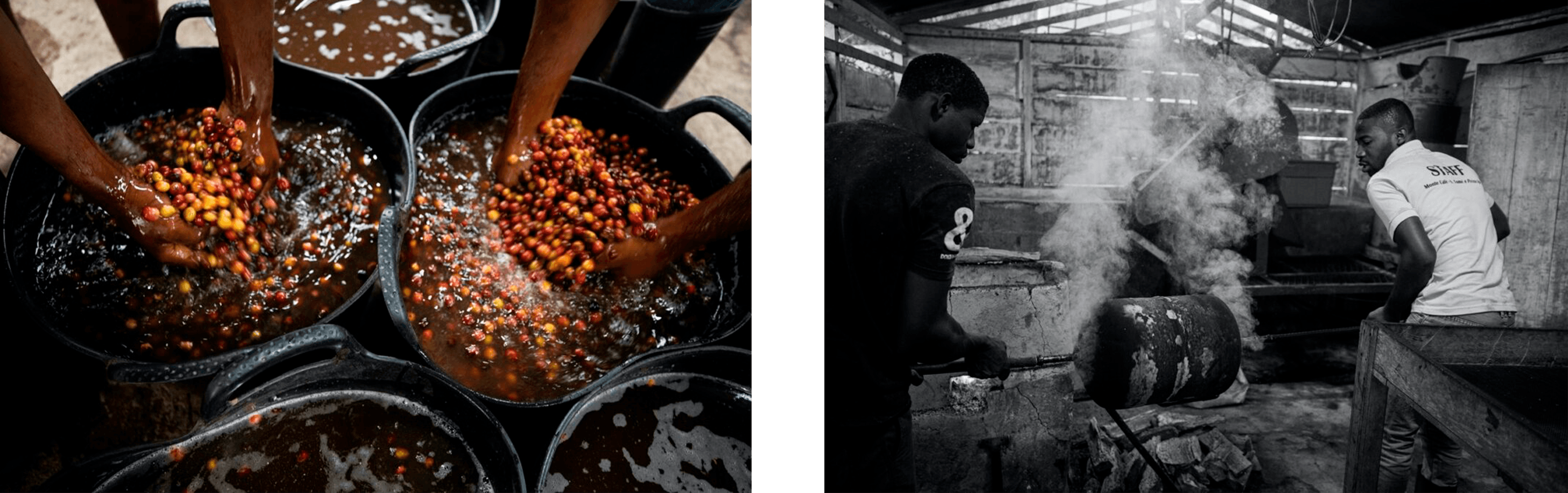
The weeks in Portugal were, on the one hand, a confirmation of the good work of Amedy and, on the other, an awakening to new possibilities. The return to São Tomé took place at the beginning of 2017, just three months before the coffee harvest. He shared everything he had learned with his brothers, who still work today at Firma Efraim, founded by their father. “I learned a lot about the proper handling of coffee in all its stages, so I had to be quick to pass on the knowledge, so that we could put it into practice in that harvest.”
The new techniques were implemented from that first harvest, with remarkable results: “Such precision had to improve our production technique.” So much so that Amedy made a point of sending samples of his new coffee to the Nabeiro family. “They also noticed the improvement, and the coffee was a success.”
The friendship between the Pereira and Nabeiro families grew closer over the years, always with an open line of communication between São Tomé and Portugal. “Rita Nabeiro became a godmother of this project. She is a person with a spirit of resilience and support that never ceases to amaze me.” Rita Nabeiro sums it up, with equal admiration: “Those who sow also reap – that is the case with Amedy, a person who clearly deserves support, because he multiplies the support he receives and extends it to those around him.” From friendship to shared projects was only a small step.
Monte Café. The tradition of the plantations
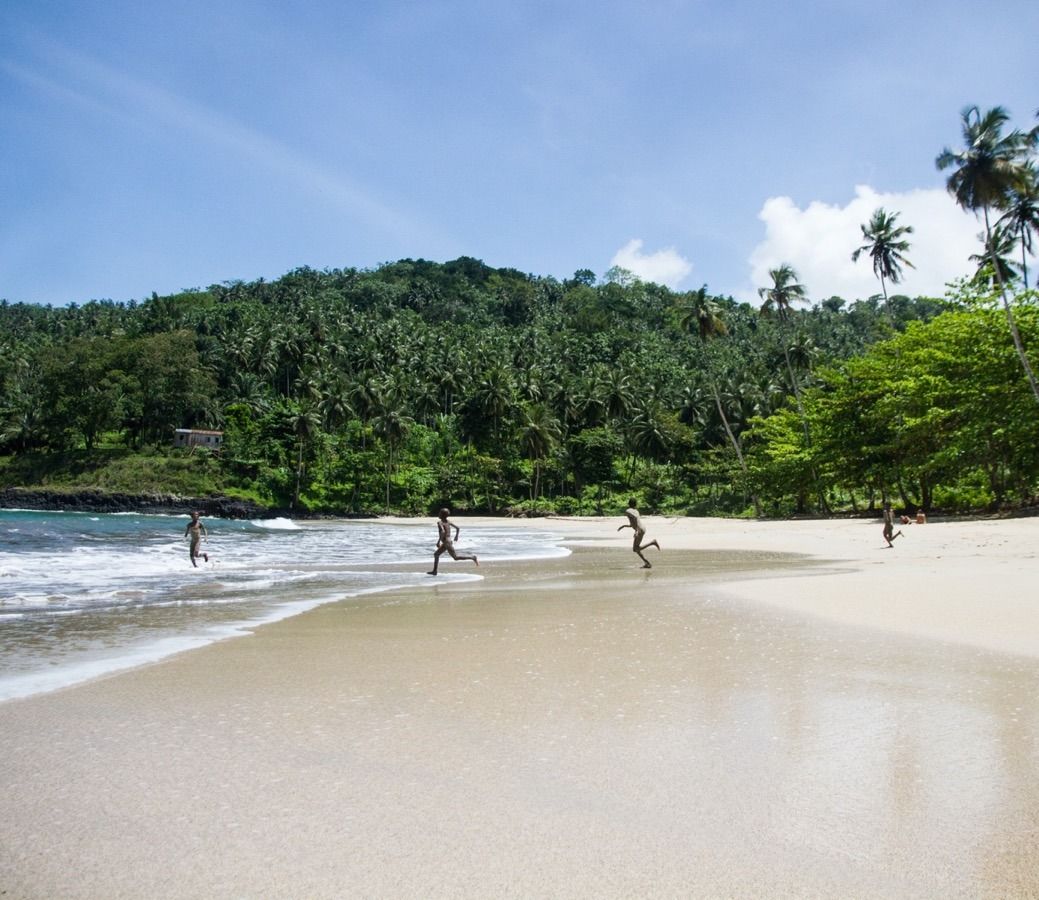
São Tomé and Príncipe has a historic past in coffee production, especially of the arabica and robusta varieties. At the end of the nineteenth century and the beginning of the twentieth century, the archipelago was even one of the world’s largest producers. On the roças – large agricultural plantations that dominated the local economy – farmers produced high‑quality coffee with a distinct flavour, shaped by the volcanic soil and the tropical climate.
Monte Café was founded in 1858 and, for many years, it was one of the most productive plantations. After the independence of São Tomé and Príncipe in 1975, coffee production went into decline due to lack of investment and the exhaustion of the plantations. The lands of Monte Café were nationalised and distributed among small farmers – among them, Manuel Catone Pereira, who managed to keep the business going in the following decades.
Impossible Coffees. From one archipelago to another
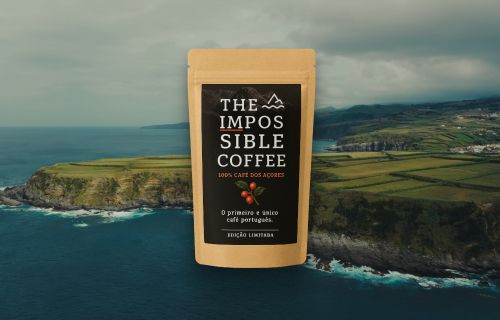
The Delta initiative, Impossible Coffees, took shape for the first time in the Azores, where support for small coffee producers was essential to achieve the dream of having coffee produced entirely in Portugal. The goal seemed impossible, but it proved attainable in 2023.
One year later, it is São Tomé and Príncipe’s turn. “We want to introduce many other impossible coffees – rare coffees, unique coffees, which are above all the result of dreams,” says Rui Miguel Nabeiro, CEO of Delta Cafés, explaining what led him to embark on this venture. “We feel drawn to projects defined by endurance, resilience, and even stubbornness.”
With a past strongly shaped by coffee production, the island of São Tomé now finds a new path in organic, premium coffee. In partnership with Delta – a mentor in production and an ally in distribution – the goal of this Impossible Coffee is ambitious yet achievable: to drive the revitalisation of coffee production in São Tomé.
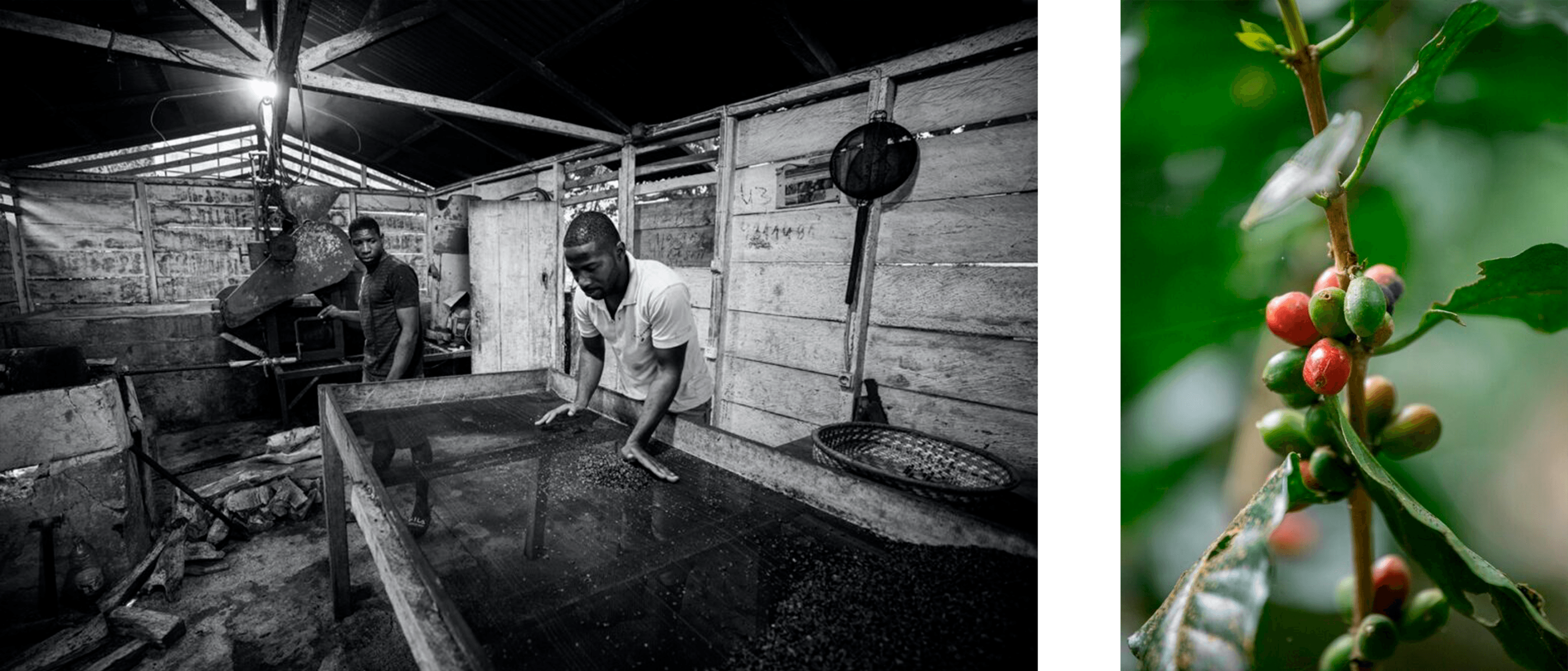
On a small scale, the production of this coffee stands out for the unique features of its tropical climate and volcanic soil. Adelino Cardoso, master coffee expert at Delta Cafés, explains that it is the altitude and the tropical climate that give this coffee “fruity notes of mango and passion fruit, a velvety body, and some acidity.” This is how Café Catoninho is created, a product as special as it is exclusive, in a limited edition and available only in Delta stores The Coffee House Experience and online.